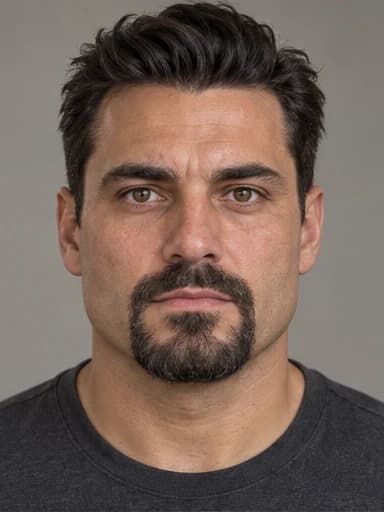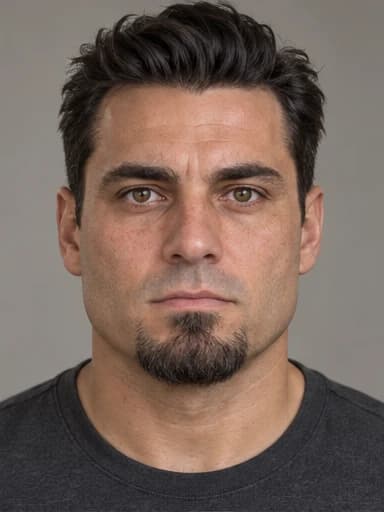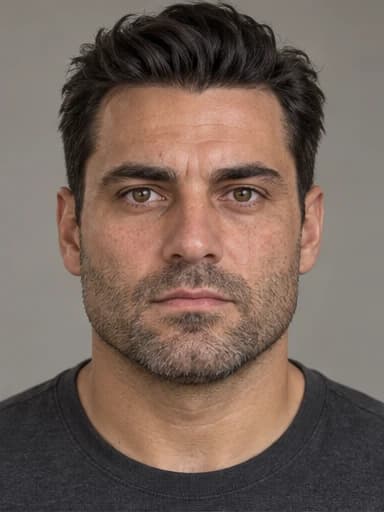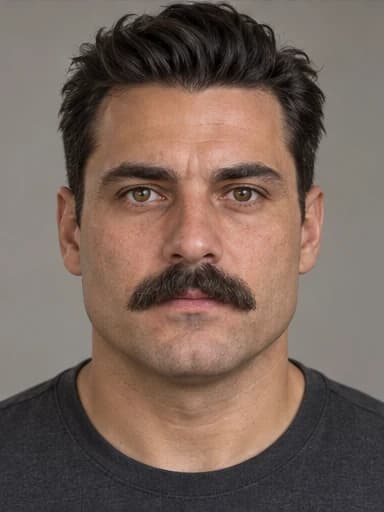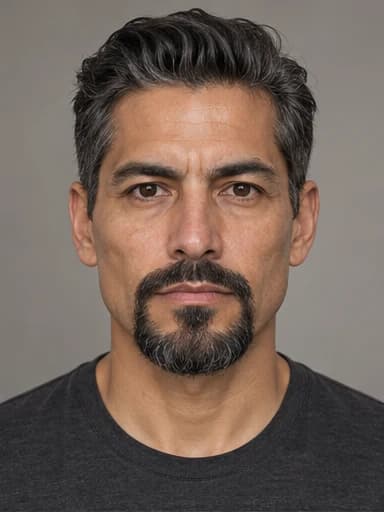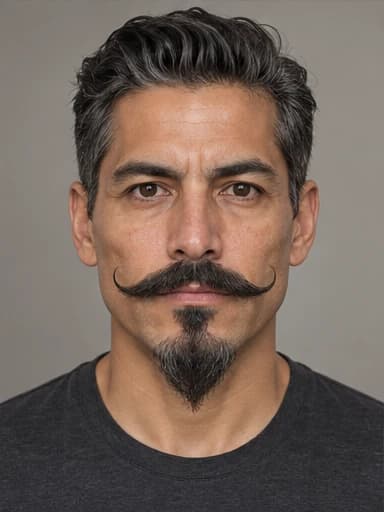
Face shape guide

Find your face shape. Explore your beard options.

Use your outline as a starting point, then choose for the hair you grow and the upkeep you want. These six groups are useful comparisons, not a test you need to fit exactly.

Start with three observations

  1. Look straight ahead

    Use a mirror at eye level, move hair off your forehead, and relax your expression. Look at the face beneath the beard rather than its trimmed outer edge.

  2. Compare length and width

    Compare hairline-to-chin length with the widest part of your face. Then compare the forehead, cheekbones and jaw. Approximate proportions are enough; a changing hairline can make length harder to judge.

  3. Check the jaw and chin

    Notice rounded or angular jaw corners and a broad or tapered chin. Use the clues below to pick one or two nearby groups. If a beard hides the outline, you can leave your face shape undecided.

Compare six face outlines

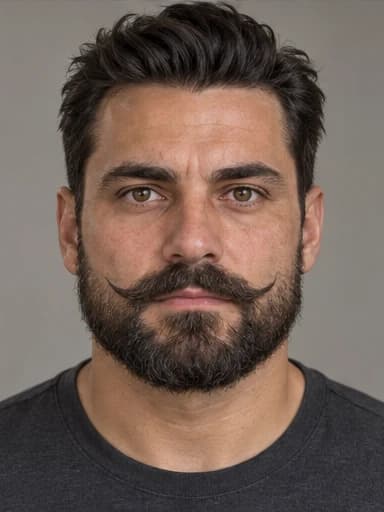
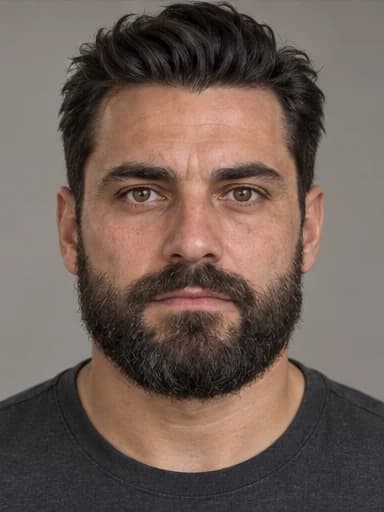
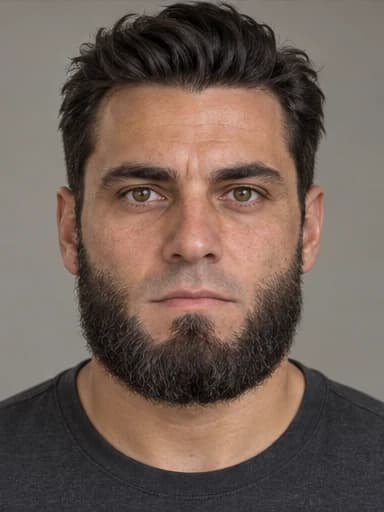
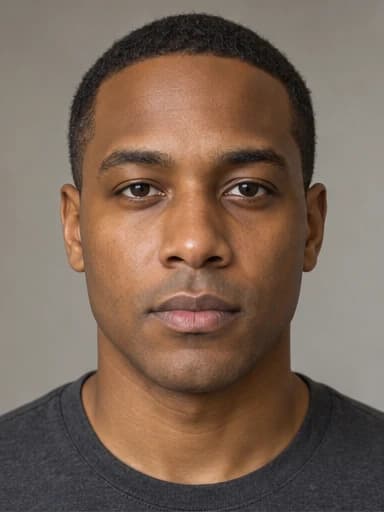
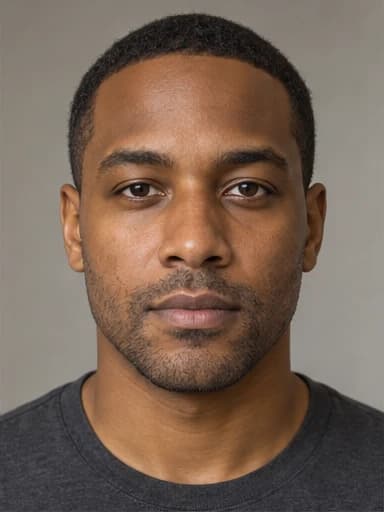
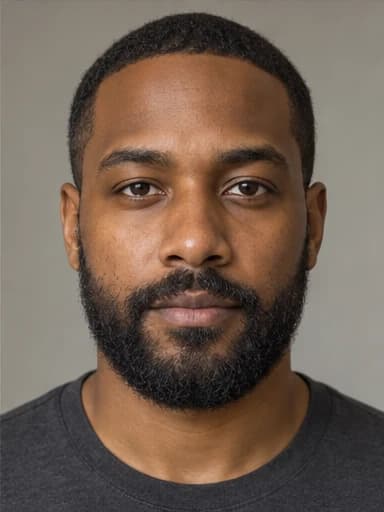
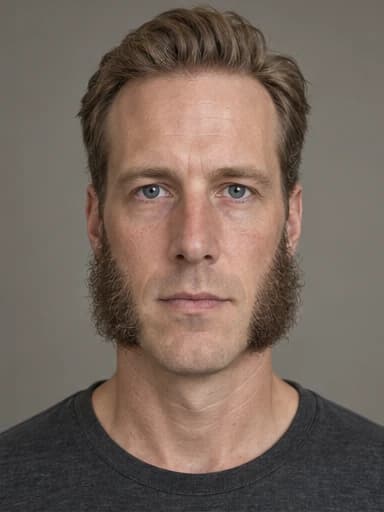
The AI portraits show each face without a beard. Compare forehead, cheekbones, jaw and face length with the outline beside it; then explore the same face with different beards below.

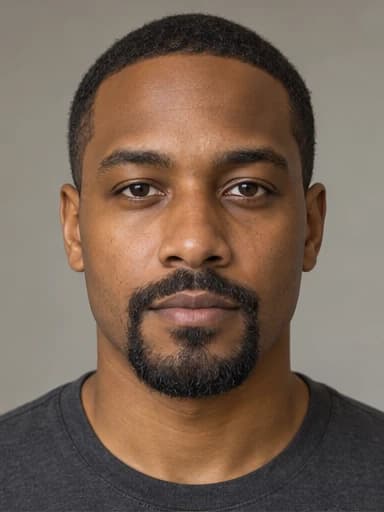
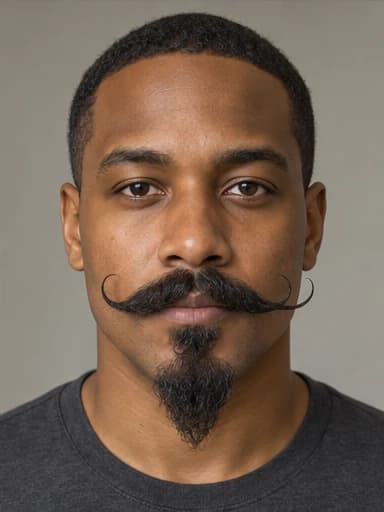
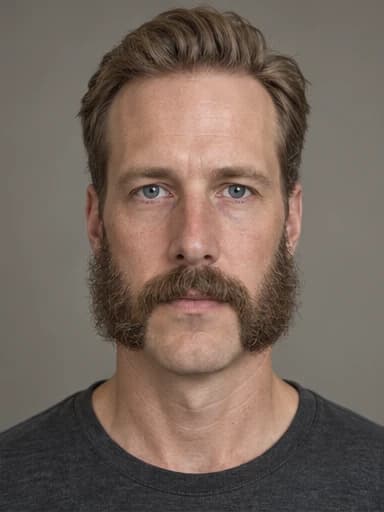
AI example — Each group keeps the same fictional face so you can compare beard outlines without a different model changing the proportions. Match the bare face first, then check the growth and trimming notes. These illustrations are not user photos or guaranteed try-on results.

AI-generated clean-shaven Round face reference
Face shape reference · no beard
Round face outline

Round

Length and width look similar, with rounded cheeks and jaw corners.

For more vertical emphasis

If you want more vertical emphasis, compare a compact goatee or Van Dyke with a shaped chin and controlled sides. If you prefer to keep your rounded outline, that is also a valid choice. Start with coverage you can grow consistently.

6 starting points

View Complete Guide for Round Face

Compare beards on this face shape

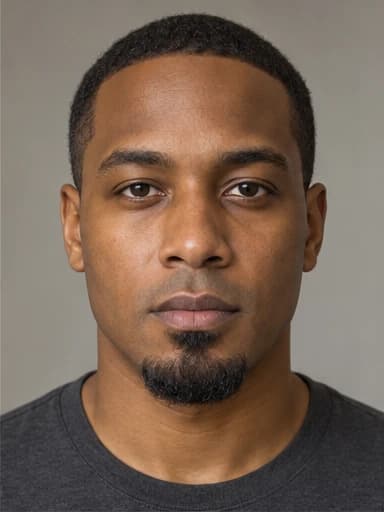
Round face with Goatee — AI-generated exampleAI example

Goatee

View guide

Central chin coverage adds definition while the cheeks stay clear.

Growth & trimming notes

Chin-centered growth below the lower lip supports this compact shape; cheek and upper-lip coverage are not needed.

Keep the upper lip, cheeks and jaw sides clean in this site’s version; balance both chin edges without widening the footprint.


Round face with Van Dyke — AI-generated exampleAI example

Van Dyke

View guide

A separate mustache and chin point create a more vertical central line.

Growth & trimming notes

Usable mustache and centered chin growth must support two separate shapes and a narrow point; mouth-corner connections are unnecessary.

Keep both mouth-corner gaps visible and refine the chin point gradually; overly wide jaw growth changes the narrow silhouette.

Round face with Anchor — AI-generated exampleAI example

Anchor

View guide

A small chin point and short front-jaw arms outline the lower face.

Growth & trimming notes

The chin must connect to both short front-jaw arms, with a lower-lip strip and separate mustache; cheek coverage is unnecessary.

Maintain the mustache gaps, centered point and two jaw endpoints; extending the arms to the ears changes the anchor outline.

Round face with Ducktail — AI-generated exampleAI example

Ducktail

View guide

Controlled sides and a longer central point emphasize vertical length.

Growth & trimming notes

A connected full-beard base and enough chin length are needed to taper from shorter sides into one centered point.

Comb downward and reduce both sides gradually; protect the jaw-to-chin transition so the point does not look detached.

Round face with Balbo — AI-generated exampleAI example

Balbo

View guide

Broad chin coverage draws attention to the lower face without covering the cheeks.

Growth & trimming notes

Chin and front-jaw growth must support a broad lower beard beneath a separate mustache and visible soul-patch area.

Balance the lower width while keeping mouth corners and sideburn gaps clear; a narrow point loses the broad Balbo footprint.

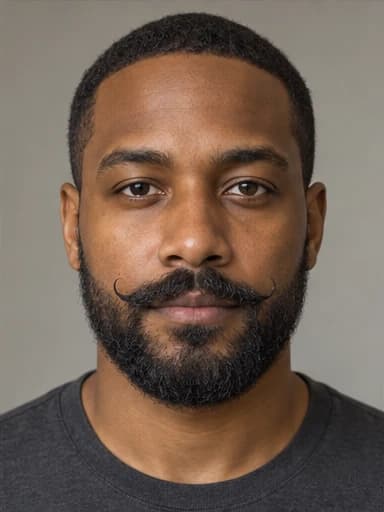
Round face with Imperial Beard — AI-generated exampleAI example

Imperial Beard

View guide

Swept mustache tips and a compact chin point add defined accents.

Growth & trimming notes

Upper-lip growth needs enough length for outward-swept tips, alongside a defined soul patch and compact pointed chin beard.

Style the mustache before trimming and keep it visually distinct from the chin; the swept upper shape needs separate upkeep.

AI-generated clean-shaven Square face reference
Face shape reference · no beard
Square face outline

Square

Forehead and jaw look similar in width, with noticeable jaw corners.

For a softer or more defined outline

If you want a softer outline, try a rounded lower edge. If you like your jaw angles, neat stubble can keep them visible. A mustache such as Chevron changes the upper-lip detail without adding chin or jaw coverage.

7 starting points

View Complete Guide for Square Face

Compare beards on this face shape

Square face with Circle Beard — AI-generated exampleAI example

Circle Beard

View guide

A rounded mouth frame adds a softer contour while jaw corners remain visible.

Growth & trimming notes

Both mouth-corner connectors must join the mustache to the chin beard to form a closed ring; sparse cheeks can stay clear.

Protect both connectors while balancing the ring width; cutting either join breaks the closed mouth-framing outline.

Square face with Goatee — AI-generated exampleAI example

Goatee

View guide

Compact chin coverage leaves the broad jaw and its corners visible.

Growth & trimming notes

Chin-centered growth below the lower lip supports this compact shape; cheek and upper-lip coverage are not needed.

Keep the upper lip, cheeks and jaw sides clean in this site’s version; balance both chin edges without widening the footprint.

Square face with Stubble — AI-generated exampleAI example

Stubble

View guide

Short shadow keeps the natural jaw angles easy to see.

Growth & trimming notes

Short growth should be reasonably even across the upper lip, lower cheeks, jaw and chin; visible skin is part of this style.

Check the short length frequently and keep cheek and neck edges deliberate; leaving it longer can reveal uneven areas.

Square face with Chevron — AI-generated exampleAI example

Chevron

View guide

Upper-lip detail changes while the entire jaw outline stays visible.

Growth & trimming notes

Broad, reasonably continuous upper-lip growth is needed for one dense mustache; chin, cheek and jaw growth are unnecessary.

Comb downward and check lip comfort and both endpoints; keep the rest of the face clean without thinning the mustache body.

Square face with Verdi — AI-generated exampleAI example

Verdi

View guide

A rounded beard edge softens the lower outline beneath a distinct styled mustache.

Growth & trimming notes

Connected full-beard coverage and enough mustache length are needed for groomed tips to sit visibly above the rounded beard.

Style the mustache before judging the rounded lower edge; trimming it flush or letting the tips droop removes the distinct upper layer.

Square face with Full Beard — AI-generated exampleAI example

Full Beard

View guide

A rounded lower beard changes the outer jaw silhouette.

Growth & trimming notes

Sideburns, cheeks, mustache, jaw and chin need to connect into one balanced beard; a face-shape match alone cannot supply missing coverage.

Maintain cheek and curved neck boundaries and check bulk from both sides; preserve the moderate rounded edge rather than carving a point.

Square face with Dutch Beard — AI-generated exampleAI example

Dutch Beard

View guide

Broad rounded coverage frames the jaw while the upper lip stays clear.

Growth & trimming notes

Sideburns, cheeks, jaw and chin need connected coverage for a wide rounded beard; upper-lip growth is unnecessary because it stays clean.

Keep the entire upper lip and mouth corners clear while checking cheek width and the broad lower curve independently.

AI-generated clean-shaven Oval face reference
Face shape reference · no beard
Oval face outline

Oval

Longer than wide, with gently rounded sides and a softly tapered chin.

Choose by coverage and upkeep

Use your growth pattern and preferred upkeep to narrow the options. A chin-focused style needs different coverage from a full beard. Compare the shape you want rather than assuming every style will work because of your face shape.

7 starting points

View Complete Guide for Oval Face

Compare beards on this face shape

Oval face with Stubble — AI-generated exampleAI example

Stubble

View guide

Short shadow follows the existing face outline without adding much length.

Growth & trimming notes

Short growth should be reasonably even across the upper lip, lower cheeks, jaw and chin; visible skin is part of this style.

Check the short length frequently and keep cheek and neck edges deliberate; leaving it longer can reveal uneven areas.

Oval face with Goatee — AI-generated exampleAI example

Goatee

View guide

Compact chin coverage puts the focus on the center of the lower face.

Growth & trimming notes

Chin-centered growth below the lower lip supports this compact shape; cheek and upper-lip coverage are not needed.

Keep the upper lip, cheeks and jaw sides clean in this site’s version; balance both chin edges without widening the footprint.

Oval face with Circle Beard — AI-generated exampleAI example

Circle Beard

View guide

A small closed mouth frame gives definition without adding cheek volume.

Growth & trimming notes

Both mouth-corner connectors must join the mustache to the chin beard to form a closed ring; sparse cheeks can stay clear.

Protect both connectors while balancing the ring width; cutting either join breaks the closed mouth-framing outline.

Oval face with Balbo — AI-generated exampleAI example

Balbo

View guide

A separate mustache and broader chin coverage add lower-face emphasis.

Growth & trimming notes

Chin and front-jaw growth must support a broad lower beard beneath a separate mustache and visible soul-patch area.

Balance the lower width while keeping mouth corners and sideburn gaps clear; a narrow point loses the broad Balbo footprint.

Oval face with Verdi — AI-generated exampleAI example

Verdi

View guide

Compare a rounded full beard with a separately styled mustache.

Growth & trimming notes

Connected full-beard coverage and enough mustache length are needed for groomed tips to sit visibly above the rounded beard.

Style the mustache before judging the rounded lower edge; trimming it flush or letting the tips droop removes the distinct upper layer.

Oval face with Full Beard — AI-generated exampleAI example

Full Beard

View guide

Connected coverage creates a fuller outline across cheeks, jaw and chin.

Growth & trimming notes

Sideburns, cheeks, mustache, jaw and chin need to connect into one balanced beard; a face-shape match alone cannot supply missing coverage.

Maintain cheek and curved neck boundaries and check bulk from both sides; preserve the moderate rounded edge rather than carving a point.

Oval face with Imperial Beard — AI-generated exampleAI example

Imperial Beard

View guide

Swept upper-lip and pointed chin accents keep the cheeks clear.

Growth & trimming notes

Upper-lip growth needs enough length for outward-swept tips, alongside a defined soul patch and compact pointed chin beard.

Style the mustache before trimming and keep it visually distinct from the chin; the swept upper shape needs separate upkeep.

AI-generated clean-shaven Oblong face reference
Face shape reference · no beard
Oblong face outline

Oblong

Length stands out more than width, with fairly straight sides.

For more side fullness

If you want less emphasis on length, compare side fullness with a more compact chin. Long, narrow tips may emphasize length; that can also be a deliberate preference. Choose a shape your cheek and jaw growth can support.

6 starting points

View Complete Guide for Oblong Face

Compare beards on this face shape

Oblong face with Mutton Chops — AI-generated exampleAI example

Mutton Chops

View guide

Side fullness adds width while the center chin stays bare.

Growth & trimming notes

Both sideburns, cheeks and rear jaws need continuous growth for substantial side masses; upper-lip and center-chin growth are unnecessary.

Balance both front endpoints and rear-jaw edges; keep the upper lip, lower-lip area and center chin clean in this site’s version.

Oblong face with Friendly Mutton Chops — AI-generated exampleAI example

Friendly Mutton Chops

View guide

Cheek fullness connects through the mustache, leaving the center chin bare.

Growth & trimming notes

Continuous sideburn-to-cheek growth must connect into a strong mustache on both sides; center-chin coverage is unnecessary.

Protect both mustache connectors while balancing cheek bulk; keep the center chin and area directly below the lower lip clean.

Oblong face with Garibaldi — AI-generated exampleAI example

Garibaldi

View guide

A broad rounded bottom adds side fullness; keep extra chin length restrained.

Growth & trimming notes

Connected cheek, jaw and chin growth must support substantial width and volume, with an integrated mustache and broad rounded bottom.

Choose a maximum width and round boundary, then tidy lightly; heavy sculpting can remove the natural fullness or turn the bottom pointed.

Oblong face with Stubble — AI-generated exampleAI example

Stubble

View guide

Short shadow shows the long face outline without extending the chin.

Growth & trimming notes

Short growth should be reasonably even across the upper lip, lower cheeks, jaw and chin; visible skin is part of this style.

Check the short length frequently and keep cheek and neck edges deliberate; leaving it longer can reveal uneven areas.

Oblong face with Circle Beard — AI-generated exampleAI example

Circle Beard

View guide

A compact mouth ring keeps added chin length modest.

Growth & trimming notes

Both mouth-corner connectors must join the mustache to the chin beard to form a closed ring; sparse cheeks can stay clear.

Protect both connectors while balancing the ring width; cutting either join breaks the closed mouth-framing outline.

Oblong face with Full Beard — AI-generated exampleAI example

Full Beard

View guide

Fuller sides and a short rounded chin create a broader beard outline.

Growth & trimming notes

Sideburns, cheeks, mustache, jaw and chin need to connect into one balanced beard; a face-shape match alone cannot supply missing coverage.

Maintain cheek and curved neck boundaries and check bulk from both sides; preserve the moderate rounded edge rather than carving a point.

AI-generated clean-shaven Heart face reference
Face shape reference · no beard
Heart face outline

Heart

The forehead looks wider than the jaw, narrowing toward the chin.

For more lower-face fullness

If you want more lower-face fullness, compare a compact mouth-framing style with broader chin coverage. Keep the chin width and mustache connections in mind; dense growth at the chin does not guarantee connected mouth corners.

7 starting points

View Complete Guide for Heart Face

Compare beards on this face shape

Heart face with Balbo — AI-generated exampleAI example

Balbo

View guide

Broader front-jaw and chin coverage adds visible lower-face width.

Growth & trimming notes

Chin and front-jaw growth must support a broad lower beard beneath a separate mustache and visible soul-patch area.

Balance the lower width while keeping mouth corners and sideburn gaps clear; a narrow point loses the broad Balbo footprint.

Heart face with Goatee — AI-generated exampleAI example

Goatee

View guide

Central chin coverage adds a focal point; a rounded edge keeps it compact.

Growth & trimming notes

Chin-centered growth below the lower lip supports this compact shape; cheek and upper-lip coverage are not needed.

Keep the upper lip, cheeks and jaw sides clean in this site’s version; balance both chin edges without widening the footprint.
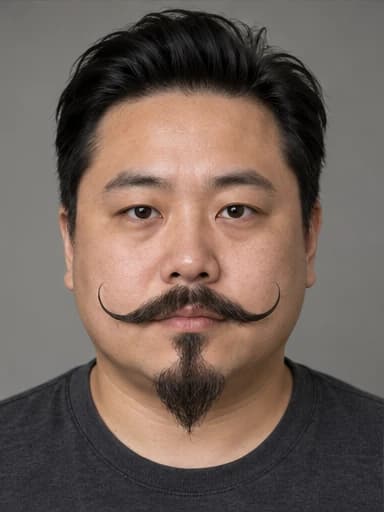
Heart face with Circle Beard — AI-generated exampleAI example

Circle Beard

View guide

A compact mouth frame adds defined coverage around the narrow lower face.

Growth & trimming notes

Both mouth-corner connectors must join the mustache to the chin beard to form a closed ring; sparse cheeks can stay clear.

Protect both connectors while balancing the ring width; cutting either join breaks the closed mouth-framing outline.

Heart face with Anchor — AI-generated exampleAI example

Anchor

View guide

A narrow chin point emphasizes taper; compare this if that is your goal.

Growth & trimming notes

The chin must connect to both short front-jaw arms, with a lower-lip strip and separate mustache; cheek coverage is unnecessary.

Maintain the mustache gaps, centered point and two jaw endpoints; extending the arms to the ears changes the anchor outline.

Heart face with Stubble — AI-generated exampleAI example

Stubble

View guide

Short shadow keeps the natural taper of the jaw visible.

Growth & trimming notes

Short growth should be reasonably even across the upper lip, lower cheeks, jaw and chin; visible skin is part of this style.

Check the short length frequently and keep cheek and neck edges deliberate; leaving it longer can reveal uneven areas.

Heart face with Extended Goatee — AI-generated exampleAI example

Extended Goatee

View guide

A low front-jaw band adds more lower-face width than a compact circle beard.

Growth & trimming notes

Both mustache-to-chin connectors and the low front-jaw band need continuous growth; the band stops before the sideburns.

Check both mouth connections and jaw endpoints; added lower width needs more edge control than a compact circle beard.

Heart face with Imperial Beard — AI-generated exampleAI example

Imperial Beard

View guide

Swept mustache and chin accents emphasize the existing tapered outline.

Growth & trimming notes

Upper-lip growth needs enough length for outward-swept tips, alongside a defined soul patch and compact pointed chin beard.

Style the mustache before trimming and keep it visually distinct from the chin; the swept upper shape needs separate upkeep.

AI-generated clean-shaven Diamond face reference
Face shape reference · no beard
Diamond face outline

Diamond

Cheekbones look widest; the forehead and chin are narrower.

Frame the cheekbones and jaw

If you want a smoother transition from cheekbones to jaw, compare controlled cheek volume and a softly shaped lower edge. A chin-focused option may be easier when cheek coverage is uneven. Choose for the coverage you can grow and the outline you prefer.

6 starting points

View Complete Guide for Diamond Face

Compare beards on this face shape

Diamond face with Full Beard — AI-generated exampleAI example

Full Beard

View guide

Controlled cheek volume and a rounded lower edge bridge cheekbones and jaw.

Growth & trimming notes

Sideburns, cheeks, mustache, jaw and chin need to connect into one balanced beard; a face-shape match alone cannot supply missing coverage.

Maintain cheek and curved neck boundaries and check bulk from both sides; preserve the moderate rounded edge rather than carving a point.

Diamond face with Balbo — AI-generated exampleAI example

Balbo

View guide

Broad lower coverage adds width beneath the cheekbones while upper cheeks stay clear.

Growth & trimming notes

Chin and front-jaw growth must support a broad lower beard beneath a separate mustache and visible soul-patch area.

Balance the lower width while keeping mouth corners and sideburn gaps clear; a narrow point loses the broad Balbo footprint.

Diamond face with Circle Beard — AI-generated exampleAI example

Circle Beard

View guide

A compact mouth frame avoids adding bulk over the cheekbones.

Growth & trimming notes

Both mouth-corner connectors must join the mustache to the chin beard to form a closed ring; sparse cheeks can stay clear.

Protect both connectors while balancing the ring width; cutting either join breaks the closed mouth-framing outline.

Diamond face with Goatee — AI-generated exampleAI example

Goatee

View guide

Chin-only coverage is an option when cheek growth is uneven.

Growth & trimming notes

Chin-centered growth below the lower lip supports this compact shape; cheek and upper-lip coverage are not needed.

Keep the upper lip, cheeks and jaw sides clean in this site’s version; balance both chin edges without widening the footprint.
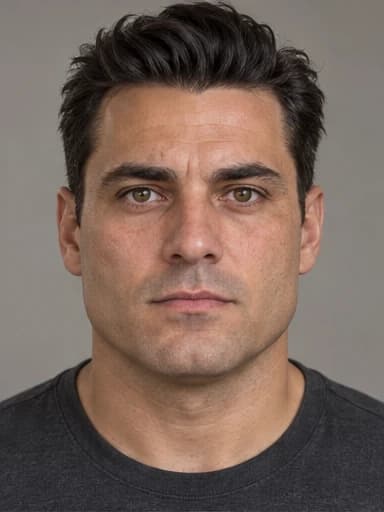
Diamond face with Ducktail — AI-generated exampleAI example

Ducktail

View guide

A central point adds length; compare this if extra vertical emphasis is your goal.

Growth & trimming notes

A connected full-beard base and enough chin length are needed to taper from shorter sides into one centered point.
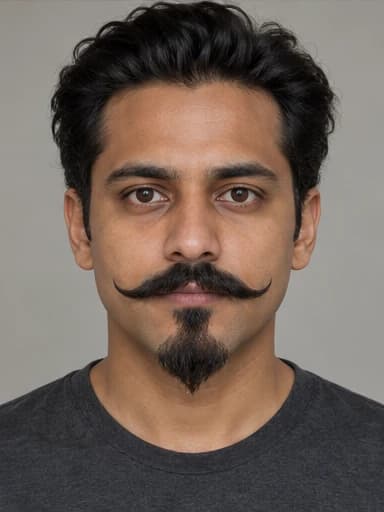
Comb downward and reduce both sides gradually; protect the jaw-to-chin transition so the point does not look detached.

Diamond face with Imperial Beard — AI-generated exampleAI example

Imperial Beard

View guide

Separate mustache and chin accents leave the cheekbone outline visible.

Growth & trimming notes

Upper-lip growth needs enough length for outward-swept tips, alongside a defined soul patch and compact pointed chin beard.

Style the mustache before trimming and keep it visually distinct from the chin; the swept upper shape needs separate upkeep.

Ready to Preview a Beard Style?

Upload a photo to generate an AI beard preview for comparison. Results may vary with the photo and model output.

Try AI Beard Generator