Friendly Mutton Chops Guide: Connected Mustache, Open Center Chin
Friendly Mutton Chops keep two full sideburn-and-cheek masses and connect them across the upper lip with a strong mustache. Hair runs beside the mouth, but the area below the lower lip and center chin remains clean, preserving an open lower center inside the broad upper frame.
Maintained by BeardStylesContent updated:
Latest recorded revision: Added the style definition, growth requirements, maintenance guidance, common mistakes and related-style comparisons.
Content and source methodSave this style in this browser to compare it later. Saved styles do not sync across devices, and clearing browser data removes them.

- Length
- Balance the mustache bridge with the side masses; keep the central opening visible before adjusting overall bulk.
- Maintenance
- Protect both mouth-side connectors and the clean center chin, then compare cheek size and mustache weight.
- Could it suit you?
- Needs continuous sideburn-to-cheek growth plus reliable connections into a substantial mustache; central-chin density is unnecessary because that area stays clear.
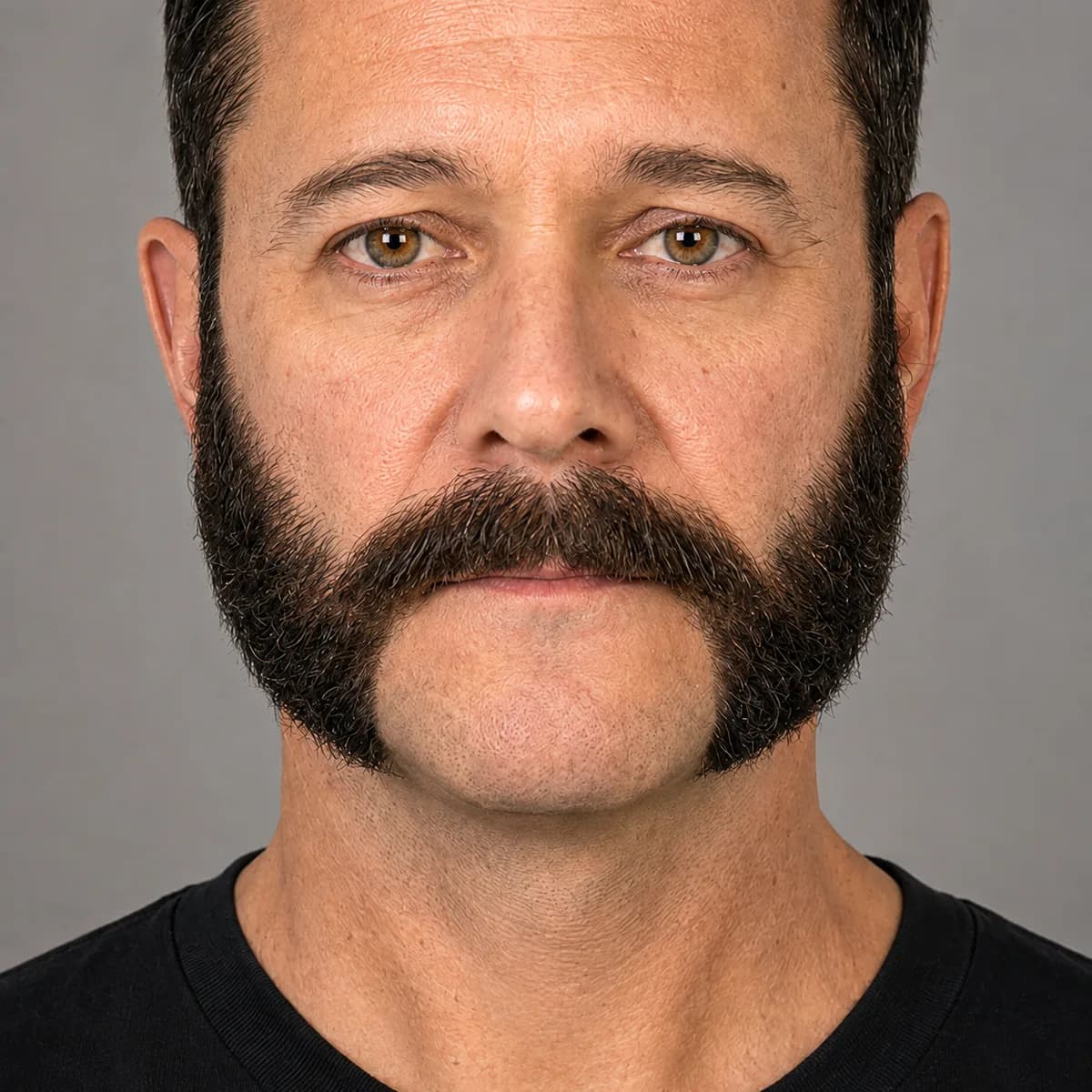
What Makes the Chops “Friendly”
Friendly Mutton Chops retain the broad sideburns, cheek coverage and rear-jaw weight of regular chops, then connect both sides through a strong mustache. Hair follows the sides of the mouth into that bridge. The center chin and the area immediately below the lower lip remain clean, so the shape frames the mouth from above and beside it without closing underneath.
Brand naming is inconsistent: Gillette's Mutton Chops guide uses the plain name for a mustache-connected version. BeardStyles reserves “Friendly” for that connection. A reference image prevents the clean center chin from being mistaken for a goatee.
Check All Four Connection Routes
Inspect sideburn to cheek on both sides, then cheek to mustache beside both mouth corners. A thick mustache cannot hide a full break at one corner, and a complete connector cannot compensate for an isolated sideburn mass. Test the central opening before shaving: it should be large enough to read clearly but not cut so wide that the connectors become threads.
Because the style distributes weight across the upper lip and both cheeks, the haircut and natural sideburn line affect the whole frame. Face-shape suggestions are not guarantees. If the connectors are weak or a prominent mustache is unwanted, regular Mutton Chops use the same side growth with a clean lip.
How to Build the Connected Frame
- Comb the mustache outward and the cheek hair down. Even the longest areas conservatively, checking millimeters in the length chart.
- Preserve the full connection from each sideburn through the cheek to the mouth corner. Establish upper cheek edges without cutting into thinner connector zones.
- Mark the clean central-chin area below the lower lip. Open it gradually from the center outward, stopping before either mouth-side connection becomes narrow.
- Shape the rear-jaw lower edges and the front curves beside the mouth. Compare how the two cheek masses meet the mustache; move an endpoint only after seeing the complete arc.
- Trim the mustache for lip comfort while retaining enough weight to bridge the sides. Reduce cheek bulk last, and check both profiles before matching lengths.
The mustache, connectors and chops may not need attention at the same time. Cleaning the central opening should not automatically trigger a shorter mustache. Record separate settings if different hair zones need different lengths.
Preserve the Open Lower Center
The defining negative space sits below the mouth, not above it. Filling the center chin produces a beard-like lower closure; shaving through a corner splits the connected frame into ordinary chops plus a separate mustache. The side masses should remain visually dominant even though the mustache is strong.
The contour illustration maps these relationships. AI can smooth a weak connector and equalize cheek density, so confirm every route in your own growth. A virtual preview cannot establish whether a connection is physically available.
Common Friendly-Chops Mistakes
One common error is making the clean chin opening perfectly rectangular. Natural curves around the mouth usually integrate better with the connectors. Another is trimming the mustache much shorter than the chops, leaving a thin bridge that does not carry their visual weight.
Avoid fixing unequal cheek bulk by moving only the inner edges. That can make the central opening lopsided. First even the internal length, then assess whether either external contour truly needs to move.
Friendly Compared with Regular Mutton Chops
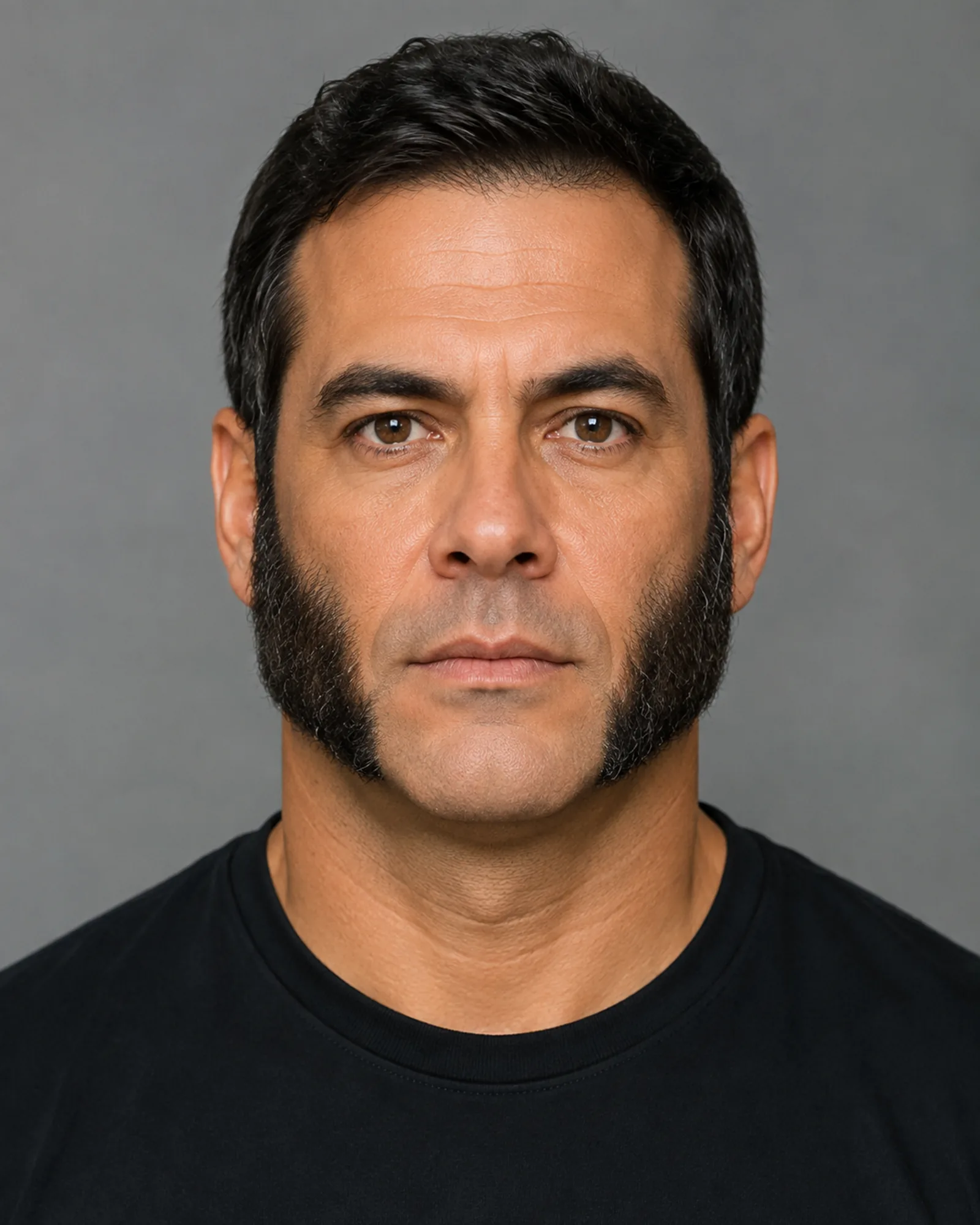
Mutton Chops stop before the mouth and remove the upper-lip hair, producing two independent side shapes. They suit growth concentrated at the sides and require fewer mouth-side connections.
Friendly Mutton Chops keep a strong mustache and both corner links, creating one connected frame while leaving the center chin clean. Choose between them by testing connector reliability and deciding whether the mustache should unite the design. Do not fill the chin to solve a weak connection; that creates a different beard rather than a stronger Friendly outline.
Related beard styles


Related guides
Try On This Style
AI previews are illustrations, not guaranteed results. Your facial hair growth, face, lighting, and photo can change the preview and the result you can achieve with trimming.
Try On This Style