Mutton Chops Guide: Broad Sideburns with a Clear Mouth and Chin
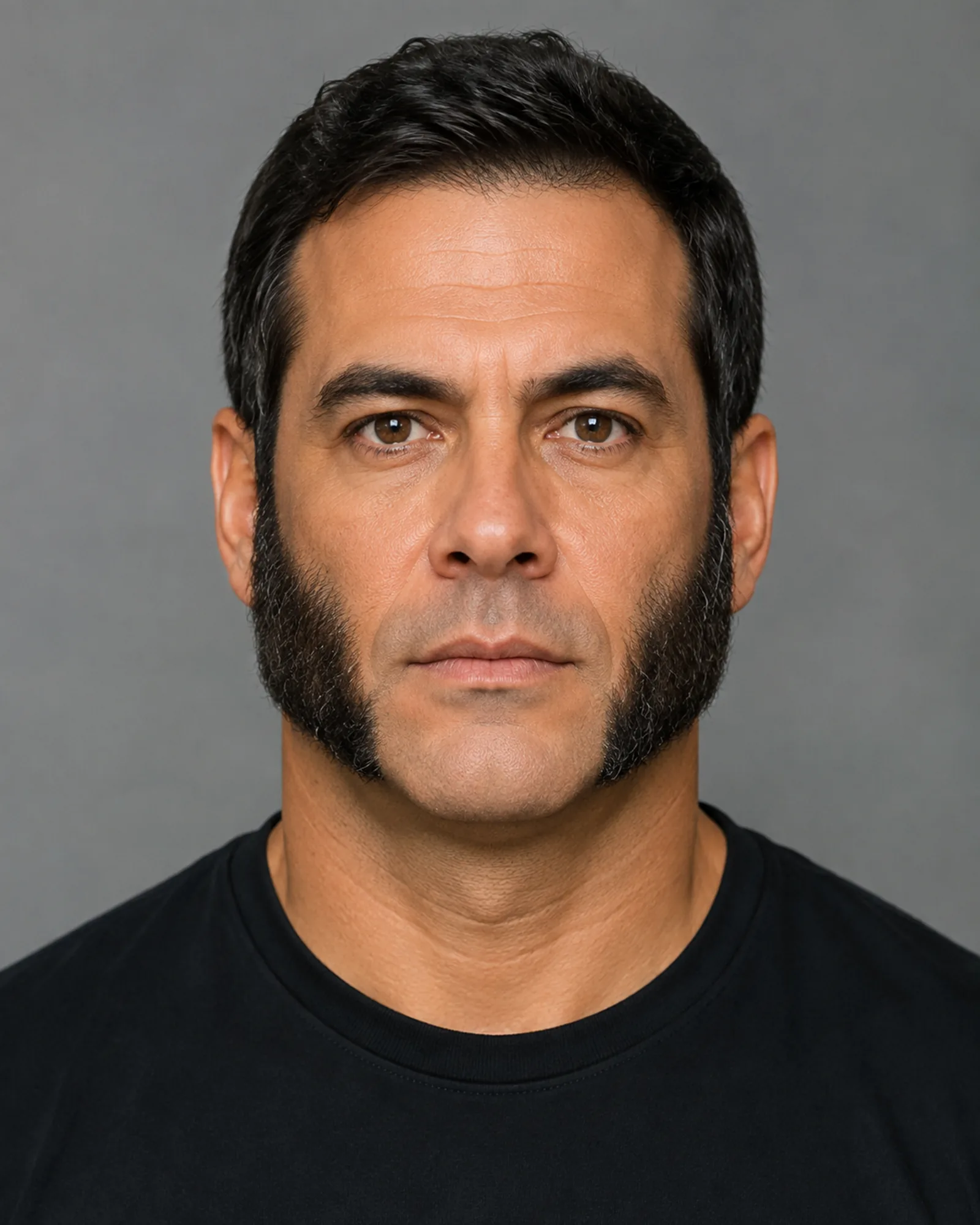
Mutton Chops are two thick sideburn masses that expand across the cheeks and follow the rear jaw, then stop before the mouth and center chin. The upper lip, lower-lip area and central chin remain clean, so the style depends on balanced side shapes rather than a connected mustache.
Maintained by BeardStylesContent updated:
Latest recorded revision: Added the style definition, growth requirements, maintenance guidance, common mistakes and related-style comparisons.
Content and source methodSave this style in this browser to compare it later. Saved styles do not sync across devices, and clearing browser data removes them.
- Length
- Keep enough width and bulk for the chops to read as side masses; decide the front endpoints before reducing length.
- Maintenance
- Compare the two front edges and lower jaw edges while keeping the mustache, soul patch and center chin clear.
- Could it suit you?
- Most workable when sideburn, cheek and rear-jaw growth is continuous on both sides, even if mustache and central-chin growth is limited.
What Mutton Chops Mean Here
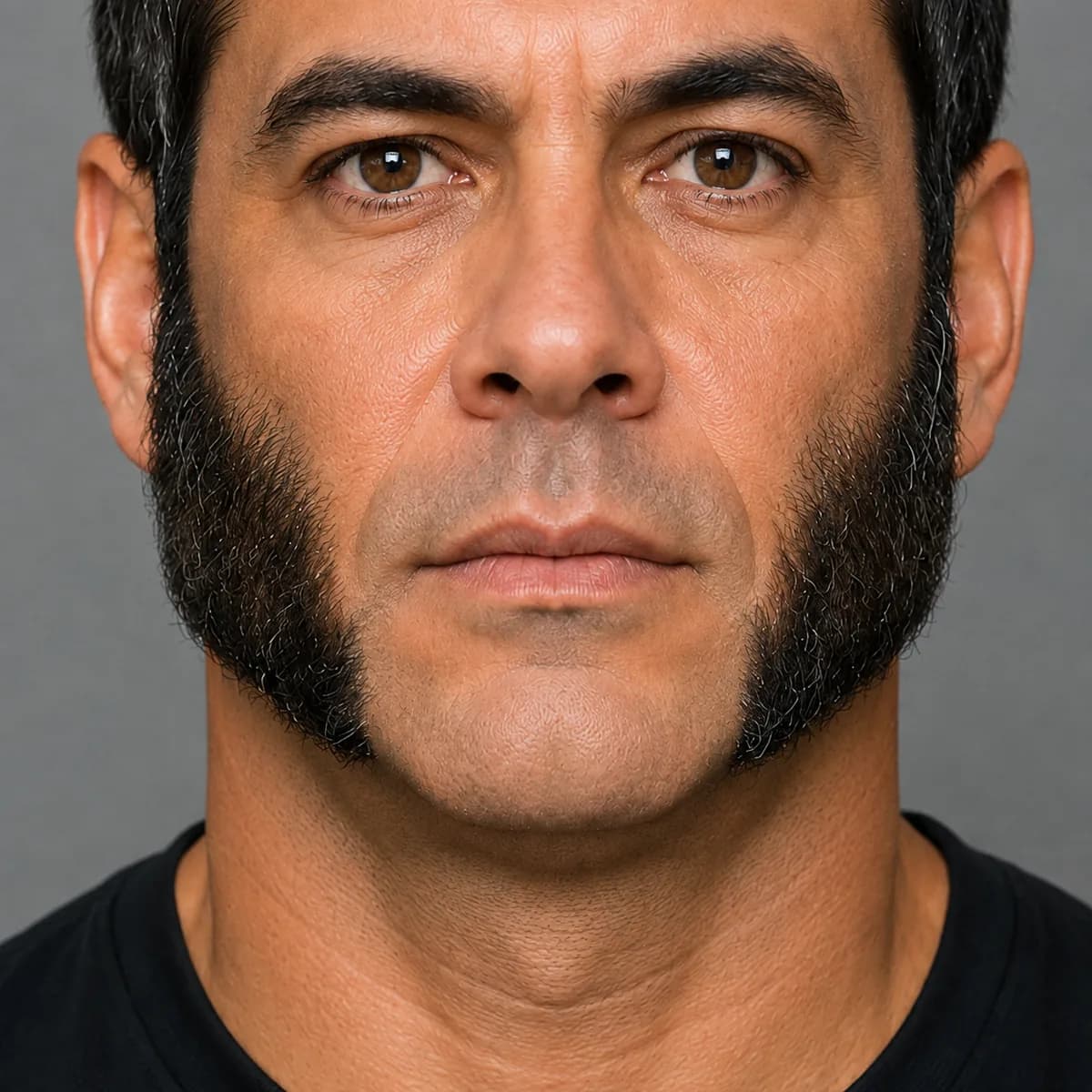
On this site, Mutton Chops grow down from the sideburns, widen over the cheeks and continue along the rear jaw. Each chop ends before the mouth and center chin. The upper lip, area below the lower lip and middle of the chin stay clean, leaving two substantial but separate side shapes.
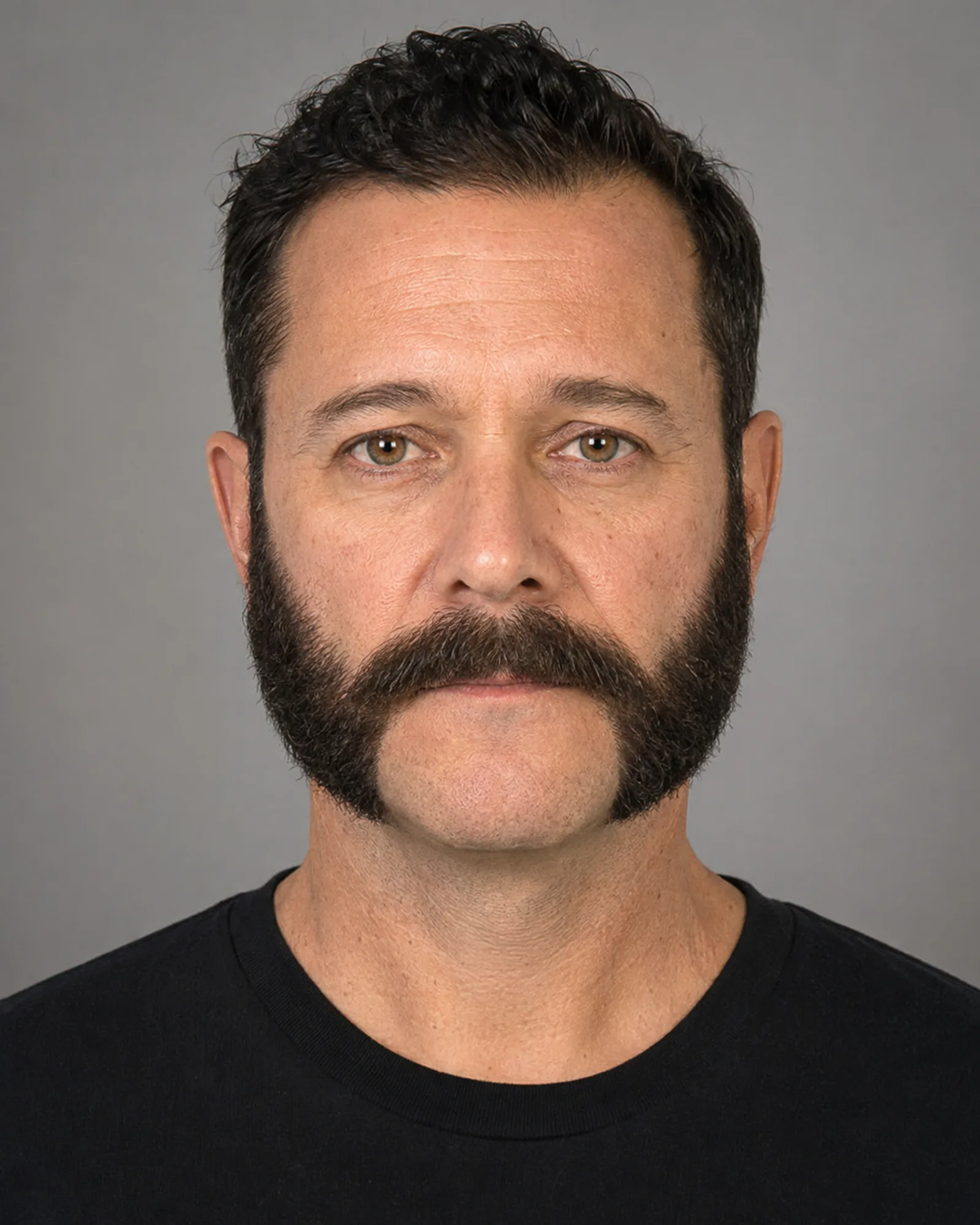
Some grooming guides use “mutton chops” for a mustache-connected version. Gillette's guide is one example. BeardStyles calls that geometry Friendly Mutton Chops. This page's image and clean upper lip define the local choice.
Check the Side Coverage
Look at the transition from scalp sideburn to cheek and from cheek to rear jaw. A strong mustache cannot compensate for a break in these side routes because it is removed. Compare how far forward each cheek grows densely; the shorter side usually sets a credible shared endpoint.
The design puts visual weight at the sides of the face, but its effect varies with haircut, natural jaw, chop width and density. A face-shape category is only a comparison aid. If you have strong mustache connections and prefer a single upper arc, review Friendly Mutton Chops before clearing the lip.
How to Shape Two Chops
- Comb dry sideburn and cheek hair downward and slightly forward. Even excessive length with a conservative setting; use the length chart to compare millimeters across tools.
- Mark matching front endpoints before the mouth. Leave both slightly forward at first, since moving an edge backward is much easier than recovering it.
- Draw the upper cheek edges from the sideburns toward those endpoints. Follow dense growth rather than forcing both sides onto a line that crosses a gap.
- Shape each lower edge along the rear jaw and finish it before the central chin. Check profiles for equal depth; a front view alone hides uneven underside coverage.
- Clear the mustache, mouth area, soul patch and center chin. Refine the two front edges in small outward strokes, then reduce bulk inside the established outlines.
Keep front position, cheek width and hair length as separate decisions. If one chop looks larger, first identify whether its edge is farther forward or its hair is simply fuller. Cutting both dimensions at once often produces a smaller but still uneven pair.
The Central Gap Matters
The clear upper lip and chin separate the chops visually. Each side should remain anchored to its sideburn rather than floating low on the jaw. The inner edges can be softly curved or straighter, but both should stop decisively before the mouth.
Use the contour image to compare coverage and negative space. AI illustrations can make both cheek masses equally dense; real growth may call for shorter endpoints or softer borders. The preview is not evidence that a thin zone will fill.
Common Mutton-Chop Mistakes
Letting a short mustache remain can make the clean center look accidental. Either preserve a strong connected mustache for the Friendly version or clear it deliberately for this one. Narrow sideburns that suddenly balloon low on the cheek can also look detached; build the widening transition gradually.
Avoid using the ear or nose as the sole symmetry marker. Faces and hairlines differ slightly from side to side. Compare the visible areas and endpoints from several angles, and pause if correcting one edge would push it behind the natural dense zone.
Mutton Chops Compared with Friendly Mutton Chops
The Friendly Mutton Chops retain the same dominant cheek and rear-jaw masses but join them across the upper lip through a strong mustache. The center chin and lower-lip area remain clean in both styles.
Choose regular Mutton Chops when you want two independent side shapes, do not have reliable upper-lip connections, or prefer the mouth completely open. Choose Friendly Mutton Chops when the mustache can form a convincing bridge and you want the sides to read as one broad upper frame. The choice is about connection, not merely overall length.
Related beard styles

Related guides
Try On This Style
AI previews are illustrations, not guaranteed results. Your facial hair growth, face, lighting, and photo can change the preview and the result you can achieve with trimming.
Try On This Style