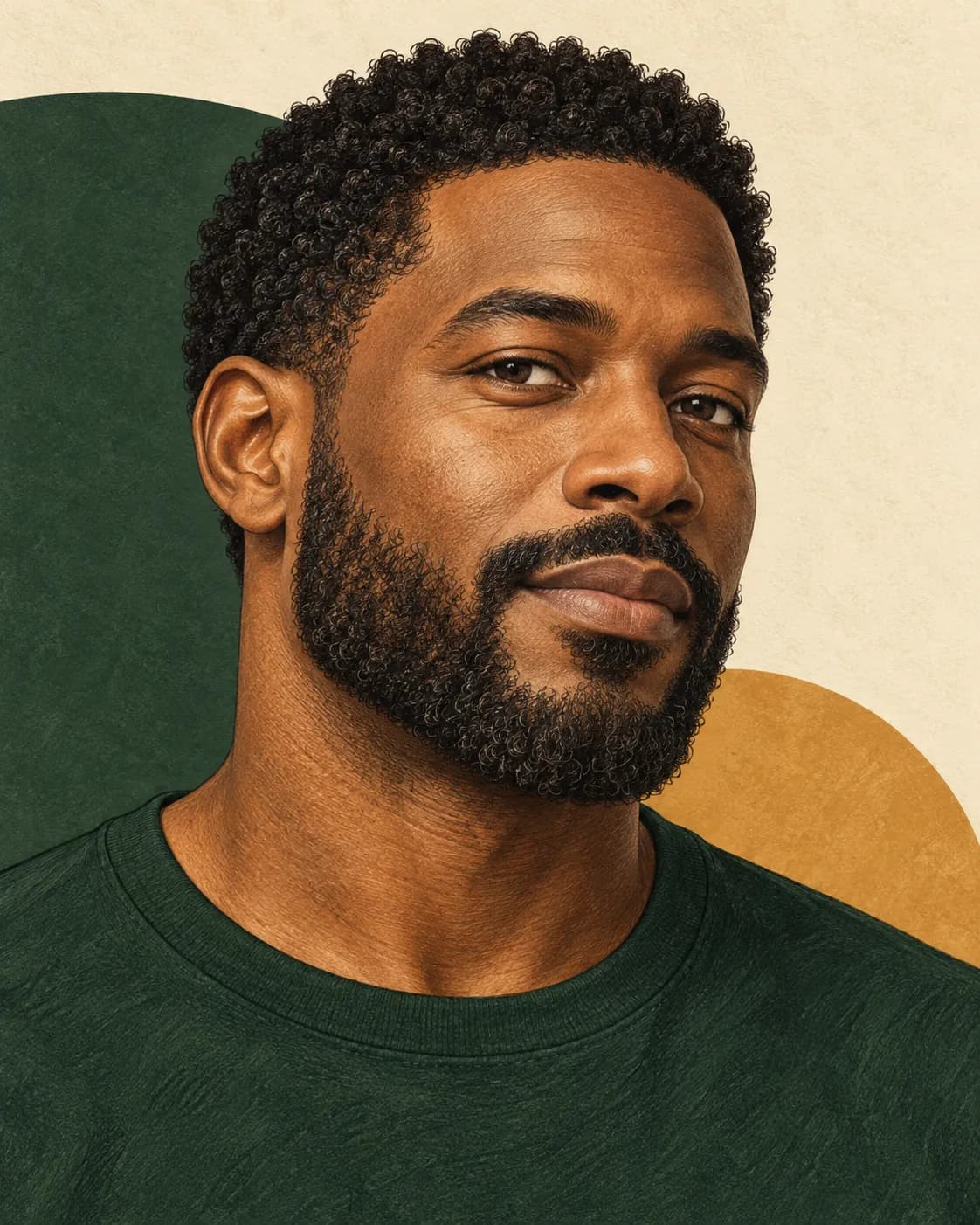
 AI example
Full BeardView guide
This example has short textured full coverage across cheeks, jaw and upper lip; texture and density vary between people.
Recommended Styles
Beard texture, density and coverage differ between Black men too. Choose an outline from your actual growth. If your hair is curly or coiled, adjust combing and upkeep to that texture rather than assuming everyone needs the same routine.
AI previews and grooming results can vary.
These fictional Black men show different beard outlines. Texture, density and coverage vary between people; the pictured version is a reference, not a rule for everyone.
AI exampleThis example has short textured full coverage across cheeks, jaw and upper lip; texture and density vary between people.
 AI example
Chin-only coverage with a shaved upper lip, cheeks and outer jaw; it needs usable growth on the chin.
 AI example
Short facial hairs remain visible across the cheeks and jaw, with skin showing through; this is a stubble example.
 AI example
A narrow jaw band connects the sideburns through the chin; upper lip and cheeks are shaved. It needs a continuous jaw path.
 AI example
A detached mustache sits above a broad chin/front-jaw beard; bare mouth corners separate the two parts.
 AI example
A sculpted mustache and narrow pointed chin beard, with bare mouth corners, cheeks and jaw sides.
 AI example
A separate mustache and small pointed chin shape with narrow short front-jaw arms; both mouth corners stay bare.
 AI example
The mustache connects to the chin beard at both mouth corners; cheeks and outer jaw stay shaved.
Texture and density are individual. Compare stubble, chin-focused shapes and full coverage against the areas where you actually grow hair. A connected mouth ring needs both mouth-corner links; a goatee does not need cheek coverage. Do not infer those connections from ethnicity.
If hair is curly or coiled, detangle gently without pulling. Use a gentle cleanser and choose a conditioner, oil or moisturizer to suit your skin and dryness; oil is not a requirement for everyone. Keep products light and adjust your routine to comfort and length.
A clean line-up can make a short or medium beard look polished, but the cheek and neck lines should still fit your face. Avoid cutting the natural cheek line too low, since it can make the beard look smaller and require frequent correction. A barber can help establish a repeatable outline.
Short boxed beards, stubble, goatees, connected mustaches, and shaped full beards can all work well. The right choice depends on growth pattern, density, face shape, and the amount of edge maintenance you prefer.
Use your beard and skin as the guide. Apply a small amount of beard oil or moisturizer when the hair feels dry or rough, and avoid heavy application that leaves buildup. A gentle wash routine also helps preserve moisture.
Upload a clear photo, choose a beard style, and use the AI generator to preview the look before you commit to growing or trimming it.