Goatee Beard Guide: Chin Width, Edges, and Variations
A goatee concentrates facial hair below the lower lip and across the center of the chin while leaving the cheeks and jaw sides clean. Its compact shape depends on a deliberate chin width, balanced vertical edges, and a clear choice about whether the mustache remains absent or separate.
Try On This Style
- Length
- Kept compact around the lower lip and chin, with the cheeks and jaw sides cleared.
- Maintenance
- Requires balanced side edges, a checked under-chin boundary, and deliberate control of the chin width.
- Could it suit you?
- Worth testing when growth is strongest at the chin, a compact lower-face outline is preferred, and regular edge cleanup feels manageable.
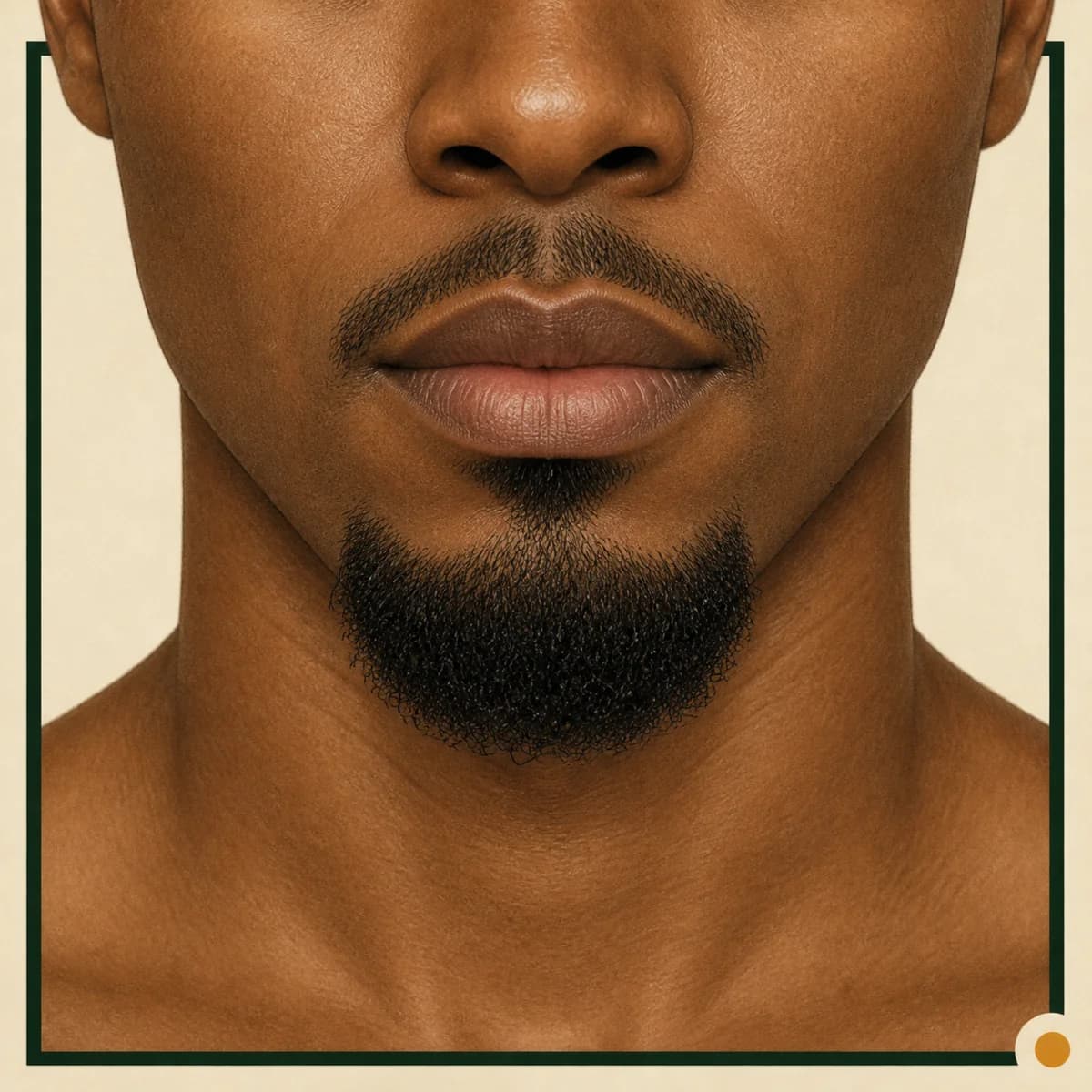
What a Goatee Is
A goatee centers facial hair below the lower lip and over the chin while the cheeks and the sides of the jaw remain clean. The usable width comes from the chin area rather than spreading broadly along the front jaw. That compact footprint is what keeps the style recognizable when viewed from the front.
The name covers more than one mustache choice. A goatee can be worn without a mustache or with a mustache that remains visibly separate. If both mouth corners are joined to the chin section so the hair closes around the mouth, the result reads as a Circle Beard instead of the open, chin-centered version described here.
Could It Suit You?
Start by looking at where your growth is most continuous below the lower lip and across the chin. A stable center section is more useful than broad cheek coverage for this outline. Notice whether the left and right edges can be placed at comparable widths without cutting deeply into stronger growth.
Also consider the outline you want and the maintenance it asks for. A goatee keeps attention near the center of the lower face and leaves a large clean area on the cheeks and jaw sides. That contrast needs deliberate cleanup. Face shape alone cannot guarantee a fit; growth distribution, preferred chin width, and tolerance for maintaining four visible edges are better reasons to try or revise the shape.
How to Trim and Maintain It
Before clearing the sides, establish the width you want to keep on the chin. Mark both vertical edges conservatively, then compare them from a normal viewing distance. Removing the cheeks and jaw sides first can make a narrow mistake difficult to correct, so preserve extra width until the center looks balanced.
Reduce bulk gradually, working with the direction of growth and checking the lower edge as it curves under the chin. Keep that under-chin boundary connected to the visible front section without letting it travel far down the neck. If you retain a mustache, decide before final edging whether it will stay separate; do not leave accidental corner wisps that make the outline ambiguous.
Finish by checking the chin from the front and both slight side views. Small corrections to one vertical edge are usually easier to control than repeatedly widening the opposite side. Clear stray growth before it drifts across the front jaw and starts changing the intended compact footprint.
Use the beard length chart to compare millimeters and check your trimmer’s model-specific settings before shortening the body. Length and chin width are separate choices.
Common Goatee Mistakes
The most common structural mistake is cleaning the sides before deciding the chin width. This can produce an overly narrow strip or encourage repeated corrections that make the two vertical edges uneven. Another is allowing the lower section to spread across the front jaw until it begins to resemble the broader base of a Balbo.
An undefined under-chin boundary can make the front look tidy while the profile appears unfinished. If a mustache is present, inconsistent mouth-corner cleanup can also create a partial connection that is neither clearly open nor a deliberate Circle Beard. Check the whole outline under ordinary lighting rather than judging one edge from very close range.
Goatee Compared with Circle Beard, Van Dyke, and Balbo
A Circle Beard closes the mustache-to-chin connection around both sides of the mouth. A goatee may have no mustache or a separate one, but its defining visual weight stays centered below the lower lip and on the chin. That open space at the corners is an important difference whenever a mustache is retained.
The BeardStyles Goatee preview keeps the upper lip clear. Use the beard styles without a mustache guide to compare that option with Soul Patch, Chin Strap, Dutch Beard, and Mutton Chops by retained coverage.
A Van Dyke also keeps the mustache separate, but pairs it with a narrower, clearly pointed chin section and deliberate skin gaps at the mouth corners. A Balbo spreads farther across the chin and front jaw, usually includes a visible soul-patch area, and keeps its mustache separate. Compared with both, the goatee is the more compact, chin-centered outline.
Related beard styles




Related guides
Try On This Style
AI previews are illustrations, not guaranteed results. Your facial hair growth, face, lighting, and photo can change the preview and the result you can achieve with trimming.
Try On This Style