Balbo Beard Guide: Separate Mustache and Broader Lower Shape
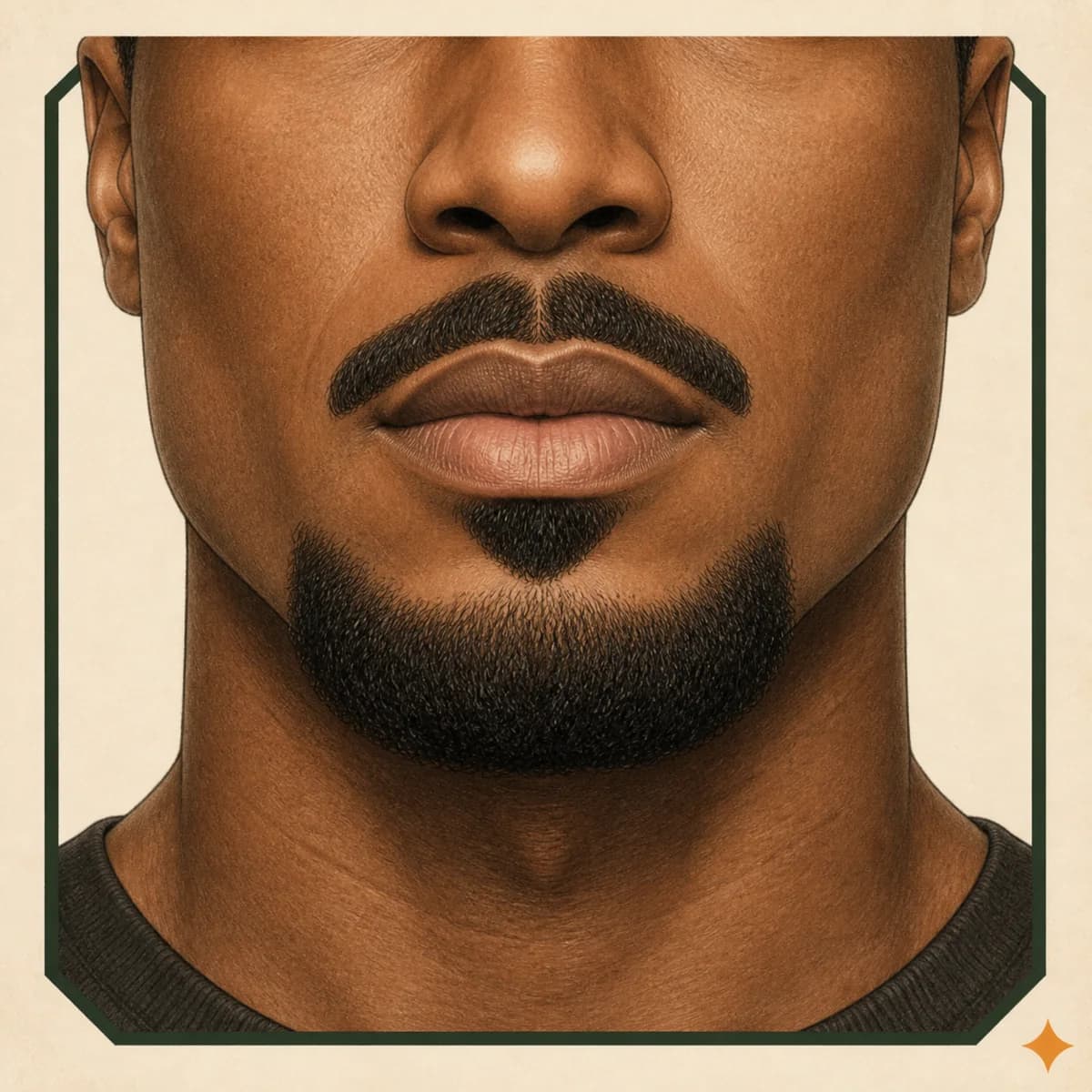
A Balbo keeps the mustache separate above a visible soul-patch area and a broader beard across the chin and front jaw, with no connection to the sideburns. Its shape depends on clear upper-side gaps, balanced lower width, and enough restraint to keep the beard from drifting into full coverage.
Try On This Style
- Length
- Broader than a centered goatee, covering the chin and front jaw while stopping before the sideburns.
- Maintenance
- Requires clear upper-side gaps, a separate mustache, and regular width checks across the lower section.
- Could it suit you?
- Worth testing when chin and front-jaw growth supports a broad lower outline, separation is preferred, and multiple boundaries can be maintained.
What a Balbo Is
A Balbo uses a separate mustache above a visible soul-patch area and a broader beard across the chin and front jaw. The lower section stops before the sideburns, leaving clean gaps along the upper sides. These breaks prevent it from reading as a connected full beard.
Its lower footprint is wider than a centered goatee and less pointed than a Van Dyke. The mustache remains visually independent rather than joining at the mouth corners. From the front, the broad lower section should look intentional on both sides of the chin instead of like a narrow center shape that has grown outward unevenly.
Could It Suit You?
Assess the chin and front-jaw areas together. The Balbo can use growth beyond the center of the chin, but it still needs a clear stopping point before each sideburn. Check whether that broader lower area can form a reasonably balanced outline while the upper cheek and side gaps remain visible.
Consider whether you want a substantial lower shape without connected cheek coverage. The style asks you to maintain the separate mustache, soul-patch area, upper-side gaps, and lower width as distinct decisions. No face shape guarantees that these boundaries will work; growth distribution, the preferred breadth of the lower section, and tolerance for maintaining several clean breaks are the practical factors.
How to Trim and Maintain It
Set the clean upper-cheek and side gaps before refining the lower outline. Mark where the beard will stop short of each sideburn, leaving a conservative amount of lower width at first. Then compare how far the beard extends across the left and right front jaw so one side does not dominate.
Keep the mustache clearly separate at both mouth corners and preserve the soul-patch area beneath the lower lip. Reduce the lower bulk gradually, following the broad shape rather than carving a narrow point. Check from the front and slight side views to make sure the jaw extensions end at comparable positions.
On later cleanup, protect the upper-side gaps and mustache separation before trimming the body. Remove stray hairs that climb toward the cheeks or sideburns, but avoid repeatedly moving the lower edge inward. The aim is to retain a broad, balanced front-jaw section without allowing it to expand into connected full-beard coverage.
Common Balbo Mistakes
Allowing the lower beard to meet the sideburns removes a defining break and makes the outline read more like a full beard. Letting the mustache connect at the corners creates a second ambiguity. Both changes can happen gradually when edge cleanup focuses only on length and ignores the empty spaces.
Another common problem is balancing the front jaw by widening the narrower side again and again. That can produce an oversized lower shape rather than a controlled correction. A lower section trimmed into a sharp, narrow point may instead resemble a Van Dyke. Establish the intended width first, compare both endpoints, and adjust in small amounts.
Balbo Compared with Van Dyke, Goatee, and Circle Beard
A Van Dyke keeps a separate mustache but uses a narrower lower section that finishes in a clear point. A Balbo is broader across the chin and front jaw, with the soul-patch area participating in a more substantial lower composition.
A goatee concentrates hair near the center below the lower lip and on the chin, so it does not spread as far across the front jaw. A Circle Beard joins the mustache to the chin on both sides and encloses the mouth. The Balbo keeps those mouth-corner areas open while placing more visual weight below and beside the chin.
For a narrower lower outline with short front-jaw arms and a centered point, compare the Anchor beard. It keeps the separate mustache while reducing the broad lower footprint of the Balbo.
Related beard styles



Related guides
Try On This Style
AI previews are illustrations, not guaranteed results. Your facial hair growth, face, lighting, and photo can change the preview and the result you can achieve with trimming.
Try On This Style