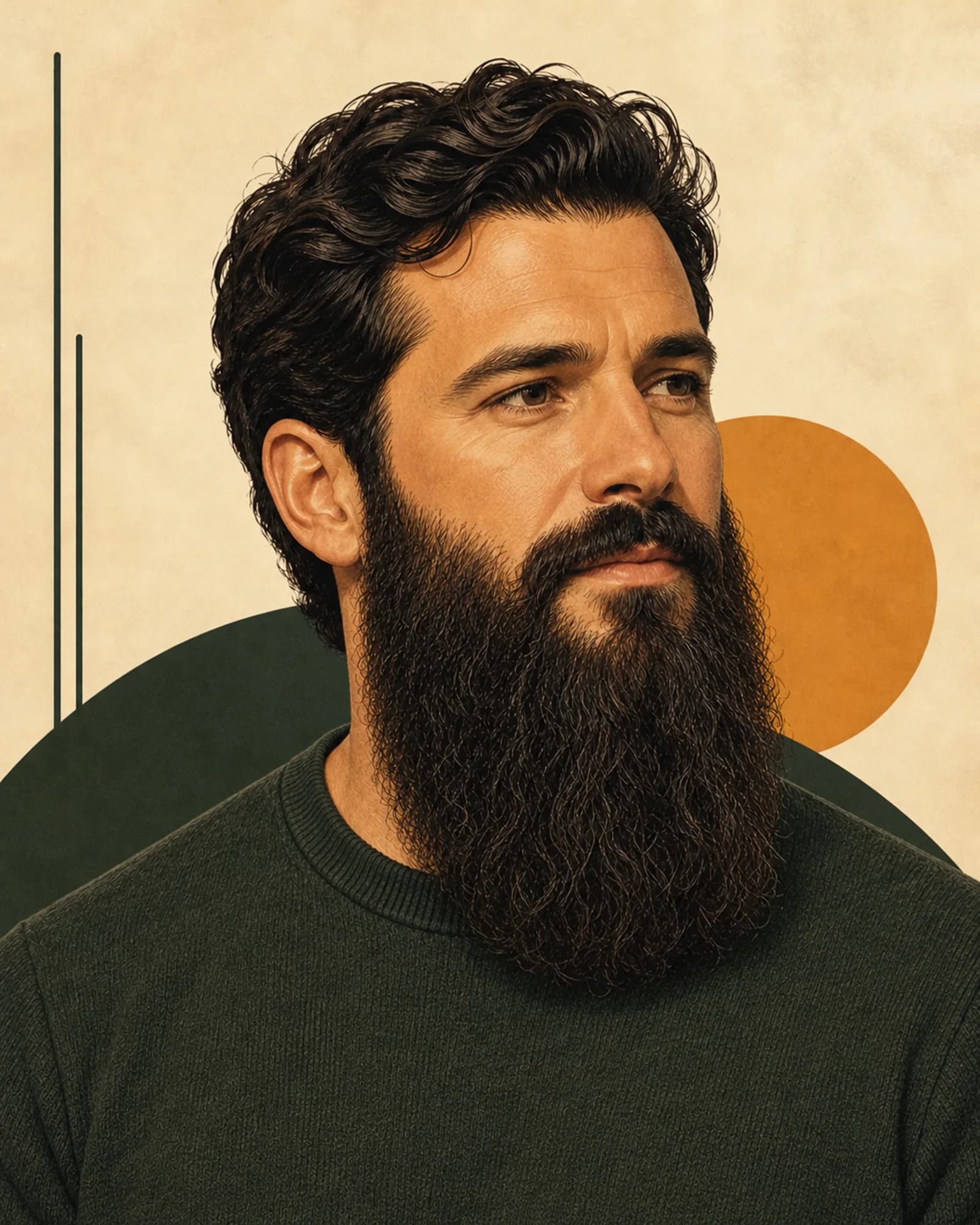
 AI example
Full BeardView guide
Connected cheeks, jaw and mustache with a broad rounded body reaching toward the chest; this is the long version.
Recommended Styles
Long beards need visible downward length, not just a larger area of coverage. Compare rounded, tapered and forked bodies, then consider other-length partial outlines separately.
AI previews and grooming results can vary.
Short, medium and long have no universal millimeter boundaries. Density, curl and camera angle also affect appearance. Compare visible bulk and outline in the images, then measure dry, combed hair and record the sides and chin separately. Try-on selects a shape, not an exact length.
Read the millimeter chart and trimmer guidanceCompare beard bodies and chin projection below the jaw. Choose a rounded, tapered or forked lower edge, then compare side volume with chin length.
AI exampleConnected cheeks, jaw and mustache with a broad rounded body reaching toward the chest; this is the long version.
 AI example
The sides taper toward one visibly projecting chin point; compare chin length with the sides.
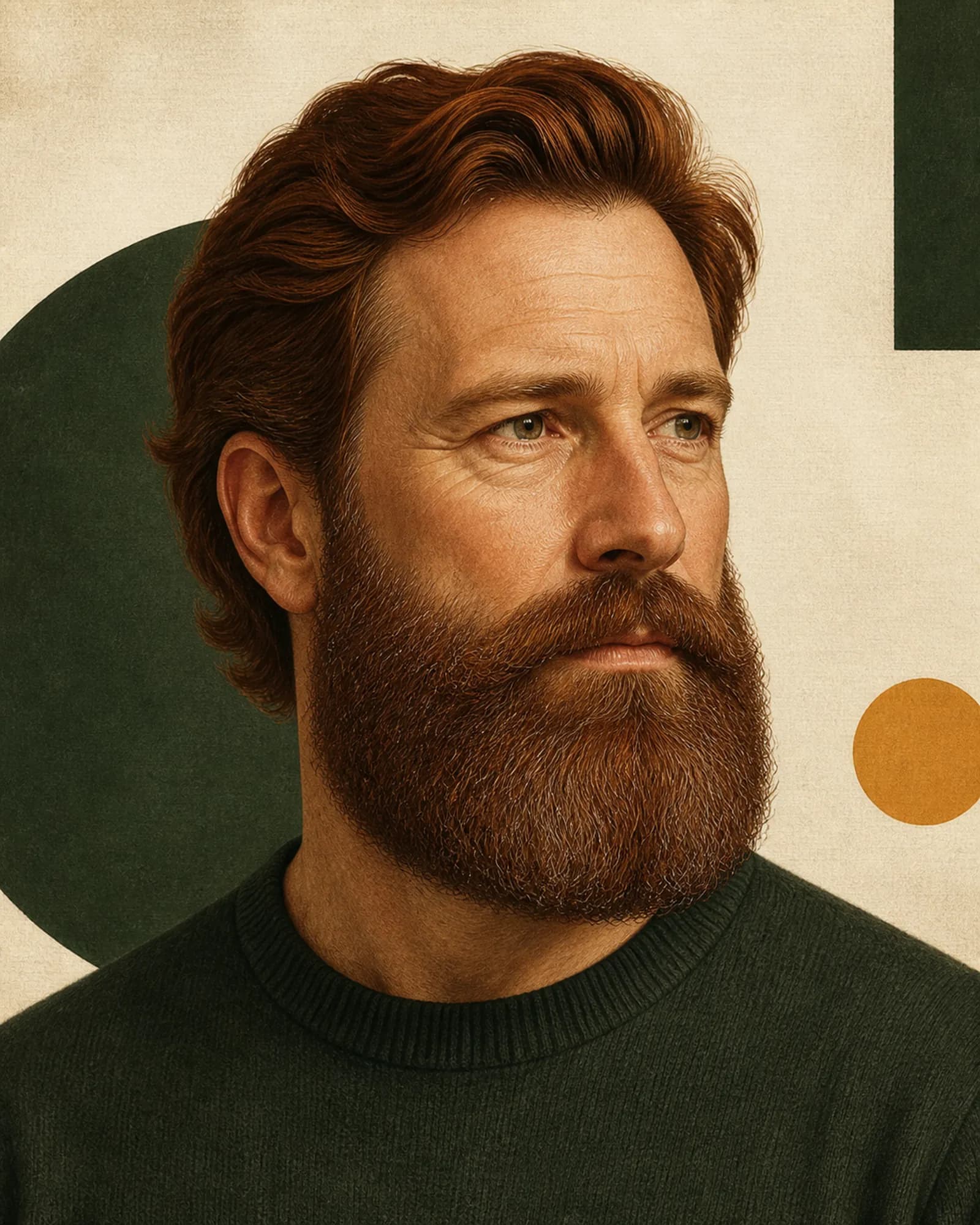 AI example
A full body below the jaw with a broad rounded bottom, rather than a single point.
 AI example
Connected mustache and cheeks with a long body and loose natural lower edge.
 AI example
One complete upper beard body divides into two visible lower ends; preserve both tips.
 AI example
A bare upper lip and mouth corners above connected cheeks, jaw and chin, with a broad rounded long body.
These four pictures show compact bodies or partial side and mustache shapes, not fixed long-beard examples. If you like their coverage, read the specific guide and choose the actual length separately.
 AI example
The image shows a compact rounded beard and styled mustache; the name does not prove a long beard.
 AI example
Short side sections connect to the sideburns; the upper lip and central chin are bare. This is a side-coverage reference.
 AI example
The mustache connects the side sections while the central chin stays bare; no long chin body is pictured.
 AI example
The pictured version pairs an upturned mustache with a separate compact pointed chin; styled upper-lip hair is not a long beard body.
Six examples above show longer beard bodies or chin projection; four more are other-length outline references. Read each style guide or try on its outline, then choose your actual hair length.
Long beard styles need a plan because extra length magnifies the outline. A ducktail concentrates length at the chin, while Garibaldi and Bandholz shapes keep more fullness through the sides. Start with an even base, then decide whether your goal is a rounded, tapered, or split bottom before allowing the beard to grow freely.
Patience is only useful when the hair stays healthy. Wash gently, condition regularly, comb through tangles rather than pulling them, and trim damaged ends when necessary. Beard oil or balm can help with dryness and flyaways, but the product should support the shape rather than hide an uneven outline.
A long beard needs ongoing checks. Treat the hanging lower edge separately from shaved-area borders, and compare the sides and bottom after combing. Bring a reference picture to a barber if the shape is difficult to reproduce; the length also needs to fit your routine.
Growth speed varies widely, and a long beard usually takes several months or more. Expect uneven stages and use regular light trims to keep the outline intentional while it grows.
A rounded full beard with an even bottom is often simpler than a sharply pointed or split style. The easiest option is the shape you can comb, condition, and trim consistently.
Upload a clear photo, choose a beard style, and use the AI generator to preview the look before you commit to growing or trimming it.