Garibaldi Beard Guide: Natural Volume and a Broad Rounded Bottom
A Garibaldi is a wide, connected full beard with substantial natural volume and a broad rounded bottom. Its deliberate boundaries keep the shape readable, but light surface cleanup preserves fullness instead of turning it into a narrow, pointed, or heavily sculpted beard.
Try On This Style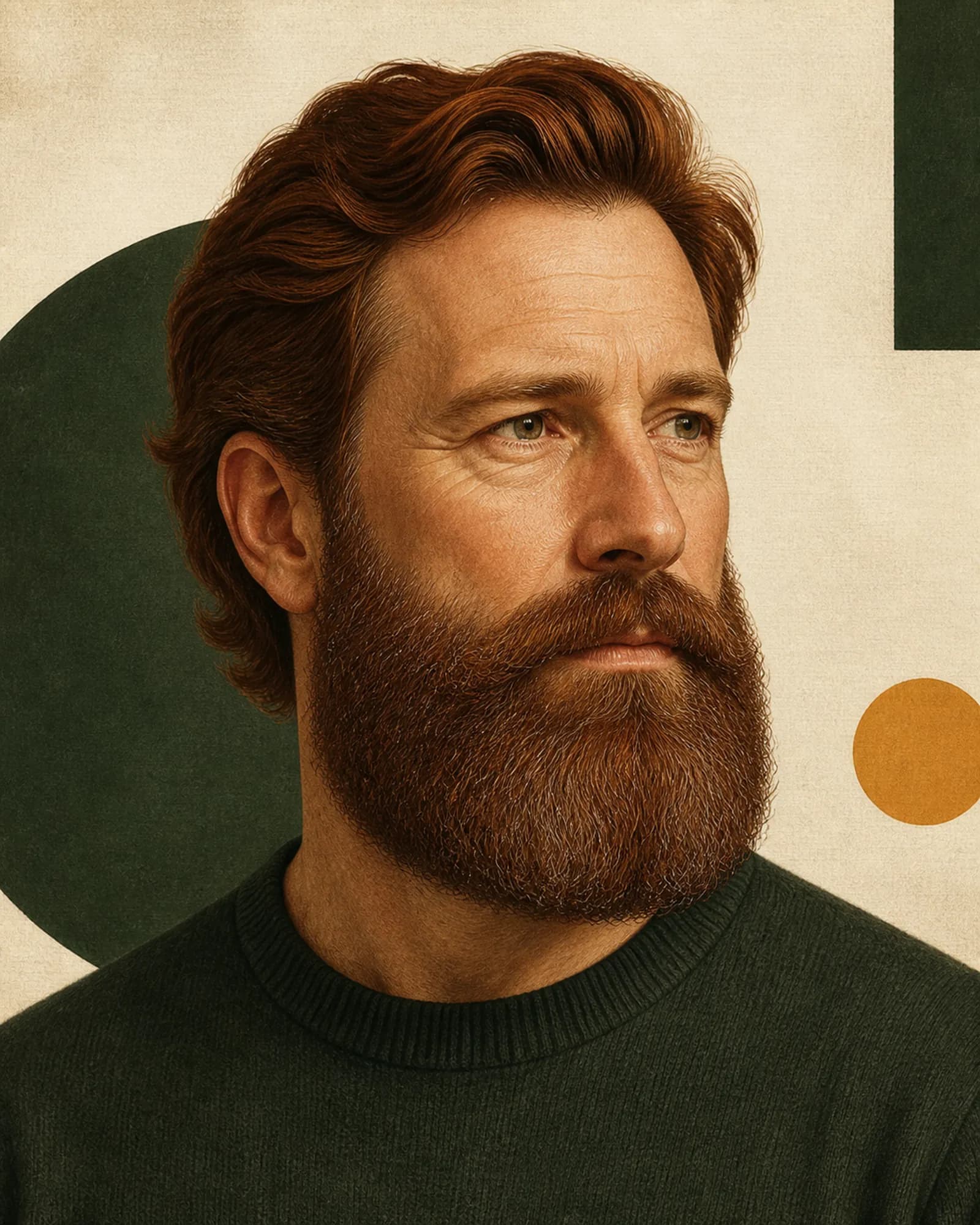
- Length
- Carries substantial connected volume through the sides and chin, ending in a broad rounded bottom rather than a point.
- Maintenance
- Requires a chosen maximum width and rounded lower boundary, deliberate cheek, moustache, and neck lines, and restrained surface cleanup.
- Could it suit you?
- Worth considering when connected coverage can support visible width and volume, a broad natural silhouette is preferred, and its boundaries can be maintained without over-sculpting.
What a Garibaldi Beard Is
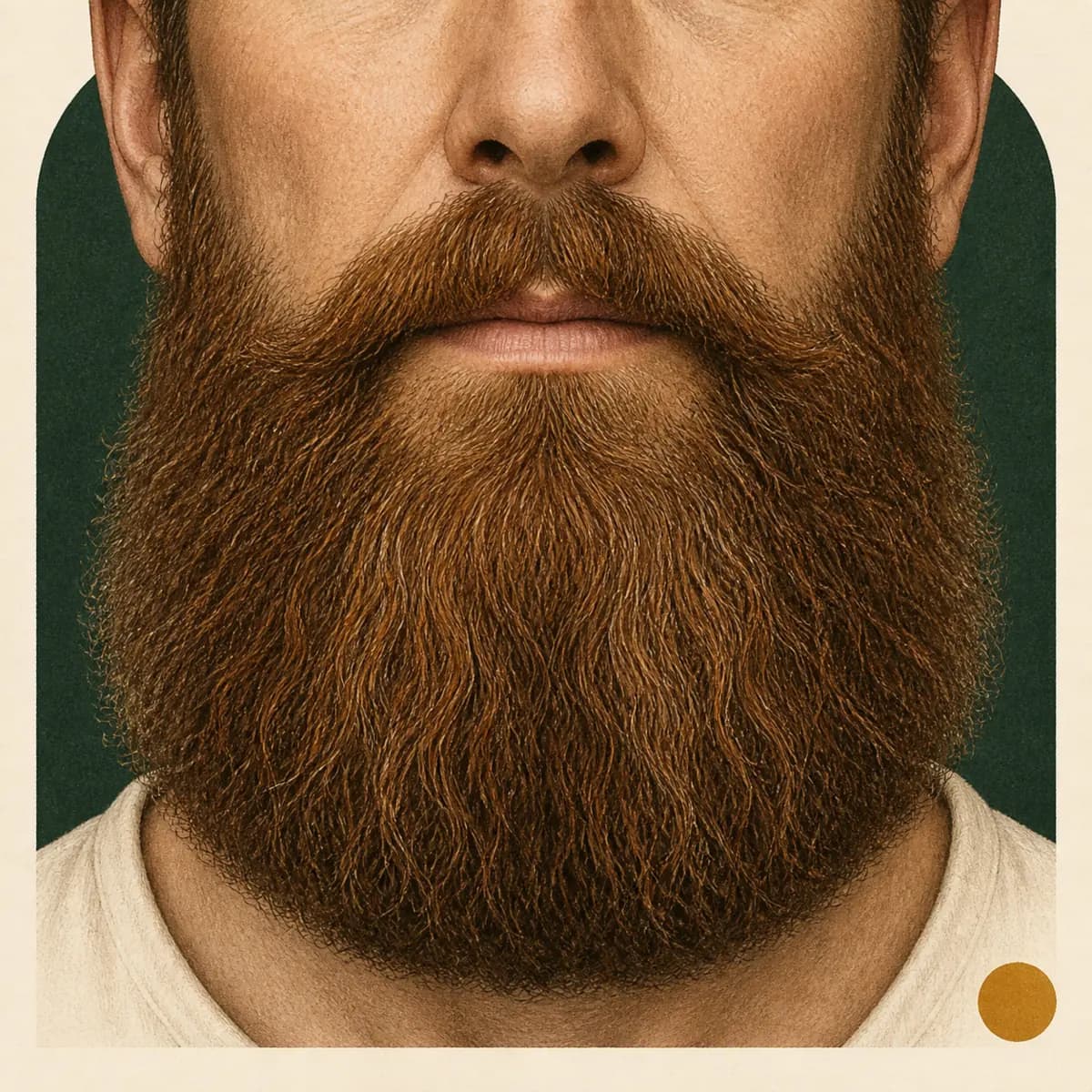
A Garibaldi is a wide, natural-looking full beard with connected sideburns, cheeks, moustache, jaw, and chin. It carries substantial volume through the sides and finishes in a broad rounded bottom. The lower contour is intentionally expansive rather than narrowing toward one center point.
“Natural” does not mean leaving every edge undefined. The moustache, cheek line, neckline, maximum width, and rounded bottom still form a deliberate outline. The distinction is in how the interior and surface are handled: enough fullness remains for the beard to look broad and substantial instead of being closely sculpted into a compact shape.
Could It Suit You?
Assess whether the sideburn, cheek, jaw, moustache, and chin areas can form connected coverage, then consider whether the available side and lower growth can carry the intended width. A broad bottom needs support across more than the center of the chin. If the outer sections are much lighter, choosing a moderate Full Beard outline may preserve stronger-looking coverage better than repeatedly expanding the edge.
Also decide whether you actually want visible volume and the maintenance it brings. A Garibaldi asks you to preserve fullness while still monitoring width, lower roundness, moustache comfort, and cheek and neck boundaries. Coverage, desired silhouette, and willingness to maintain that balance are the relevant conditions. The illustrated person's age, ethnicity, or face shape is not a promise that the style will suit someone else.
How to Trim and Maintain It
With the beard dry, comb the sides outward and the lower section downward into the way you normally wear it. Before detail trimming, decide the maximum side width and sketch a broad rounded lower edge with minimal cuts. Checking these two large boundaries first helps prevent small cleanup decisions from slowly narrowing the entire beard.
Remove only the hairs that clearly project beyond the chosen surface. Alternate between sides, re-comb, and check from a normal distance. Light surface cleanup keeps the shape controlled while preserving the layers that create natural fullness. Avoid repeatedly cutting into the interior merely because individual hairs follow different directions.
Once the width and bottom are stable, make the moustache, cheek, and neck boundaries deliberate. Keep the connected structure intact and clear only what falls outside the chosen lines. Review the front, both profiles, and the underside before making final corrections; the bottom should remain broad and rounded rather than drifting into a point.
Common Garibaldi Mistakes
Detail trimming before choosing the maximum width and bottom curve often reduces one patch at a time until the beard loses its broad silhouette. Excessive surface cleanup can have the same effect by stripping away the layered volume that makes the style look natural. Define the large shape first and treat isolated flyaways as a finishing step.
Letting all boundaries disappear is a different mistake: an unplanned moustache edge, cheek line, or neckline can make the beard look unfinished rather than intentionally full. Narrowing the lower sides toward the chin changes the contour toward a Ducktail, while repeatedly compressing side volume produces a more moderate Full Beard. Chasing every small density difference can also create real asymmetry where only natural variation existed.
Garibaldi Compared with Ducktail and Full Beard
A Ducktail controls the sides and tapers toward one centered point. Garibaldi preserves more side volume and ends in a broad rounded bottom, so its lower edges spread outward rather than converge.
A moderate Full Beard shares the same connected coverage but is generally less deliberately wide and carries less substantial lower volume. Its rounded-natural bottom supports overall balance without making breadth the main feature. Garibaldi is the wider, fuller, and rounder choice; that difference should remain visible even after the surface and boundaries are tidied.
Related beard styles


Related guides
Try On This Style
AI previews are illustrations, not guaranteed results. Your facial hair growth, face, lighting, and photo can change the preview and the result you can achieve with trimming.
Try On This Style