Bandholz Beard Guide: Long Full Growth with a Loose Natural Outline
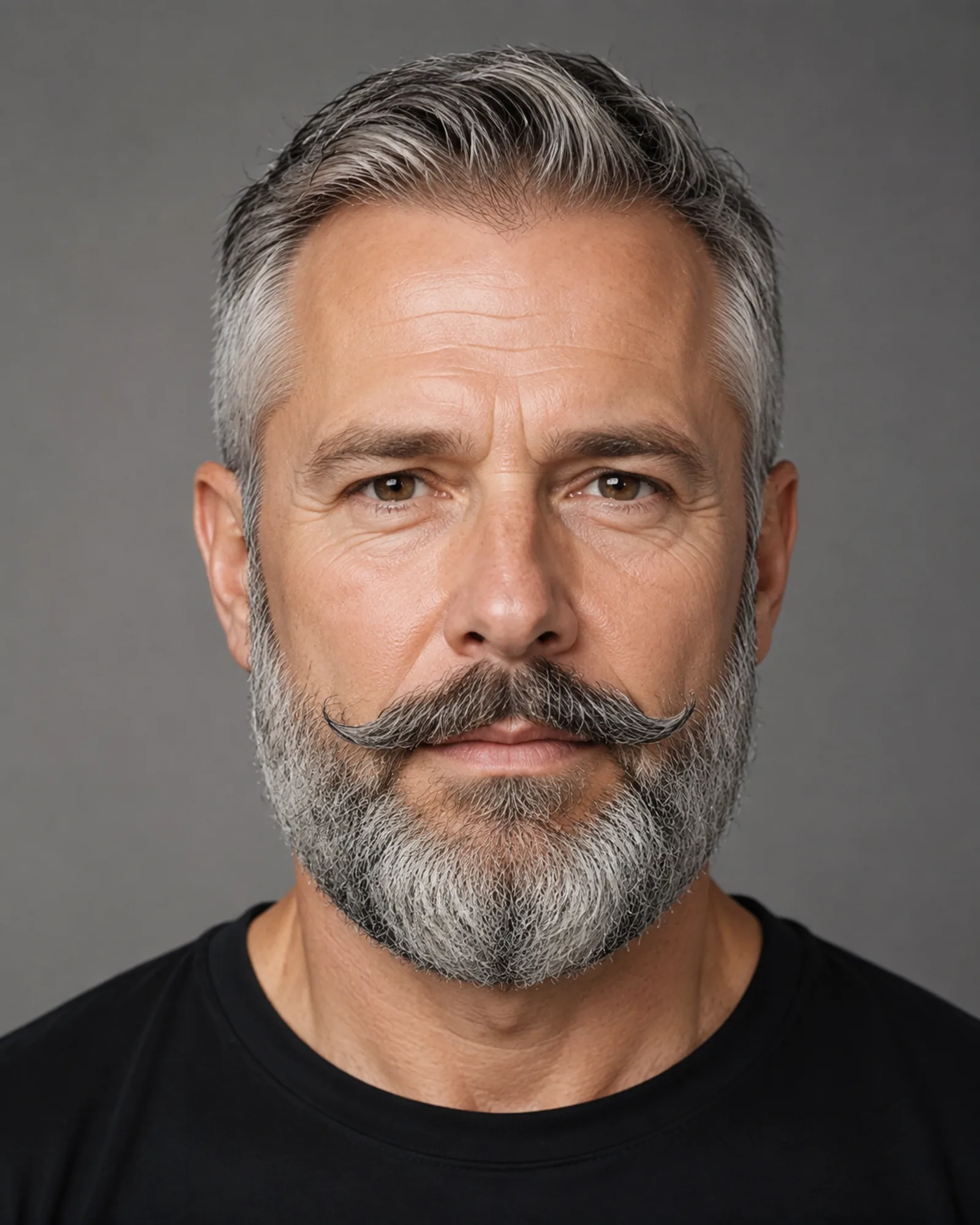
A Bandholz is a long, full connected beard covering sideburns, cheeks, jaw and chin with a substantial integrated mustache. Its lower silhouette stays loose and naturally variable; maintenance removes high strays and hair below the natural neckline without repeatedly sculpting a tight geometric edge.
Maintained by BeardStylesContent updated:
Latest recorded revision: Distinguished Beardbrand’s definition without trimming or shaping from BeardStyles’ selective maintenance guidance.
Content and source methodSave this style in this browser to compare it later. Saved styles do not sync across devices, and clearing browser data removes them.

- Length
- Preserve accumulated lower length and natural variation; trim damaged or isolated ends without forcing a short uniform curve.
- Maintenance
- Detangle and assess the complete dry silhouette before removing bulk, high cheek strays or hair below the natural neckline.
- Could it suit you?
- A long-term option for connected full-beard growth when you accept natural density differences and prefer selective tidying over frequent geometric reshaping.

What a Bandholz Beard Is
The Bandholz on BeardStyles is a long full beard with connected sideburns, cheeks, jaw, chin and mustache. The lower section retains substantial length and a loose natural silhouette rather than a sharp point or tightly clipped round. Grooming is selective: remove high cheek strays and hair below the natural neckline while preserving the beard's overall scale.
Beardbrand's own account describes the namesake style as a long beard left to grow naturally without trimming or shaping, and notes that every beard differs. The selective maintenance steps below are BeardStyles' own adaptation, rather than instructions from that source. Our illustration and preview use the full coverage and loose outline described here.
Decide Whether the Commitment Fits
Check connections across the sideburns, cheeks, jaw and chin, but do not expect every area to carry equal density. With more length, stronger zones may overlap lighter ones. That can improve visual continuity without changing actual follicle distribution. Photographs taken in consistent light are more useful than promises based on elapsed time.
The beard's scale may influence perceived facial proportions, yet there is no guaranteed face-shape result. Consider daily washing, drying, detangling and how the length interacts with collars or protective equipment. If you want a substantial beard with a more controlled endpoint, the Garibaldi is a practical comparison.
How to Preserve Length While Trimming
- Clean, fully dry and detangle the beard. Comb it outward to release trapped hair, then let it settle. Do not assess final length while wet or stretched.
- Identify the natural lower silhouette and mark only isolated ends that sit clearly outside it. Use scissors or a conservative setting; the length chart can document guarded side areas.
- Reduce excessive side bulk in small downward passes without chasing the entire beard to one length. Preserve the connection from sideburn through cheek and jaw.
- Tidy only high cheek strays and establish a low natural neckline below the visible beard body. Avoid cutting an artificial shelf high behind the chin.
- Comb the mustache outward, clear the lip as needed and blend it into the full beard. Recheck the settled silhouette after movement before making a second structural pass.
Maintenance does not mean “never trim.” It means each cut has a reason: comfort, a detached end, a broken outline or disproportionate bulk. Record those reasons so small cleanups do not gradually convert the beard into a shorter shaped style.
Reading a Loose Outline
Natural does not mean every stray must remain. The body should look coherent at conversational distance, while the lower edge can contain soft variation. The mustache stays full and connected rather than being carved out as a separate styled layer.
AI illustrations can regularize density and make a loose edge look more orderly than real hair. Use the contour to understand full coverage and relative length, then judge your own beard after it has dried and settled in normal conditions.
Common Bandholz Mistakes
Cutting a crisp horizontal bottom removes the loose silhouette and often sacrifices more length than intended. Trimming wet hair can create a similar surprise after it dries and contracts. Another mistake is raising the neckline until it becomes visible behind the beard from the front.
At the opposite extreme, calling all unattended growth a finished Bandholz overlooks care and coherence. Detangling, selective end removal and a considered neckline can preserve a natural look without allowing isolated sections to dictate the outline.
Bandholz Compared with Verdi and Garibaldi
The Verdi is shorter and more deliberately rounded, with a styled mustache that sits visibly above the beard. Choose it when controlled geometry and a distinct upper element are priorities.
The Garibaldi keeps a broad natural round at moderate length and integrates the mustache. It offers fullness with a clearer lower boundary. The Bandholz carries more accumulated length and tolerates a looser edge; choose it when selective restraint is part of the design, not merely a temporary stage before shaping.
Related beard styles


Related guides
Try On This Style
AI previews are illustrations, not guaranteed results. Your facial hair growth, face, lighting, and photo can change the preview and the result you can achieve with trimming.
Try On This Style