Verdi Beard Guide: A Rounded Beard with a Prominent Styled Mustache
The Verdi combines a short, rounded full beard over the cheeks, jaw and chin with a prominent groomed mustache whose tips sit clearly above the beard. Its controlled lower edge and deliberately styled upper element create a two-level silhouette within otherwise full connected coverage.
Maintained by BeardStylesContent updated:
Latest recorded revision: Added the style definition, growth requirements, maintenance guidance, common mistakes and related-style comparisons.
Content and source methodSave this style in this browser to compare it later. Saved styles do not sync across devices, and clearing browser data removes them.

- Length
- Keep the beard controlled and rounded while preserving separate styling length in the mustache tips.
- Maintenance
- Comb the beard into its natural fall and style the mustache before judging either outline.
- Could it suit you?
- Works best with connected full-beard coverage and enough mustache length to sit visibly above the beard after grooming.
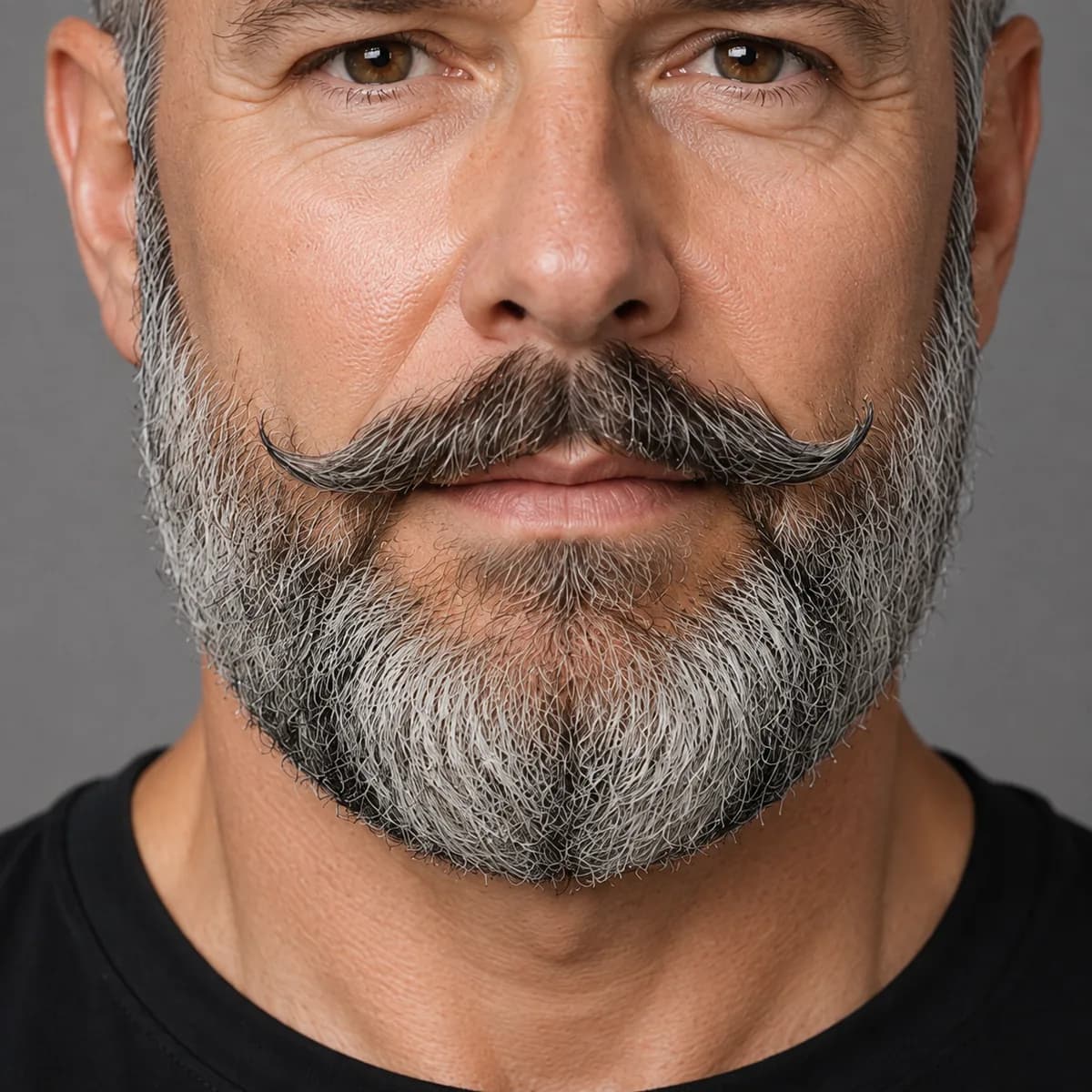
What a Verdi Is
The Verdi on BeardStyles is a full beard with a tidy rounded bottom, accompanied by a prominent mustache whose styled tips sit above the beard rather than disappearing into it. Cheeks, jaw and chin remain covered. Only high cheek strays and hair below the rounded neckline are cleared.
Beardbrand's style overview describes its Verdi with a rounded beard and styled handlebar-like mustache. Exact lengths in brand descriptions are examples, not requirements here. The local distinction is proportional: controlled rounded beard below, visibly groomed mustache above.
Assess the Two Components
First check whether sideburns, cheeks, jaw and chin connect into a credible full beard. Then test whether the mustache tips can be directed outward and held above the beard. A strong beard with a short integrated mustache will read closer to a Garibaldi; a strong mustache cannot conceal major breaks in the full-beard field.
The rounded lower shape can alter perceived proportions, but no face-shape category guarantees a result. Decide how much width and depth you want before removing length. For density limitations, compare the patchy beard guide; it offers footprint choices without promising that thin regions will change.
How to Trim the Rounded Beard and Mustache
- Dry and comb the beard outward, then down into its natural fall. Set the mustache in its intended direction. Use the length chart to document any guarded areas.
- Establish the rounded bottom from the center toward both rear-jaw corners. Preserve extra depth at first and compare the curve from the front and both profiles.
- Reduce side bulk in downward passes without turning the lower edge square. Clean high cheek strays and set a curved neckline that supports, rather than cuts into, the visible beard body.
- Comb the mustache outward and style the tips above the beard. Remove only hairs that cross the lip or refuse the intended direction; do not trim the tips while they hang unstaged.
- Compare the mustache width with the beard width, then make small finishing cuts. Correct a lopsided lower curve before shortening the entire beard.
The mustache may need daily resetting while the beard outline changes more slowly. Separate routine styling from structural trimming. A product can hold direction but cannot create missing length or density.
Contour and Separation
Although the facial hair is connected, the mustache should remain visually legible as its own groomed element. The beard bottom is rounded and controlled, without the long loose lower growth of a Bandholz. Smooth transitions at the sideburns prevent the beard from looking like a round chin block attached to narrow sides.
Use the contour illustration to compare hierarchy. The AI image captures one styled arrangement; real mustache tips may settle differently with humidity, texture and movement, and results vary throughout the day.
Common Verdi Mistakes
Trimming the mustache flush with the beard erases the defining upper layer. Letting long tips droop into the beard has a similar effect even when length remains. Style first, cut second.
An over-rounded beard can become a small ball with abrupt sides. Build the curve through the jaw rather than only beneath the chin. Avoid chasing one sparse cheek by lowering both cheek lines until full-beard coverage becomes unnecessarily narrow.
Verdi Compared with Garibaldi and Bandholz
The Garibaldi uses a broader natural rounded bottom and a mustache integrated into the beard. Choose it when a substantial but less separated, less styled silhouette better fits your routine.
The Bandholz is longer, looser and more natural at the lower edge, with a full connected mustache. Choose it when preserving accumulated length and natural variation matters more than a controlled round. The Verdi is the tailored option of the three: shorter rounded body plus a deliberately prominent mustache.
Related beard styles



Related guides
Try On This Style
AI previews are illustrations, not guaranteed results. Your facial hair growth, face, lighting, and photo can change the preview and the result you can achieve with trimming.
Try On This Style