Full Beard Guide: Connected Coverage and Balanced Shape
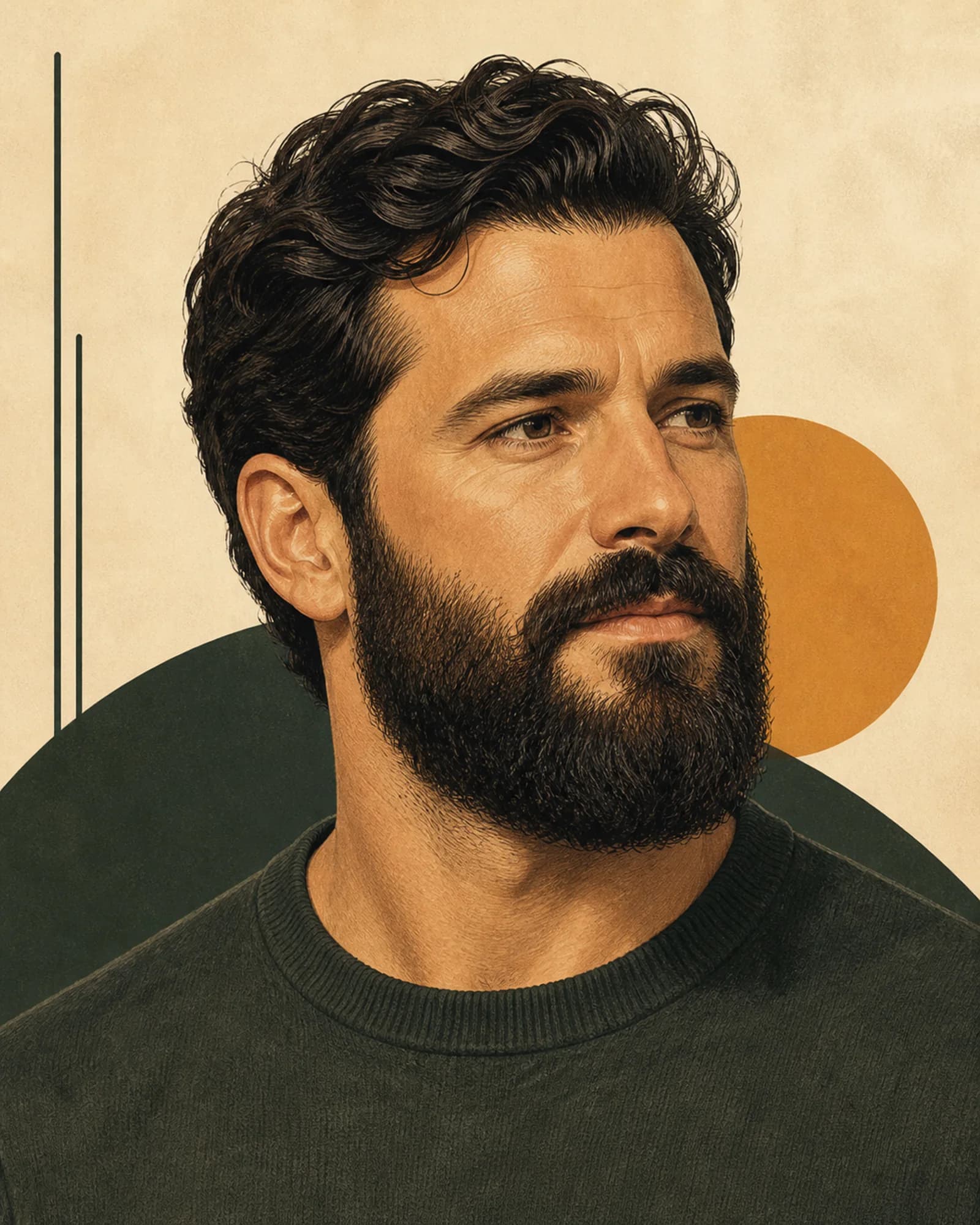
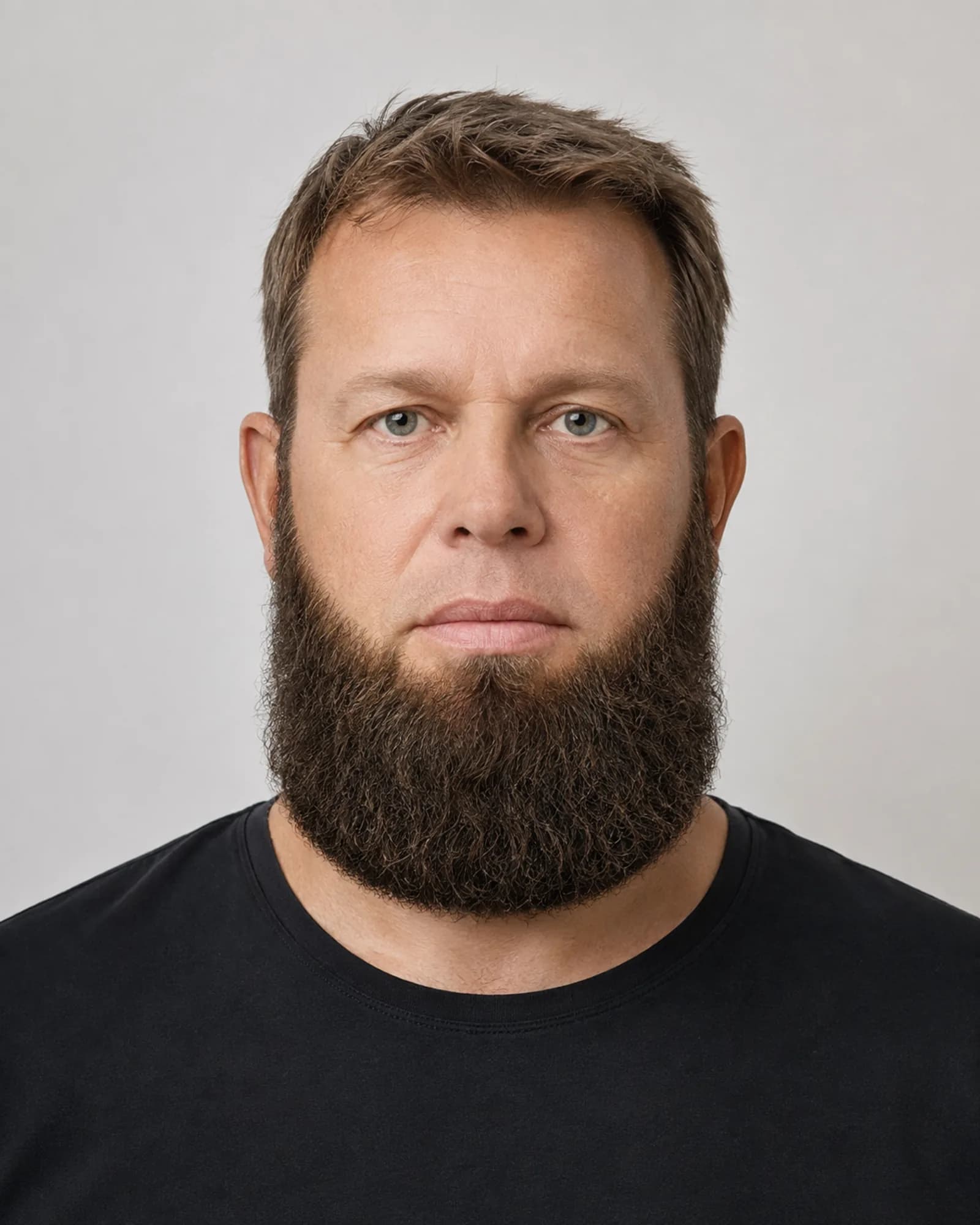
A Full Beard connects the sideburns, cheeks, moustache, jaw, and chin into one continuous shape. This guide focuses on a moderate, balanced outline with a rounded-natural lower edge rather than the centered point of a Ducktail or the deliberate width of a Garibaldi.
Maintained by BeardStylesContent updated:
Latest recorded revision: Added the neckline guide for checking the lower border from the front and sides before clearing the neck.
Content and source methodSave this style in this browser to compare it later. Saved styles do not sync across devices, and clearing browser data removes them.
- Length
- Enough length to join the main growth areas into a continuous shape while keeping the lower outline moderate and balanced.
- Maintenance
- Requires deliberate cheek and neck boundaries, gradual dry trimming, and regular checks of bulk and connectors from both sides.
- Could it suit you?
- Worth considering when the main beard areas connect, a moderate continuous silhouette is preferred, and maintaining several outer boundaries feels manageable.
What a Full Beard Is
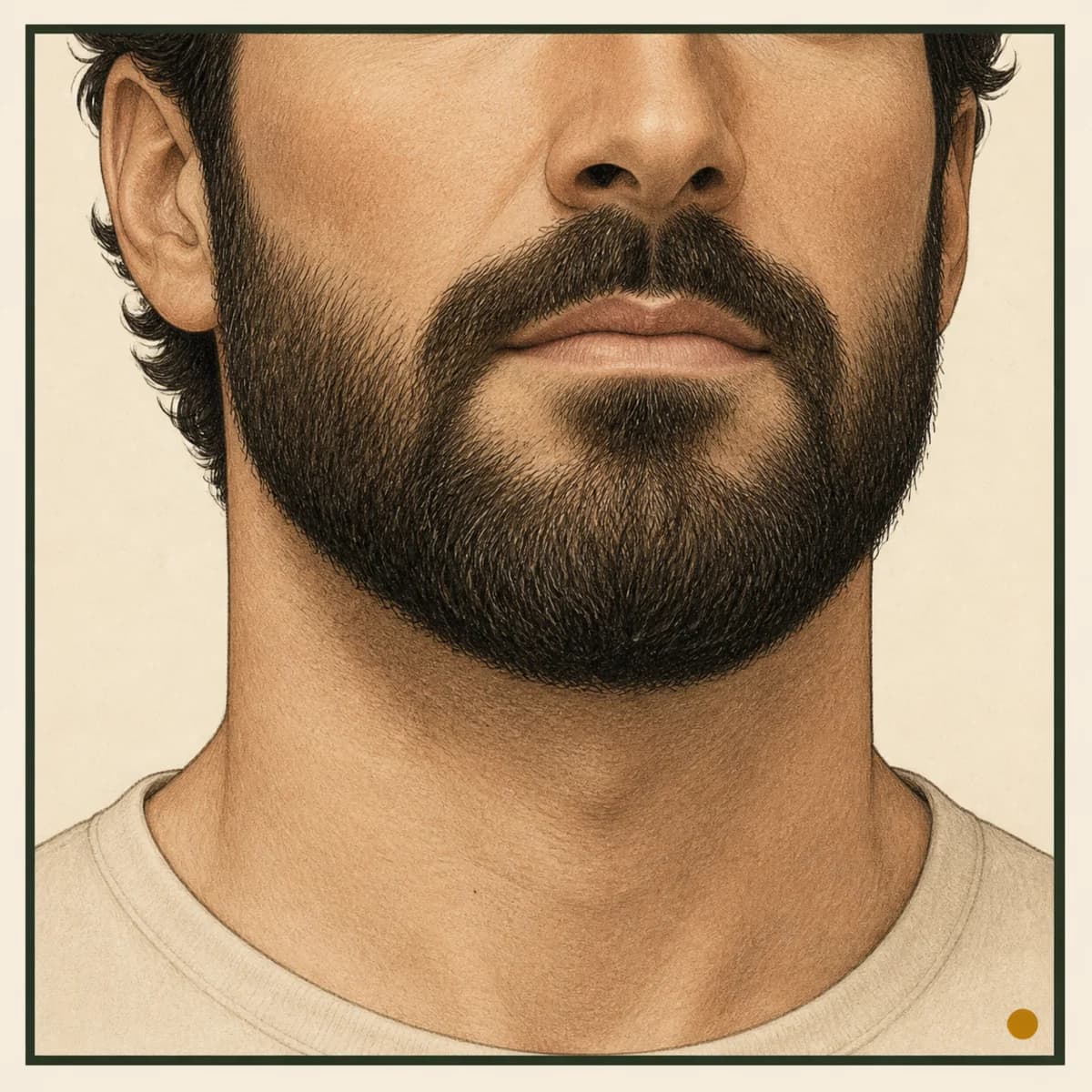
A Full Beard uses continuous coverage from the sideburns through the cheeks, moustache, jaw, and chin. The connectors at the mouth and sideburns belong to the overall structure rather than reading as separate pieces. Its lower edge can follow a softly rounded or natural line, but the shape stays moderate: it is not deliberately drawn into a single point or pushed into an extra-wide base.
Balance matters more than making every area equally dense. Cheek growth, jaw growth, and the moustache often carry different visual weight. The aim is to make those areas read as one considered outline while keeping enough natural variation that the beard does not look carved into an unrelated shape.
Could It Suit You?
Look first at whether your sideburn, cheek, moustache, jaw, and chin growth can form a usable continuous route. Small differences in density do not automatically rule the style out, but a boundary that repeatedly crosses sparse areas can be difficult to keep visually stable. Choose lines that work with the coverage you actually have rather than expanding them to imitate somebody else's beard.
Then consider the silhouette and the work it requires. A moderate Full Beard offers more lower-face coverage than a partial style without committing to the pointed Ducktail or broad Garibaldi outline. It still asks you to manage cheek and neck boundaries, moustache comfort, connectors, and overall bulk. Available coverage, the shape you want, and your willingness to maintain it are better guides than age, ethnicity, or a face-shape promise.
How to Trim and Maintain It
Wash only if needed, then let the beard dry fully and comb it into the direction in which you normally wear it. Set the cheek line and neckline before removing substantial bulk. A conservative cheek edge preserves usable coverage; a neckline placed below the jaw lets the beard continue around the lower face instead of cutting it off on the jaw itself. Use the beard neckline guide to compare the border from the front and sides before you clear the neck.
Refine the bulk in stages with a longer guard or a small amount of freehand cleanup. Work from one side to the other, then compare both sides at a normal viewing distance. Similar visual weight is a more practical target than chasing every density difference hair by hair. Re-comb after each pass because curled or compressed hairs can change the apparent outline when released.
Keep the moustache-to-beard and sideburn-to-cheek connectors intact as you clean the surrounding edges. Finish with small corrections to the lower outline, then check the front, both profiles, and the area beneath the chin. If one side appears heavier, remove only enough to restore the overall balance rather than repeatedly shortening both sides.
Common Full Beard Mistakes
Starting with aggressive bulk removal can expose gaps that the longer surface hair was helping to blend. Trimming while the beard is damp can also produce a shorter or less even outline once the hair dries and returns to its usual direction. Work in dry, reversible stages wherever possible.
Another mistake is forcing a named bottom shape that the rest of the beard does not support. Narrowing both sides toward one sharp center changes the outline toward a Ducktail; preserving excessive side width and a heavy rounded base moves it toward Garibaldi. Cutting the neckline too high, thinning the mouth connectors, or trying to erase every natural density difference can break the continuous structure that defines a Full Beard.
Full Beard Compared with Ducktail and Garibaldi
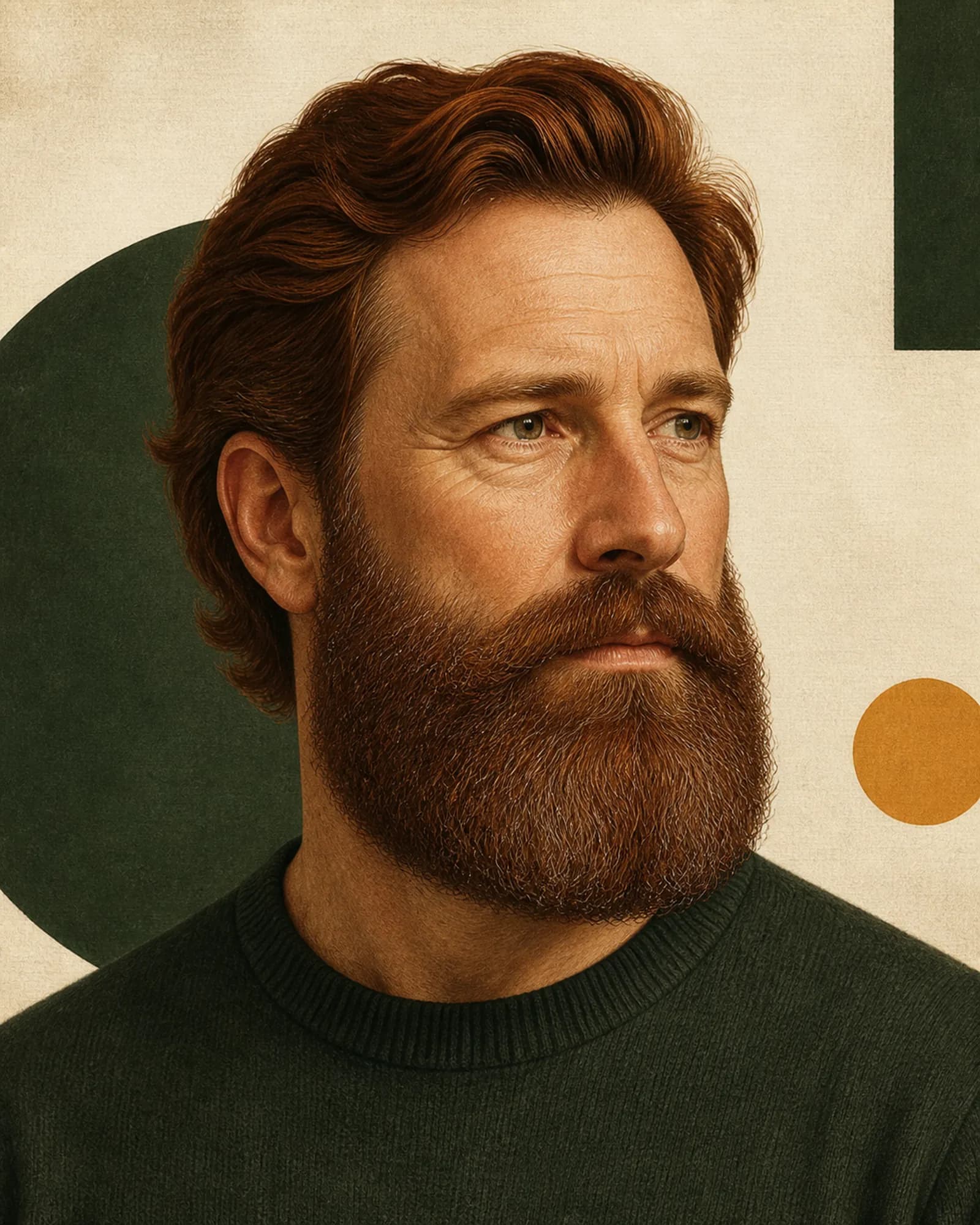
A Ducktail begins with connected full-beard coverage but keeps the sides more controlled and tapers symmetrically toward one centered point below the chin. A moderate Full Beard has a more neutral rounded-natural lower edge and does not depend on that point for its identity.
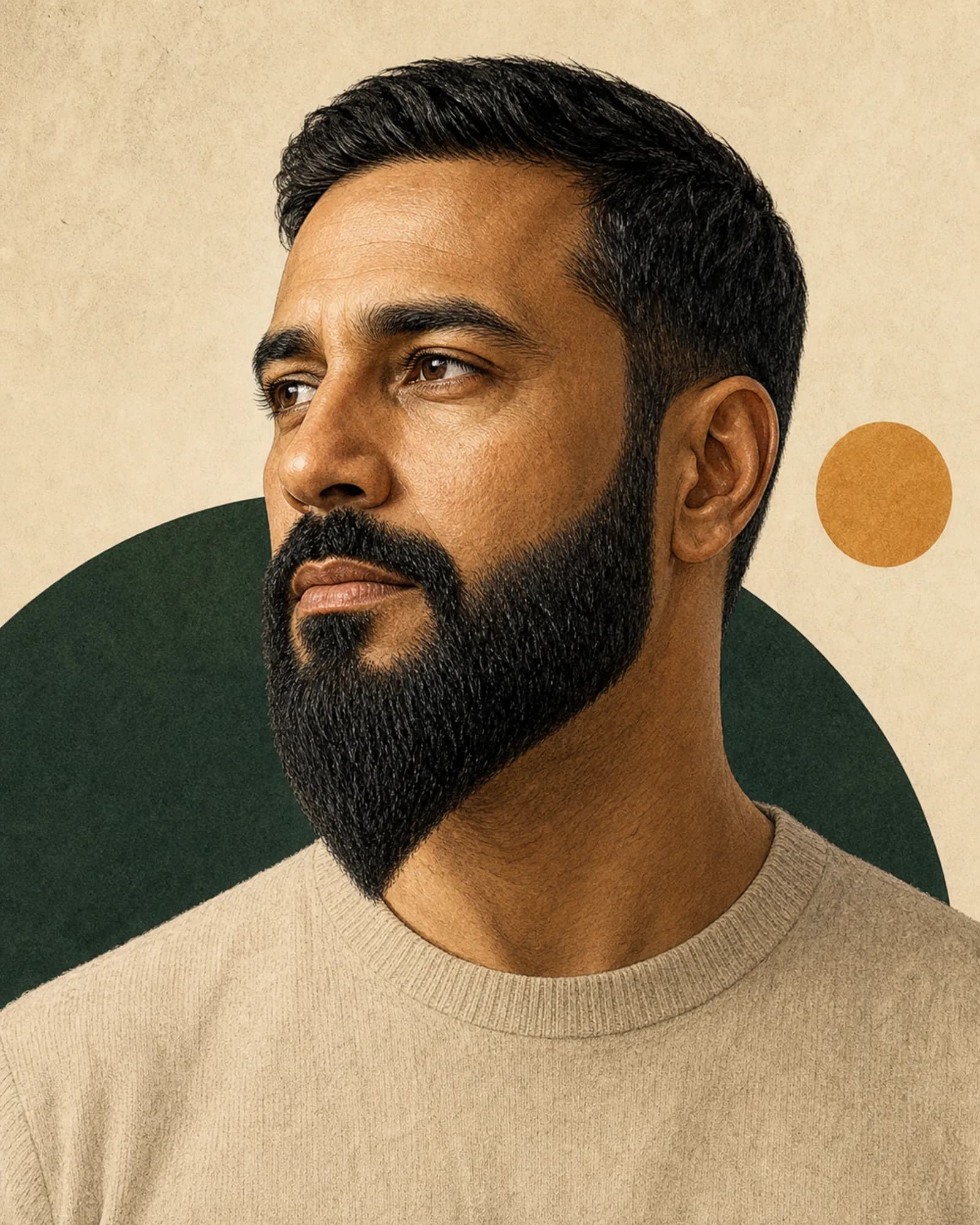
A Garibaldi is intentionally wider and fuller, with substantial natural volume and a broad rounded bottom. The Full Beard described here is generally more moderate in width and bulk. All three can share connected cheeks, moustache, jaw, and chin coverage; the clearest distinction is how the side volume and lower contour are shaped.
Related beard styles
Related guides
Try On This Style
AI previews are illustrations, not guaranteed results. Your facial hair growth, face, lighting, and photo can change the preview and the result you can achieve with trimming.
Try On This Style