Ducktail Beard Guide: Centered Point and Controlled Taper
A Ducktail starts with a connected full-beard base, controls the side volume, and tapers symmetrically toward one centered point below the chin. The point should grow out of a continuous jaw-to-chin transition rather than look like a narrow section attached to an unrelated beard.
Try On This Style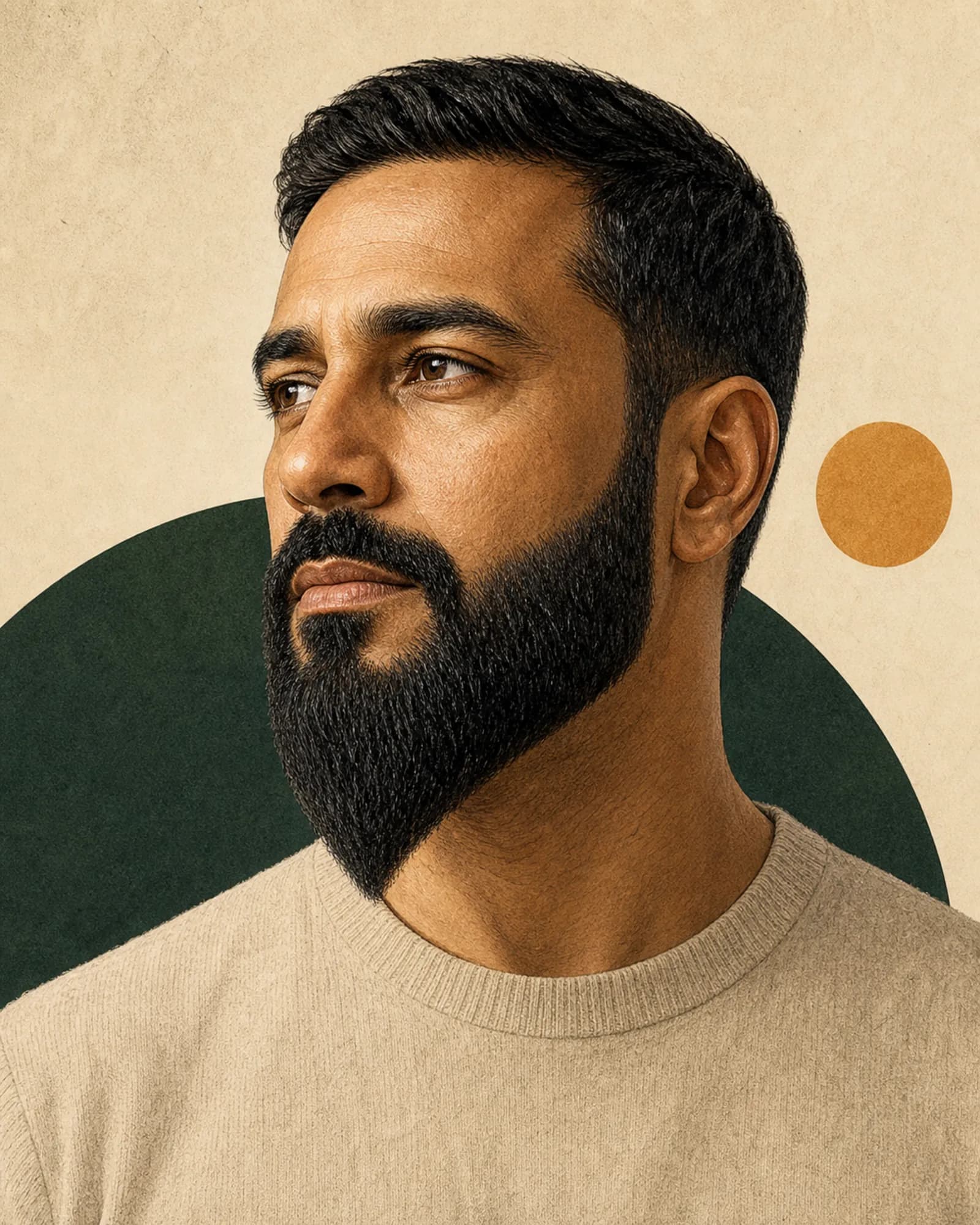
- Length
- Shorter, controlled sides transition into greater chin length and one visible centered point.
- Maintenance
- Requires downward combing, gradual work from both sides, center-line checks, and restraint through the jaw transition.
- Could it suit you?
- Worth testing when connected coverage and enough chin length can support a point, a tapered silhouette is desired, and alignment checks feel manageable.
What a Ducktail Beard Is
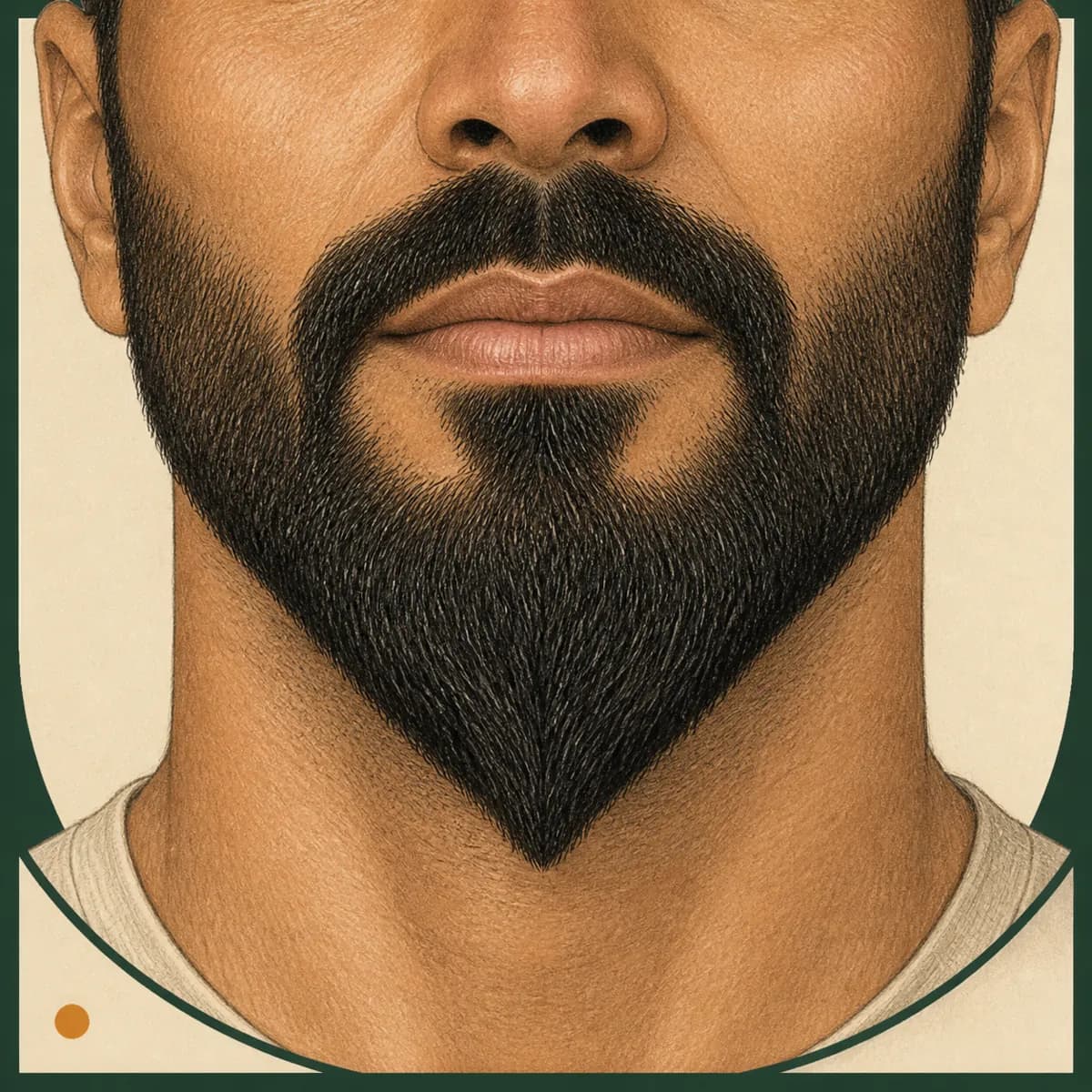
A Ducktail is a connected full-beard shape with controlled, relatively shorter sides that taper toward one point centered below the chin. The moustache, cheeks, jaw, and chin still read as one beard. Its distinguishing feature is the lower geometry: both sides narrow into the same central destination instead of ending in a neutral or broadly rounded bottom.
The point should be part of a smooth transition from the jaw into the chin. A long central tuft with abrupt gaps beside it does not create the same structure. From the front, the two diagonals should carry comparable visual weight; from a slight side view, the point should remain integrated with the lower beard rather than hanging separately.
Could It Suit You?
Check whether your cheek, jaw, moustache, and chin areas can provide connected coverage, then look specifically at the usable length and density beneath the chin. A centered taper needs enough material on both sides of the center line to create gradual diagonals. If one transition is much weaker, begin with a softer point rather than cutting the stronger side deeply to force a match.
The decision is also about silhouette and upkeep. A Ducktail deliberately directs the eye toward a narrow lower point and asks for repeated alignment checks after the beard is combed. Available coverage, the pointed outline you want, and your willingness to preserve that outline are useful factors. Age, ethnicity, and face shape do not guarantee that the style will fit or produce a particular result.
How to Trim and Maintain It
Let the beard dry, then comb the side and chin hair downward into its normal resting direction. Mark the center line beneath the chin before shaping either diagonal. Preserve extra length around that line and use the two sides as alternating references rather than completing one side before looking at the other.
Build the point gradually. Remove small amounts from the outer lower edges, re-comb, and check whether both lines converge on the same center. Keep the sides controlled, but avoid taking too much from the jaw-to-chin transition; that bridge is what makes the taper look continuous instead of leaving a thin point beneath a hollow lower edge.
After the main silhouette is stable, refine the cheek, moustache, and neckline boundaries without weakening their connectors. Reassess the front and both slight profiles after combing downward again. Stop while the point is still slightly fuller than the final target, then make only the small corrections that remain visible at a normal viewing distance.
Common Ducktail Mistakes
Cutting the center point first can leave no reliable guide for the two diagonals and often encourages an off-center finish. Shaping one side completely before alternating to the other can produce the same problem. The center line should remain fixed while both sides approach it in small stages.
Removing too much from the lower jaw transition creates a narrow hanging tip rather than a connected taper. Trimming hair that has not been combed into its resting direction can reveal unexpected steps after it settles. Repeatedly shortening the longer-looking side without checking head position, lighting, and the full outline may also turn a small visual difference into a real structural imbalance.
Ducktail Compared with Full Beard and Garibaldi
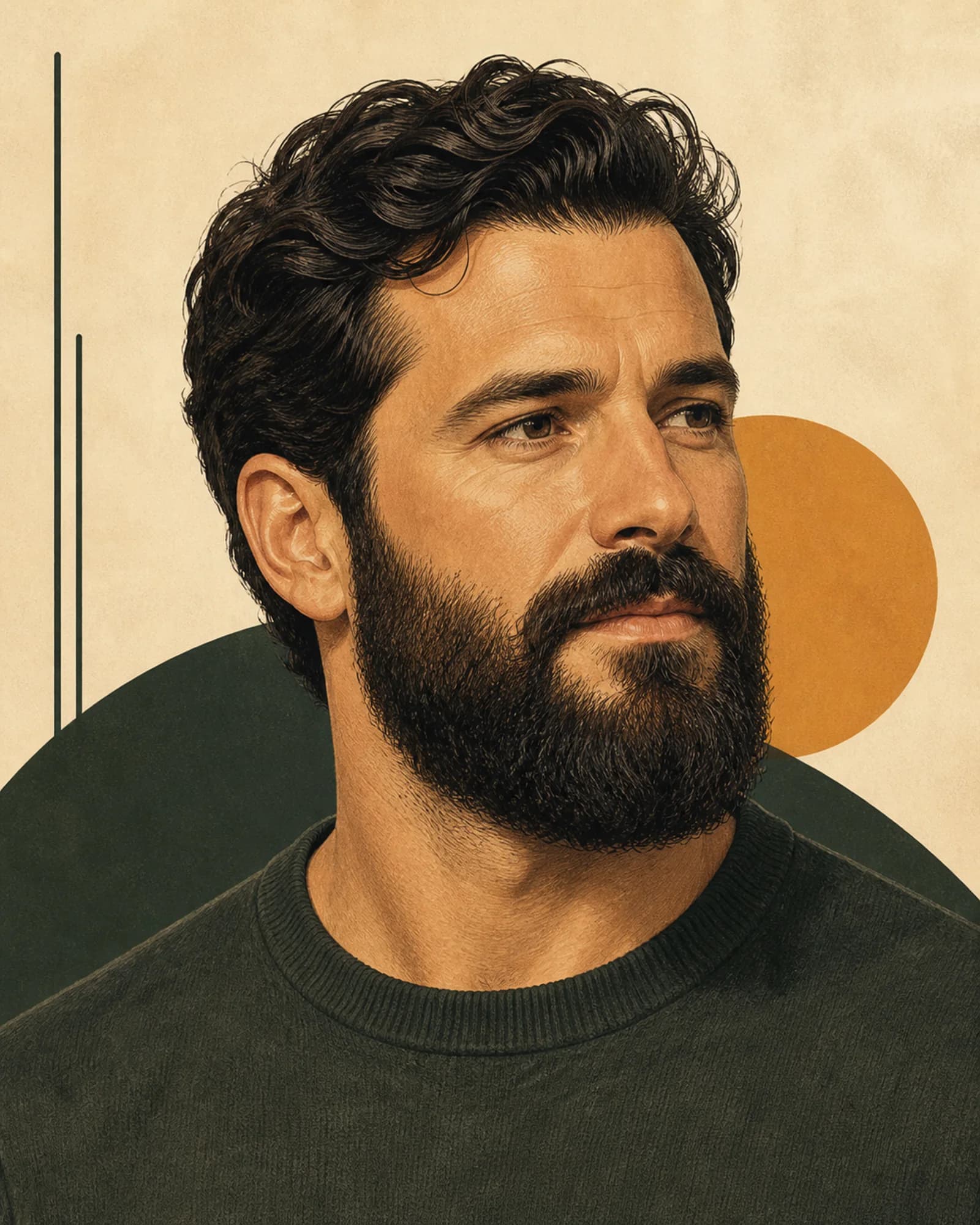
A moderate Full Beard keeps a more neutral rounded-natural bottom and balances the whole connected mass without relying on one center point. A Ducktail controls the side volume and makes the symmetric taper its defining lower outline.
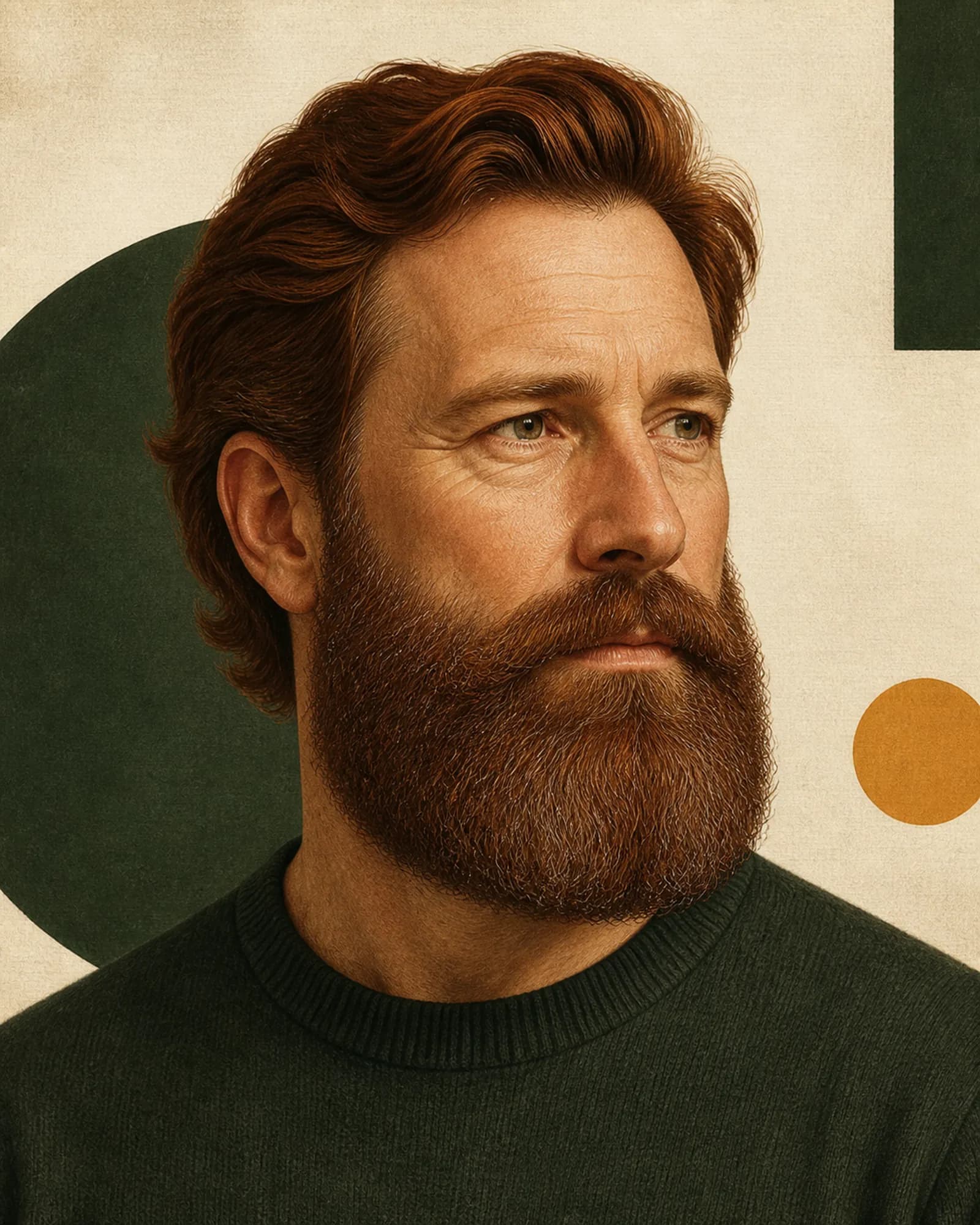
A Garibaldi moves in the opposite direction: it preserves substantial natural fullness, extends wider at the sides, and finishes in a broad rounded bottom. The three styles can all use connected full-beard coverage, but Ducktail is the clearly tapered and pointed choice rather than the moderate Full Beard or the broad, rounded Garibaldi.
Related beard styles

Related guides
Try On This Style
AI previews are illustrations, not guaranteed results. Your facial hair growth, face, lighting, and photo can change the preview and the result you can achieve with trimming.
Try On This Style