Dutch Beard Guide: A Wide Rounded Full Beard Without a Mustache
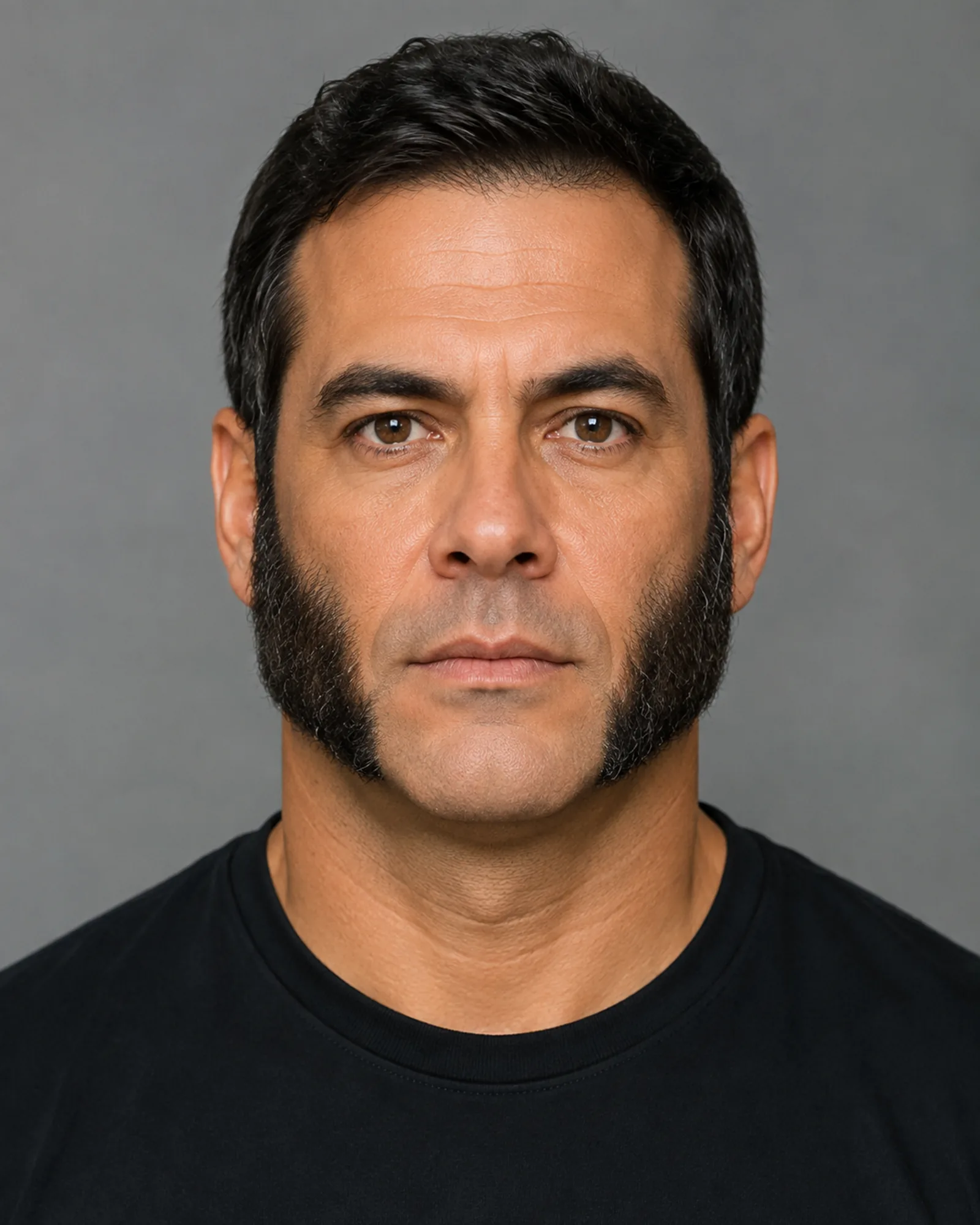
The Dutch beard is a wide full beard connecting sideburns, cheeks, jaw and chin beneath a broad rounded bottom, while the entire upper lip and mouth-corner area stay clean. Its mustache-free opening is a deliberate part of the geometry, not an unfinished gap above an otherwise complete beard.
Maintained by BeardStylesContent updated:
Latest recorded revision: Added the style definition, growth requirements, maintenance guidance, common mistakes and related-style comparisons.
Content and source methodSave this style in this browser to compare it later. Saved styles do not sync across devices, and clearing browser data removes them.

- Length
- Preserve width through the cheeks and jaw while shaping a broad rounded bottom; keep the upper-lip opening fully clear.
- Maintenance
- Check the two mouth-corner boundaries, cheek volume and lower curve independently before reducing the beard body.
- Could it suit you?
- A strong option when cheeks, sideburns, jaw and chin connect well but the upper lip is sparse, uncomfortable to keep, or intentionally excluded.

What a Dutch Beard Is
The Dutch beard on BeardStyles covers the sideburns, cheeks, jaw and chin in one wide full body with a broad rounded bottom. It has no mustache. The entire upper lip and mouth-corner area remain clear, along with high cheek strays and hair below the lower neckline.
Many beard-without-mustache catalogs group several outlines together. The local Dutch is not merely any beard with a shaved lip: its full cheek coverage, sideburn connections and wide round lower edge are all required. Use this page's contour when a barber or another guide uses “Dutch” for a narrower chin-only shape.
Check the Beard Field, Not the Upper Lip
Assess sideburn-to-cheek, cheek-to-jaw and jaw-to-chin continuity. Upper-lip density is irrelevant because that area is cleared, but gaps beside the mouth can affect the edge of the opening. Test how far the clean corner area can extend without cutting away the full cheek body.
The broad bottom places weight across the lower face, although no face-shape classification guarantees the effect. Decide whether the mustache-free opening is comfortable and visually intentional for you. The beard-without-mustache guide compares this choice with smaller no-mustache footprints.
How to Shape the Wide Rounded Beard
- Comb the dry beard outward to release hidden hair, then down into its normal fall. Use a longer setting first and record millimeters with the length chart.
- Establish the upper cheek lines and preserve substantial width from each sideburn through the cheek. Avoid tapering the sides so aggressively that only the chin remains full.
- Define the clean upper-lip and mouth-corner opening. Work outward from the center of the lip in small passes, stopping before the side edges cut into cheek coverage.
- Build a broad rounded bottom across the jaw and chin. Compare both rear corners and the center from several angles; the curve should span the beard, not form a small semicircle under the chin.
- Set a low curved neckline beneath the visible body, then reduce internal bulk as needed. Recheck the lip opening after smiling and speaking before widening it.
The shaved opening and the lower curve usually need different maintenance. Clear new upper-lip growth without automatically shortening the full beard. When the bottom changes, comb and settle it before deciding that one side is longer.
The Mustache-Free Opening
The clean lip should reach through both mouth corners so no accidental connectors remain. Below it, the beard stays broad and continuous; a small isolated chin patch would contradict the Dutch footprint. Smooth sideburn transitions reinforce the wide full-beard structure.
Use the AI contour to identify covered and clear zones, not to require identical density. A preview can remove an upper lip cleanly, but it cannot show how quickly stubble returns or whether the cheek-to-mouth edges are equally strong.
Common Dutch-Beard Mistakes
Leaving a faint mustache while shaving the corners can make the opening look incidental. Clear the whole upper lip consistently. Conversely, widening the opening downward after every uneven hair can eat into the front beard until it resembles two side panels.
Another mistake is trimming the bottom into a narrow point. The local Dutch needs a broad rounded endpoint. Reduce hanging center length only after checking that the jaw corners still support the curve.
Dutch Beard Compared with Chin Strap and Full Beard
The Chin Strap is also mustache-free, but it is a narrow continuous band following the jaw from sideburn to sideburn, with clean cheeks above and neck below. Choose it when you want an outline rather than a full beard body.
The Full Beard shares connected cheek, jaw and chin coverage but includes a connected mustache and uses a groomed rounded lower edge. Choose it when the upper lip belongs in the complete field. The Dutch preserves the wide lower body while making the open upper lip a defining feature.
Related beard styles


Related guides
Try On This Style
AI previews are illustrations, not guaranteed results. Your facial hair growth, face, lighting, and photo can change the preview and the result you can achieve with trimming.
Try On This Style