Circle Beard Guide: Connectors, Ring Width, and Clean Edges
A Circle Beard joins the mustache to the chin beard at both mouth corners, forming one closed outline around the mouth while the outer cheeks and jaw stay clean. Its definition depends on preserving both connectors, keeping the ring visually even, and cleaning the outside edge without thinning the joins.
Maintained by BeardStylesContent updated:
Latest recorded revision: Added the mustache-free style comparison and clarified that the current Goatee preview has a bare upper lip.
Content and source methodSave this style in this browser to compare it later. Saved styles do not sync across devices, and clearing browser data removes them.

- Length
- Forms a compact closed ring from the mustache around both mouth corners to the chin.
- Maintenance
- Requires protecting both connectors, balancing the ring width, and cleaning the outer cheek and jaw boundary.
- Could it suit you?
- Worth testing when both mouth-corner connectors are visible, a closed mouth-framing outline is preferred, and careful edge upkeep is acceptable.
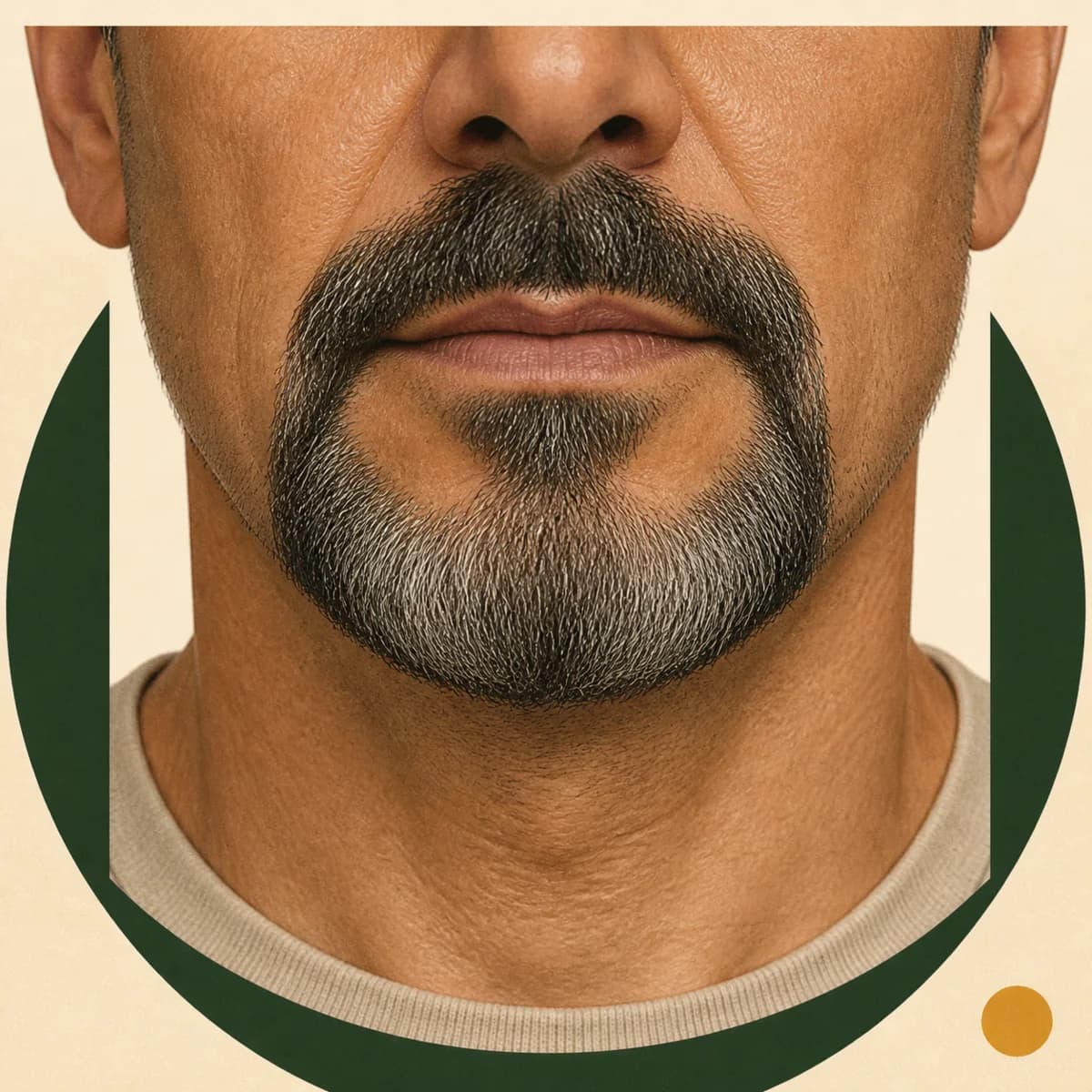
What a Circle Beard Is
A Circle Beard connects the mustache to the chin beard at both mouth corners, creating one closed ring around the mouth. The lower section is usually rounded across the chin, while the outer cheeks and jaw remain clean. Both connectors must be present for the outline to read as closed rather than as separate upper and lower pieces.
The ring does not need to be a perfect geometric circle. Its identity comes from continuous coverage around the mouth and a controlled outer boundary. If the corners are deliberately open, the result moves toward a goatee variation or a Van Dyke; if coverage continues broadly across the cheeks and jaw, it becomes a Full Beard structure.
Could It Suit You?
Check the mustache, mouth corners, area below the lower lip, and chin as one route. The most important question is whether both corner connectors can remain visible without making the entire ring much thinner than intended. Compare the left and right joins during relaxed expression and ordinary mouth movement.
Consider whether you prefer a compact, closed frame around the mouth and are willing to maintain its inner and outer edges. Growth distribution at the connectors, the desired ring width, and tolerance for precise cleanup matter more than a generalized face-shape claim. No face shape guarantees that the connection or final outline will suit an individual.
How to Trim and Maintain It
Preserve both mouth-corner connectors before removing hair from the outer cheeks and jaw. Establish the approximate ring width with extra material still in place, then compare the two sides. If one connector is naturally narrower, avoid trimming the stronger side so aggressively that both become fragile.
Reduce the mustache and chin bulk gradually while keeping the transition through each corner visible. Clean the outer boundary in small passes, working around the ring rather than starting by cutting into the joins. Keep the rounded lower edge centered beneath the mouth and check that it does not widen unexpectedly across the front jaw.
Before final cleanup, look at the outline while smiling lightly and moving the mouth as you normally would. Skin movement can reveal a connector that looks intact at rest but appears overly thin during expression. Finish with small corrections to the inner and outer edges instead of chasing a mathematically identical width at every point.
Common Circle Beard Mistakes
Thinning one or both mouth-corner connectors while cleaning the outside edge is the mistake most likely to break the closed outline. Leaving one side wider than the other can also make the ring appear shifted. These issues are easier to spot by checking the full mouth area than by trimming each corner in isolation.
Another mistake is treating every irregularity as a reason to narrow the entire ring. Repeated corrections can remove stable growth and make the connectors less durable. Letting the outer beard spread across the jaw changes the compact frame into broader coverage, while opening both corners changes it into a separated style.
Circle Beard Compared with Goatee, Van Dyke, and Full Beard
A goatee centers hair below the lower lip and on the chin. It may omit the mustache or keep it separate, so it does not require the closed mouth-corner connections that define a Circle Beard. The Circle Beard uses those two joins to make one continuous outline.
The current BeardStyles Goatee preview is the upper-lip-free version. The beard styles without a mustache guide compares its retained coverage with four other existing previews and keeps Circle Beard outside that group.
A Van Dyke deliberately preserves skin gaps at both mouth corners and pairs a separate mustache with a pointed chin section. A Full Beard continues across the cheeks, jaw, and sideburn area instead of stopping at a compact ring around the mouth. The Circle Beard occupies the smaller, connected middle ground: closed at the mouth, clean on the outer cheeks and jaw.
Related beard styles



Related guides
Try On This Style
AI previews are illustrations, not guaranteed results. Your facial hair growth, face, lighting, and photo can change the preview and the result you can achieve with trimming.
Try On This Style