Extended Goatee Guide: A Connected Mouth-and-Low-Jaw Beard
An extended goatee connects the mustache to the chin beard, then carries a low band outward toward both jaw corners without joining the sideburns. Its lower footprint is wider than a circle beard but stops short of the broad disconnected lower field used by this site's Balbo.
Maintained by BeardStylesContent updated:
Latest recorded revision: Added the style definition, growth requirements, maintenance guidance, common mistakes and related-style comparisons.
Content and source methodSave this style in this browser to compare it later. Saved styles do not sync across devices, and clearing browser data removes them.

- Length
- Keep the low jaw extensions controlled and choose their width before reducing the chin length.
- Maintenance
- Check both mouth-corner connections and both outer jaw endpoints whenever the lower band is edged.
- Could it suit you?
- Best compared when mustache-to-chin connections and the front jaw grow continuously, while the upper cheeks can be cleared without cutting through the intended band.

What an Extended Goatee Is
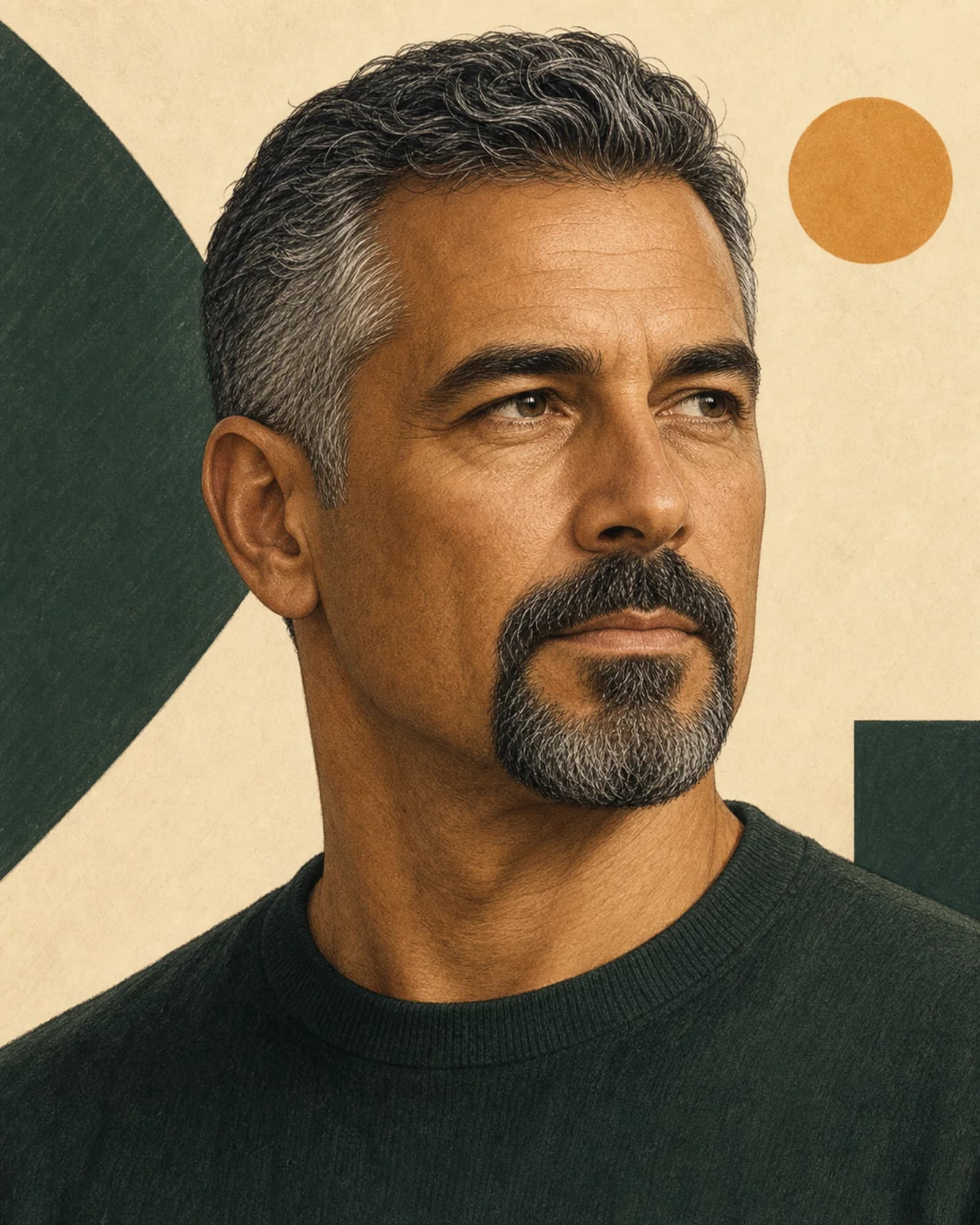
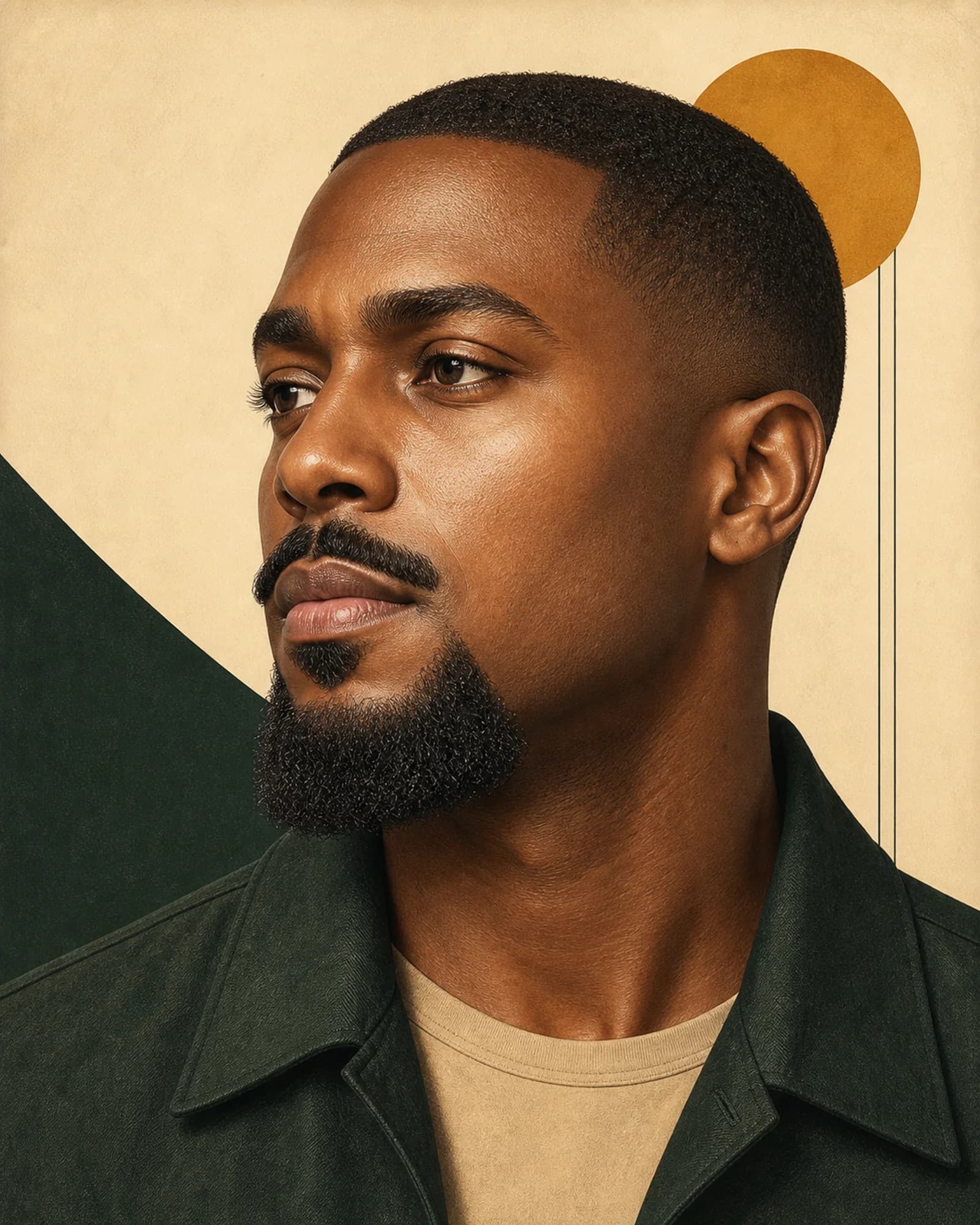
The local extended goatee starts with a connected mustache and chin beard. From the chin, a low band runs outward toward each jaw corner, creating more width than a standard mouth-centered goatee. The band ends before the sideburns, and the upper cheeks remain clean.
“Extended goatee” is sometimes used broadly for several Hollywoodian-style outlines. Here, connection at the mouth corners and a low, symmetrical jaw extension are defining features. The page image is the reference when another guide uses the name for a disconnected mustache or a much broader beard.
Coverage and Practical Fit
Check three zones: both mustache-to-chin connectors, the chin itself, and the low front jaw on each side. A missing connector opens the ring and changes the upper structure. A gap near one outer endpoint may be handled by ending both bands slightly earlier, provided the final width still looks intentional.
This shape removes the need for dense upper-cheek growth, but it asks for more lower-jaw continuity than a circle beard. Face shape can guide comparison, not predict an outcome. Before shaving, photograph or mark several possible endpoints; width changes the look more than a small length adjustment. If coverage is uncertain, consult the patchy beard guide.
How to Build the Low Band
- Even the beard at a conservative length, working on dry, combed hair. Translate your chosen guard through the length chart rather than assuming two trimmers use the same numbering.
- Preserve the mustache, mouth-corner connectors and chin. Draw the top edge of each extension from beside the chin toward a matching point near the jaw corner.
- Define a lower edge that follows the front jaw without dropping into the neck. Keep extra width until both sides have been viewed from the front and in profile.
- Clear upper cheeks and the gaps before the sideburns. Keep the mustache connections intact; trim toward the hair boundary instead of driving a blade through it.
- Balance the two outer endpoints, then reduce bulk inside the established shape. If one side ends early because of growth, shorten the opposite endpoint before narrowing the entire band.
Length and footprint need separate maintenance. A longer chin can coexist with neat extensions, while uniform bulk creates a calmer outline. Recheck the underside by lifting the chin only slightly; an aggressively high neckline can make the band look thin from the front.
What the Contour Should Preserve
The mouth area forms one connected unit, and the low band gives that unit lateral reach. Hair should not climb high into the cheeks or continue into the sideburns. At the same time, the band must be broad enough to look like part of the beard rather than two accidental wisps.
The contour image shows coverage, not a required guard setting. AI images and previews can simplify gaps and density, so confirm the design against your own front-jaw growth before cutting clean areas.
Common Extended-Goatee Mistakes
The most expensive mistake is clearing the sideburn gaps before choosing the two endpoints: one gap often ends up wider than the other. Another is shaping the top edge first and repeatedly lowering it to fix bumps, leaving a band too narrow to remain continuous.
Do not assume a connected mustache makes every broad lower beard an extended goatee. If hair covers most of the cheeks, the result reads as a full beard. If the lower section disconnects at the mouth, it has moved toward the local Balbo geometry.
Extended Goatee Compared with Circle Beard and Balbo
The Circle Beard closes around the mouth but stays compact, with clean jaw sides. Choose it when connections are reliable near the mouth but the front jaw is sparse or you prefer a smaller footprint.
The Balbo shown here has a separate mustache and a broad sculpted lower beard across the chin and front jaw. Choose it when you want lower width without preserving the mouth-corner connections. The extended goatee sits between these choices: connected like the circle beard, but wider and lower along the jaw.
Related beard styles

Related guides
Try On This Style
AI previews are illustrations, not guaranteed results. Your facial hair growth, face, lighting, and photo can change the preview and the result you can achieve with trimming.
Try On This Style