Anchor Beard Guide: A Pointed Chin and Narrow Front-Jaw Outline
An anchor beard combines a separate mustache, a narrow strip below the lower lip, and a pointed chin with short extensions along the front jaw. Clean cheeks, open mouth corners, and ends that stop before the ears distinguish this compact outline from a full beard or a chin strap.
Maintained by BeardStylesContent updated:
Latest recorded revision: Updated the Anchor illustrations to match the narrow, pointed lower outline described in the guide.
Content and source methodSave this style in this browser to compare it later. Saved styles do not sync across devices, and clearing browser data removes them.

- Length
- Keep the chin point compact and the front-jaw arms narrow; choose hair length separately from the outline.
- Maintenance
- Check the mustache gaps, centered lower-lip strip and two jaw endpoints each time you tidy the edges.
- Could it suit you?
- Worth comparing when growth connects the chin to both front-jaw arms and you are comfortable maintaining several clean boundaries.
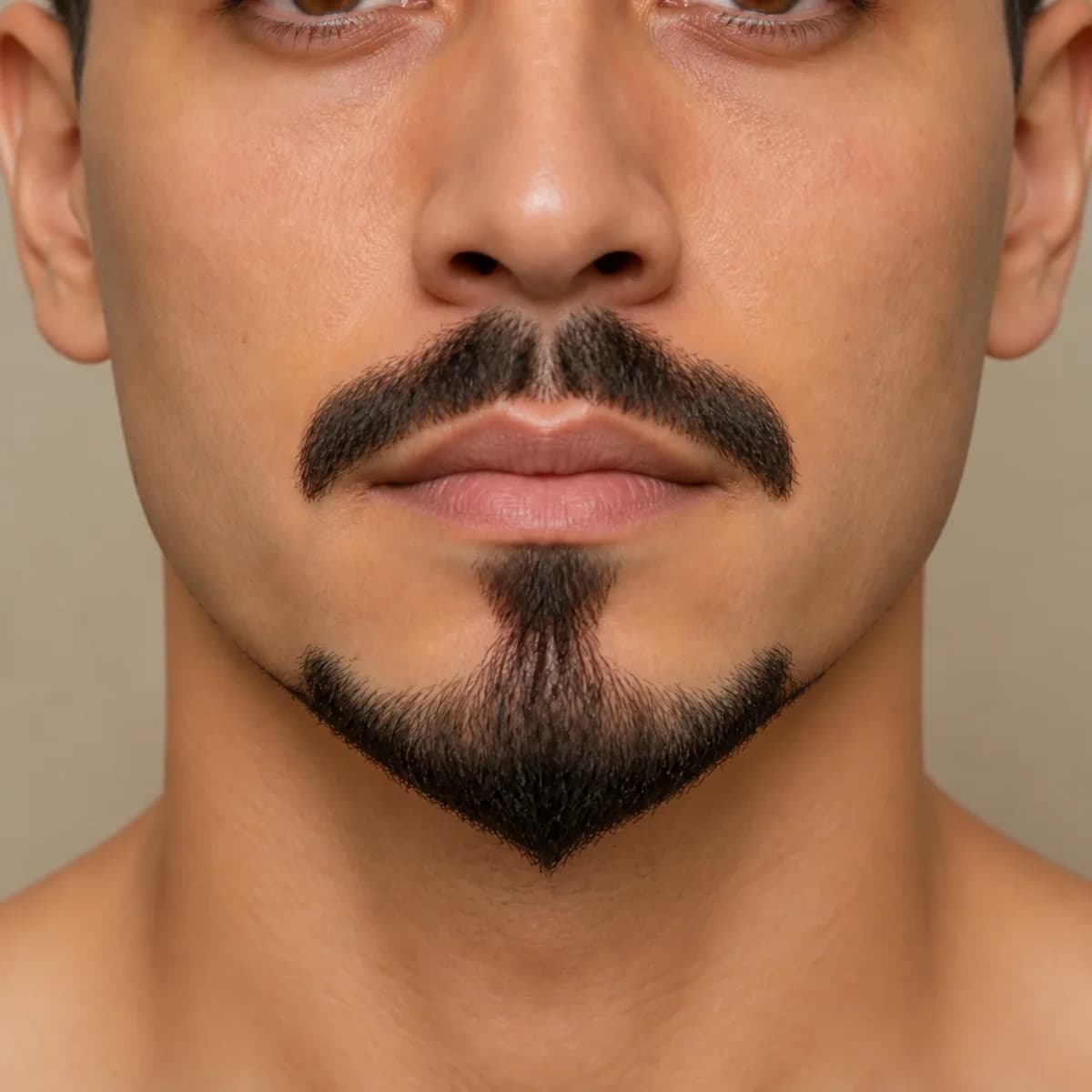
What an Anchor Beard Is
On BeardStyles, an anchor means a disconnected mustache above a narrow lower-lip strip and a pointed chin beard. Two short arms extend from the chin along the front jaw, giving the lower shape its anchor-like outline. They stop well before the ears. Cheeks, sideburn connections, and neck stay clear.
Names vary between grooming guides. The Gillette anchor guide describes the general pointed-chin style and a trimming sequence. Our illustration and preview use the disconnected upper and narrow lower shape described here; the name alone should not replace a reference image.
Could It Suit You?
Check the center of your chin and both front-jaw arms. Sparse cheeks do not have to fill in for this outline, but gaps across an intended arm can interrupt its shape. Compare both sides before deciding how far to extend them. A wider outline may reveal a gap that a smaller one avoids.
Face shape is a starting point for comparison, not a guarantee. A pointed lower shape places attention on the chin; its effect depends on your existing proportions, density and preferred width. If lower growth is limited, compare a Goatee. The patchy beard guide can help you think about coverage without promising new growth.
How to Trim the Outline
- Comb dry hair into its usual direction. Keep more length and width than the final target at first; the length chart explains how to compare millimeters and model-specific settings.
- Choose two stopping points on the front jaw, well before the ears. Preserve the hair between each point and the chin while clearing the unwanted cheek and sideburn connections.
- Keep the mustache separate at both mouth corners. Retain a narrow strip below the lower lip leading toward the center of the chin.
- Refine the lower chin into a compact point. Reduce the jaw arms gradually, comparing the left and right endpoints from the front and a slight side view.
- Pause when correcting symmetry would require making the whole outline much narrower. Let an over-trimmed area recover before repeatedly cutting the fuller side to match it.
Record length and outline separately. You may want to tidy a mouth-corner gap without shortening the chin, or reduce bulk without moving the jaw endpoints. Check the outline as it changes rather than adopting a fixed schedule for everyone. Clean-shaven areas and the beard body require different maintenance, even when the overall beard is short.
The Boundaries to Keep Visible
The mustache gaps and short jaw arms do different jobs. The gaps keep the upper and lower sections separate; the arms distinguish the anchor from a purely centered pointed beard. Extending the narrow band to the ears turns it toward a chin-strap outline. Filling the cheeks changes the coverage more substantially.
Use the contour illustration to compare where hair stops, not to measure a precise length. The pictures are original AI illustrations. A preview is also a visual aid, not a promise that your own hair will grow with those edges or density.
Common Anchor Beard Mistakes
One arm can become longer than the other when you look only at the chin point. Check both outer endpoints as well as the center. Another mistake is treating the mustache and chin as a connected ring: the open mouth corners are part of the version shown here.
Removing too much from below the lower lip can separate the center into unrelated patches. Leaving a very broad lower area may instead resemble a Balbo. Decide which boundary needs attention before each pass instead of shortening every part together.
Anchor Compared with Balbo, Van Dyke, and Goatee
The Balbo shown on this site has a broader lower footprint across the chin and front jaw. The anchor is narrower and gives the two short arms and centered point more emphasis.
The Van Dyke also separates the mustache, but its lower section is concentrated more centrally into a point. Choose which lower footprint you want to compare; do not rely on the style names as interchangeable instructions.
A Goatee keeps the lower footprint around the chin without requiring a point or front-jaw arms. Compare it when you want a smaller outline or when growth is strongest in the center.
Related beard styles


Related guides
Try On This Style
AI previews are illustrations, not guaranteed results. Your facial hair growth, face, lighting, and photo can change the preview and the result you can achieve with trimming.
Try On This Style