Stubble Beard Guide: Length, Lines, and Maintenance
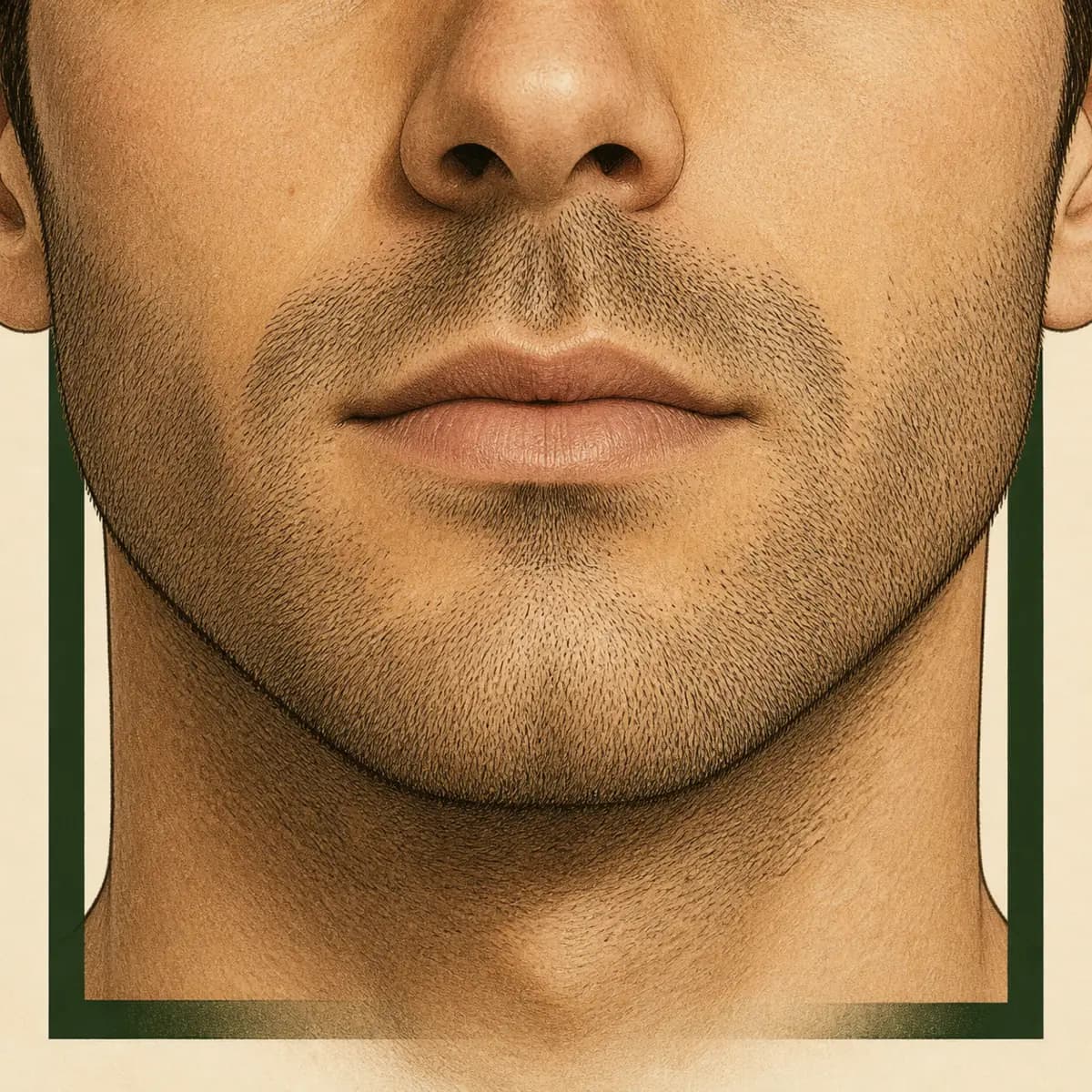
Stubble keeps facial hair short enough for skin to remain visible. The style depends less on simply stopping shaving and more on even length, deliberate cheek and neck edges, and a setting that works with the areas where your beard grows most consistently.
Try On This Style
- Length
- Usually kept very short, with skin still visible through the facial hair.
- Maintenance
- Requires frequent length checks and deliberate cheek and neckline cleanup.
- Could it suit you?
- Most useful as a starting point when short growth is reasonably even or when a low-profile outline is preferred.
What Stubble Is
Stubble is an intentionally short layer of facial hair through which the skin remains visible. Its defining feature is not one universal measurement, but a reasonably even visual length across the areas you choose to keep. A clear cheek boundary and a considered neckline make it look shaped rather than like an uncontrolled pause in shaving.
Because facial hair can lie flat in one area and stand out in another, the same trimmer setting may not look identical everywhere. Judge the overall shadow and outline at a normal viewing distance instead of expecting every hair to match exactly.
Could It Suit You?
Check your growth on the cheeks, jaw, and chin separately. If one area is less dense, a slightly shorter overall setting can sometimes reduce the contrast without pretending the coverage is uniform. You can also keep the outline focused on the areas where growth is most consistent rather than repeatedly expanding it into weaker sections.
Face shape can change where stubble draws visual emphasis—for example, a dark jaw edge may make that line more noticeable—but it cannot guarantee that the style will suit a person. Growth pattern, preferred outline, skin comfort, and willingness to maintain the edges are more useful factors to test.
How to Trim and Maintain It
Start with clean, dry facial hair so damp hairs do not lie flatter and lead to an unexpectedly short result. Choose a longer guard than your intended finish, trim with the grain first, and reduce the setting gradually. Mixed growth directions may require several controlled passes rather than one aggressive pass against the grain.
After the length is balanced, define a cheek line that follows the usable growth instead of cutting deeply into it. Set the neckline below the jaw so the beard still frames the lower face; remove hair farther down the neck without pushing the line up onto the jaw. Step back and check both sides from a normal distance before making small corrections. Brush loose hair from the trimmer and clean the tool according to its instructions before putting it away.
The beard length chart helps compare millimeters and model-specific trimmer settings. Check the stated length for your exact attachment before choosing a shorter setting.
Common Stubble Mistakes
A neckline pushed too high can make the lower edge look narrow and expose an abrupt strip beneath the jaw. Chasing a weak cheek or connector area for too long often removes stronger growth around it and makes the whole outline less stable. One hurried pass against several growth directions can also leave alternating light and dark patches.
Redness or discomfort after trimming should not automatically be treated as a beard-growth problem. Review pressure, blade condition, cleanliness, and how closely you are trimming; if irritation persists or concerns you, pause the routine and seek appropriate professional advice rather than trying to correct it with more passes.
Stubble Compared with Goatee and Full Beard
Stubble usually keeps short coverage across more of the mustache, cheeks, jaw, and chin while leaving skin visible. A goatee concentrates hair around the chin and sometimes the upper lip, so it relies less on cheek coverage and may deliberately leave the jaw sides clear. The mustache-to-chin connection depends on the particular goatee variation, not on the stubble pattern.
A full beard uses broader connected coverage and enough length to create a more substantial outer shape, while stubble keeps the face underneath more visible. Stubble avoids the combing and lower-shape work of a fuller beard, but its short length makes uneven patches and untidy edges easier to notice. The practical tradeoff is frequent attention to length and boundaries rather than managing a longer mass of hair.
Related beard styles


Related guides
Try On This Style
AI previews are illustrations, not guaranteed results. Your facial hair growth, face, lighting, and photo can change the preview and the result you can achieve with trimming.
Try On This Style