Beardstache Guide: A Dominant Mustache over Much Lighter Stubble
A Beardstache combines a dense, dominant mustache with much shorter, visibly lighter stubble across the cheeks, jaw and chin. The style depends on a clear hierarchy between the two lengths: once the beard approaches the mustache in weight, it becomes a short beard with a mustache instead.
Maintained by BeardStylesContent updated:
Latest recorded revision: Added the style definition, growth requirements, maintenance guidance, common mistakes and related-style comparisons.
Content and source methodSave this style in this browser to compare it later. Saved styles do not sync across devices, and clearing browser data removes them.

- Length
- Choose two clearly separated lengths: preserve mustache body while keeping the surrounding beard at light stubble.
- Maintenance
- Trim the stubble and mustache in separate passes, then inspect contrast in consistent light before changing either setting.
- Could it suit you?
- Best when upper-lip growth can form the dominant feature and short facial growth supplies an even-enough background without competing with it.
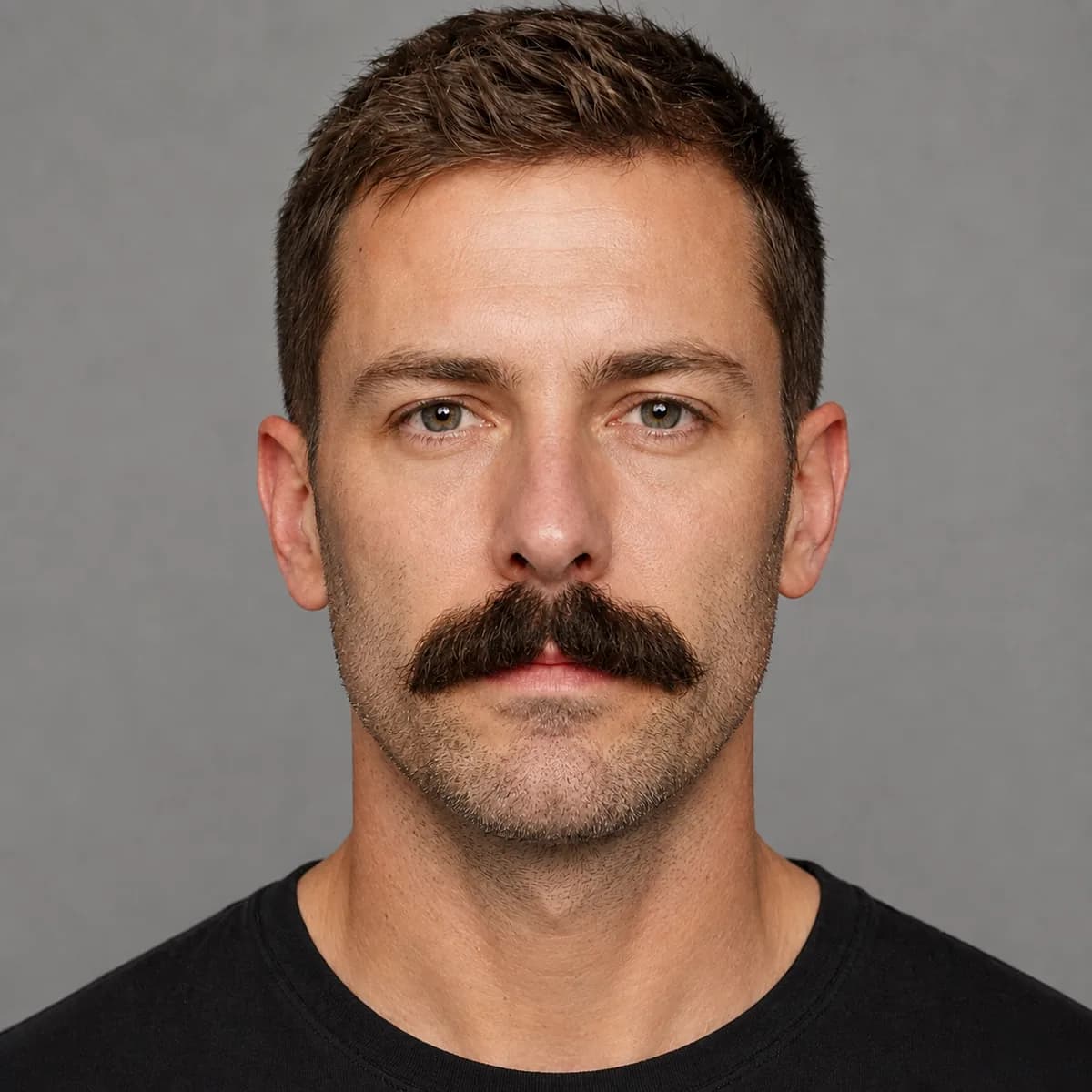
What a Beardstache Is
The Beardstache is a two-length style. A dense mustache is the focal point, while much shorter light stubble covers the cheeks, jaw and chin. High cheek strays and the lower neck stay clean. The stubble is visible but must remain clearly subordinate to the mustache.
Gillette's mustache overview defines the Beardstache by letting the mustache grow longer than the beard or stubble. The local geometry is stricter about contrast: the surrounding beard is light stubble and should never approach the mustache's visual density.
Test the Contrast, Not Just Two Guard Numbers
Grow enough upper-lip hair to judge its full shape, then compare it with short facial stubble in the same light. Dark, coarse stubble may look heavier at a short measurement than fine hair at a longer one, so fixed numbers cannot guarantee the hierarchy. Use photos rather than elapsed days to judge the difference.
The style does not require a perfectly dense full beard, but large stubble gaps may still be visible. Its effect varies with color contrast, skin tone, mustache width and natural density; face-shape categories do not predict a result. If you want the rest of the face clean, compare a Chevron.
How to Create Two Clear Levels
- Separate the mustache from the rest with a comb and clips or fingers. Trim the cheeks, jaw and chin with the longer of the stubble settings you are considering; verify millimeters in the length chart.
- Reduce the stubble one step at a time until it forms a visible but quiet background. Keep high cheek lines and lower neckline tidy without carving a heavy beard outline.
- Comb the mustache down and outward. Preserve its body, then clear hairs that enter the mouth and set deliberate endpoints.
- View the whole face in consistent neutral light. If the beard competes with the mustache, shorten only the stubble; do not lengthen or widen the mustache automatically.
- Check the mouth corners, chin and sideburn transition. Soften abrupt stubble patches while retaining the overall light level, then record both settings separately.
Because stubble changes visual weight quickly, it may need attention sooner than the mustache. Maintain each layer when its role changes rather than trimming both on the same automatic schedule.
The Hierarchy Is the Contour
Unlike a clean-shaven mustache style, the Beardstache has facial coverage. Unlike a short full beard, that coverage is background texture. The mustache can be Chevron-like, natural or slightly shaped, but it must read first from conversational distance.
Use the contour illustration to compare the relative weight, not to copy an absolute hair length. AI images can make stubble unusually even and control lighting; actual contrast changes across daylight, indoor light and hair color.
Common Beardstache Mistakes
Using adjacent guard settings may create too little visual separation, especially with dense dark beard hair. Judge the result, not the numbers. Another mistake is repeatedly trimming the mustache to match fast-changing stubble until both levels converge.
Do not define the cheek and neckline so heavily that the background becomes the primary shape. Clean boundaries are useful, but a dark, sharply boxed beard can overpower even a long mustache.
Beardstache Compared with Chevron and Horseshoe
The Chevron places a dense broad mustache over completely clean cheeks, jaw and chin. Choose it for the strongest upper-lip isolation or when facial stubble is too uneven for the background you want.
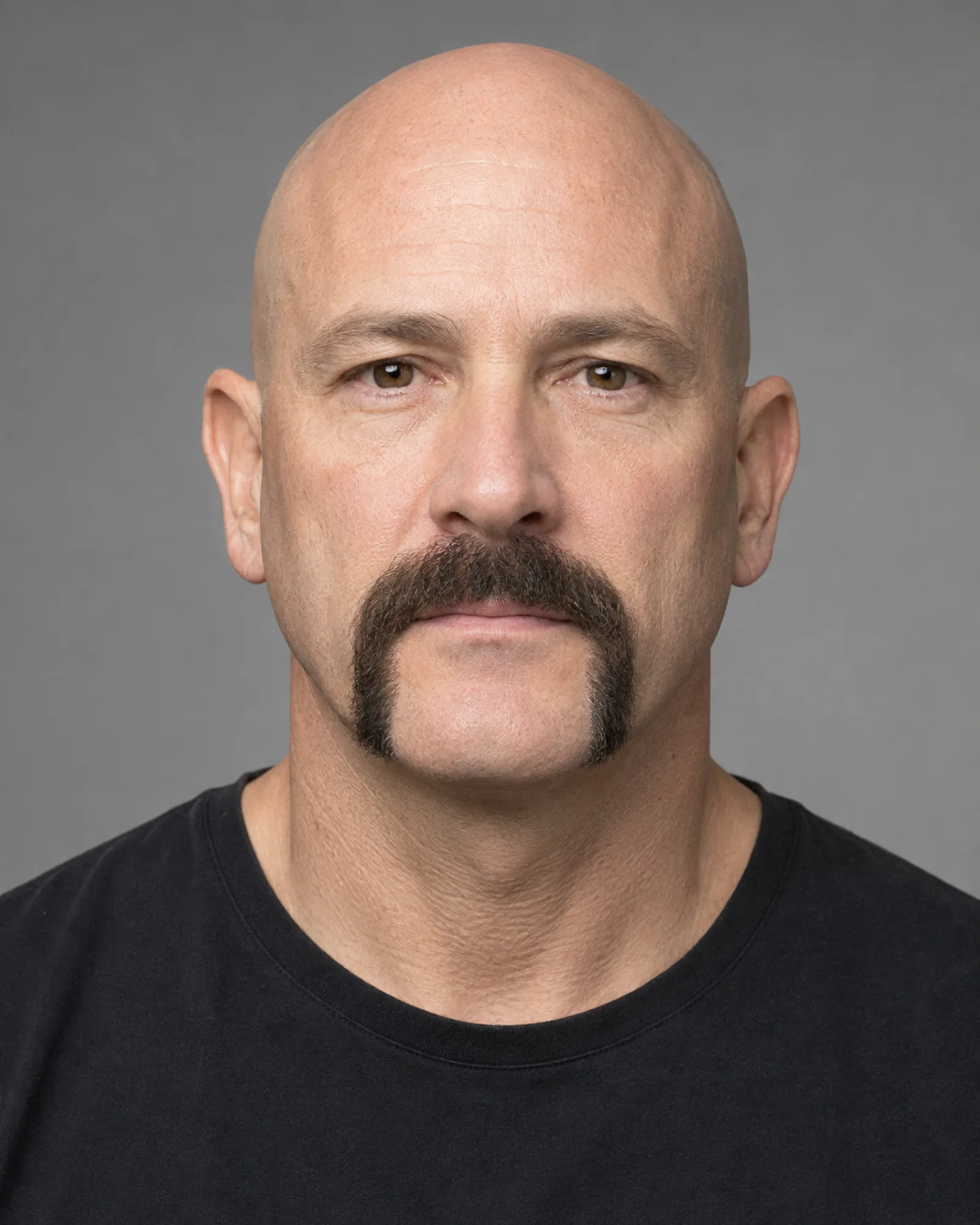
The Horseshoe extends the mustache down in two straight bars beside the mouth and keeps the center chin clean. Its contrast comes from shaped negative space, while the Beardstache spreads light stubble across the whole lower face. If the stubble becomes dense or long enough to read as a beard body, reduce it or describe the result as a short beard with a prominent mustache.
Related beard styles

Related guides
Try On This Style
AI previews are illustrations, not guaranteed results. Your facial hair growth, face, lighting, and photo can change the preview and the result you can achieve with trimming.
Try On This Style