Chevron Mustache Guide: A Dense Broad Upper-Lip Shape
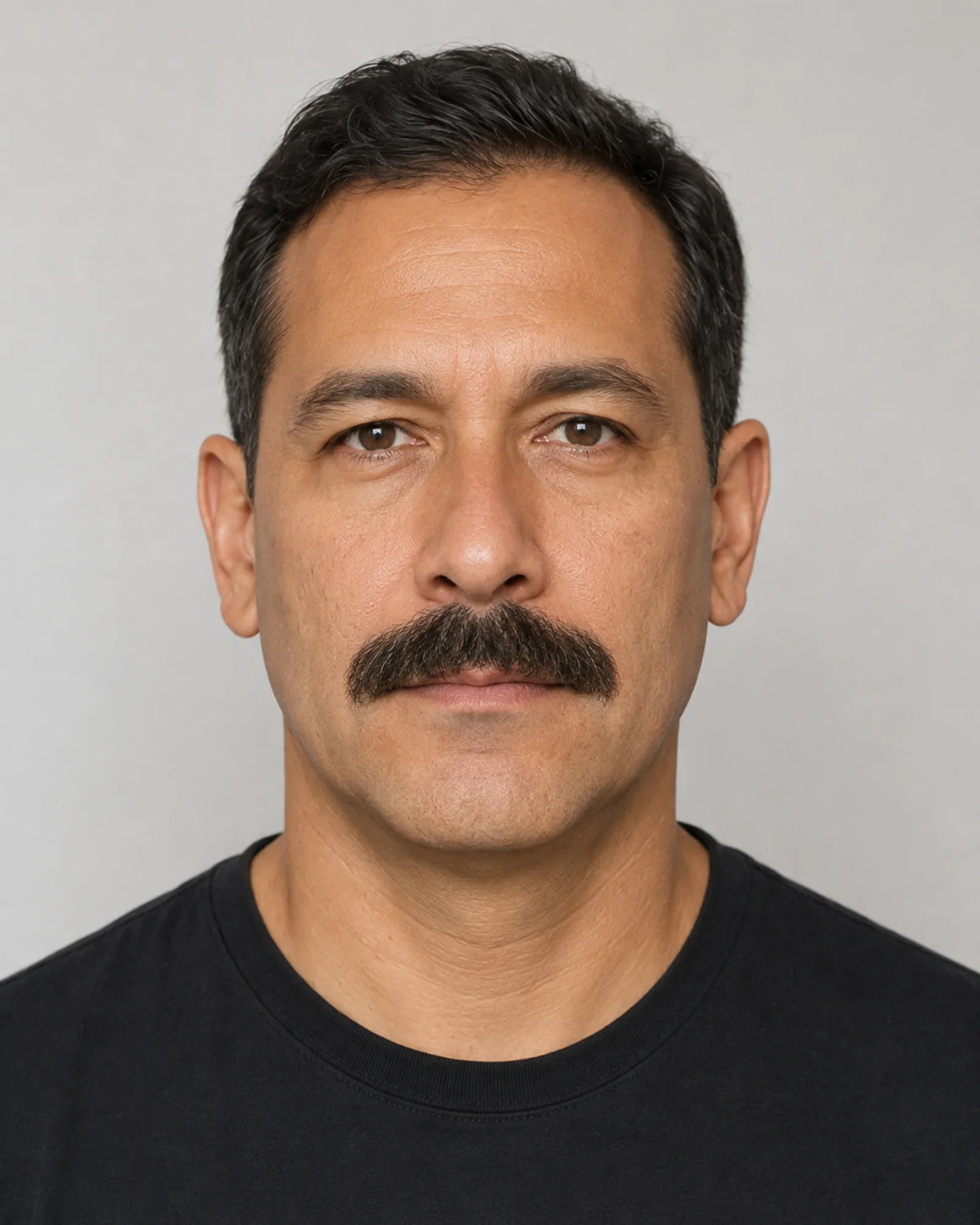
A Chevron is one dense, broad mustache that follows the upper lip in a soft downward angle and ends just beyond the mouth corners. The rest of the face stays clean, so density, lower-edge comfort and balanced endpoints matter more than decorative curls or narrow precision lines.
Maintained by BeardStylesContent updated:
Latest recorded revision: Corrected the Chevron contour image description to clarify the downward slope from the center toward both sides.
Content and source methodSave this style in this browser to compare it later. Saved styles do not sync across devices, and clearing browser data removes them.
- Length
- Keep enough body to read as dense while trimming the lower edge for speech and eating comfort.
- Maintenance
- Comb down before checking the lip line, then compare both endpoints before shortening the mustache body.
- Could it suit you?
- Worth trying when upper-lip growth is broad and reasonably continuous, and you prefer one strong shape with the cheeks, chin and jaw kept clear.
What a Chevron Mustache Is
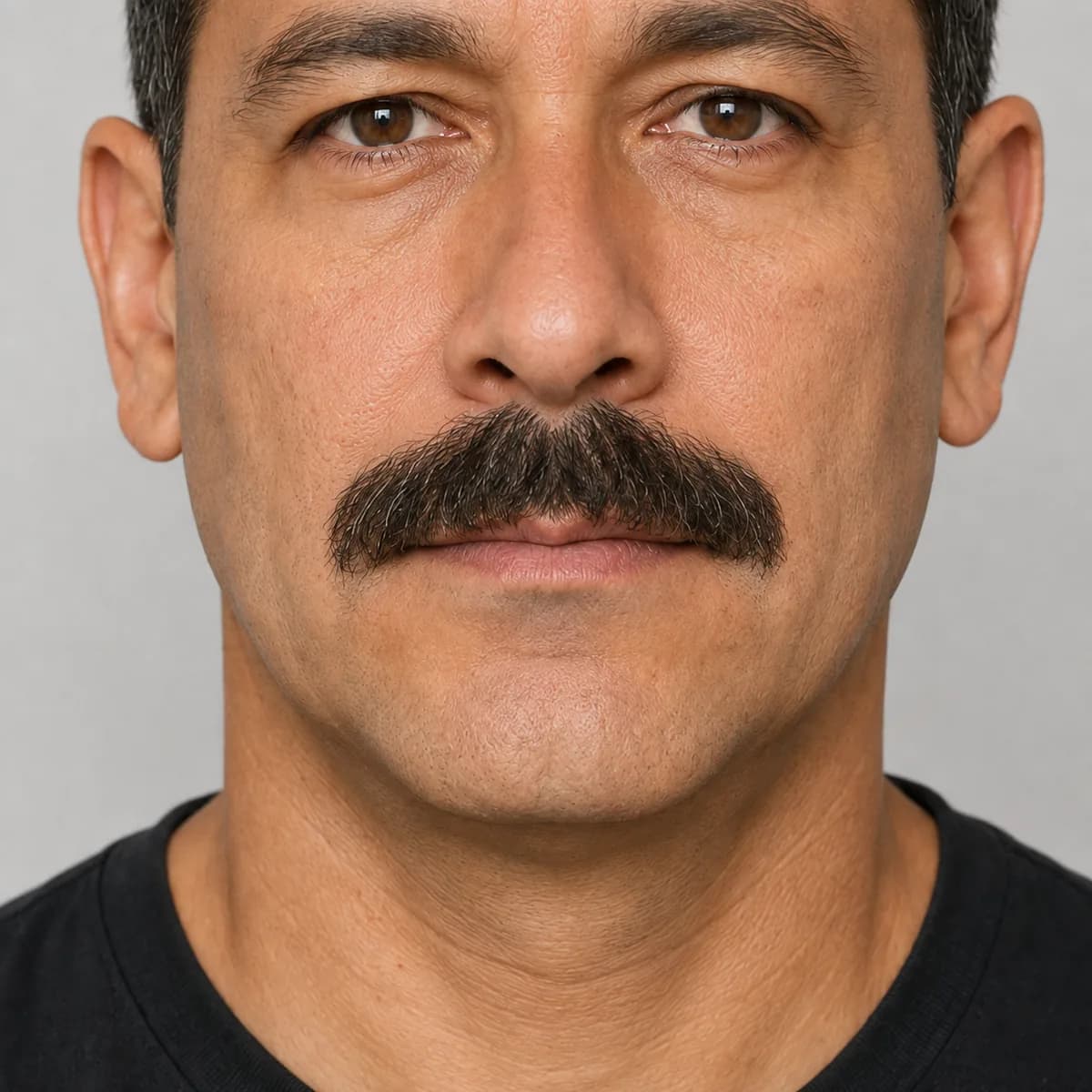
The Chevron is a full upper-lip mustache with a slight downward angle from the center toward the sides. It finishes just beyond the mouth corners. There are no vertical bars, curled tips or accompanying chin beard; the chin, cheeks and jaw stay clean.
Philips' mustache overview describes the Chevron as a substantial upper-lip style, while its trimming guide recommends combing down and cleaning the perimeter. The local geometry adds exact stopping points: just beyond the mouth corners, without turning downward beside them.
Check Density and Daily Comfort
Comb the hair down without product. The center and both halves should form one readable mass, although natural density need not be perfectly uniform. Sparse outer corners can be handled by choosing slightly earlier matching endpoints; cutting a notch into the fuller side usually makes the difference more obvious.
A broad mustache occupies visible space around the nose and mouth. That may suit your preference, but face-shape labels do not guarantee the result. Check the style while speaking and smiling. If the lower edge continually enters the mouth, comfort may require a shorter edge or a less full mustache even if a reference image sits lower.
How to Trim a Chevron
- Let the clean, dry mustache fall naturally and comb it straight down. Start with a longer guard or scissors; compare settings by millimeters with the length chart.
- Choose left and right endpoints just beyond the mouth corners. Clear hair outside those marks without extending the cuts downward.
- Reduce bulk from the upper surface in small passes, preserving a dense center. Do not carve a deep central part unless that is a deliberate variation.
- Define the lower edge around the upper lip for comfort. Follow the natural arc rather than drawing an unnaturally rigid horizontal line.
- Clean the cheeks, chin, lower-lip area and jaw. Recheck the Chevron from normal distance; correct endpoints before making the entire mustache shorter.
The lower edge may need attention before the top or ends do. Record what changed—bulk, lip clearance or endpoint—so routine maintenance does not gradually shrink every dimension at once.
Boundaries That Separate the Chevron
Its weight remains above the mouth. The ends can pass the corners slightly, but they do not descend to the jaw. Its broad body distinguishes it from a pencil mustache; the absence of styled curls distinguishes it from handlebar forms.
Use the contour illustration to compare the footprint rather than to demand identical density. The AI preview cannot show how hair moves during eating or speech, so comfort checks belong in the real-world decision.
Common Chevron Mistakes
Trimming only the lower edge while ignoring bulk can leave a shelf of hair that still drops into the mouth. Conversely, thinning the whole mustache every time one long hair appears can erase the dense character. Isolate stray hairs before changing the guard.
Another mistake is following asymmetric mouth corners as if they were fixed rulers. Set endpoints by how the mustache reads on the face, compare them at rest and while smiling, and avoid cutting both ends back repeatedly to chase millimeter-level symmetry.
Chevron Compared with Horseshoe and Beardstache
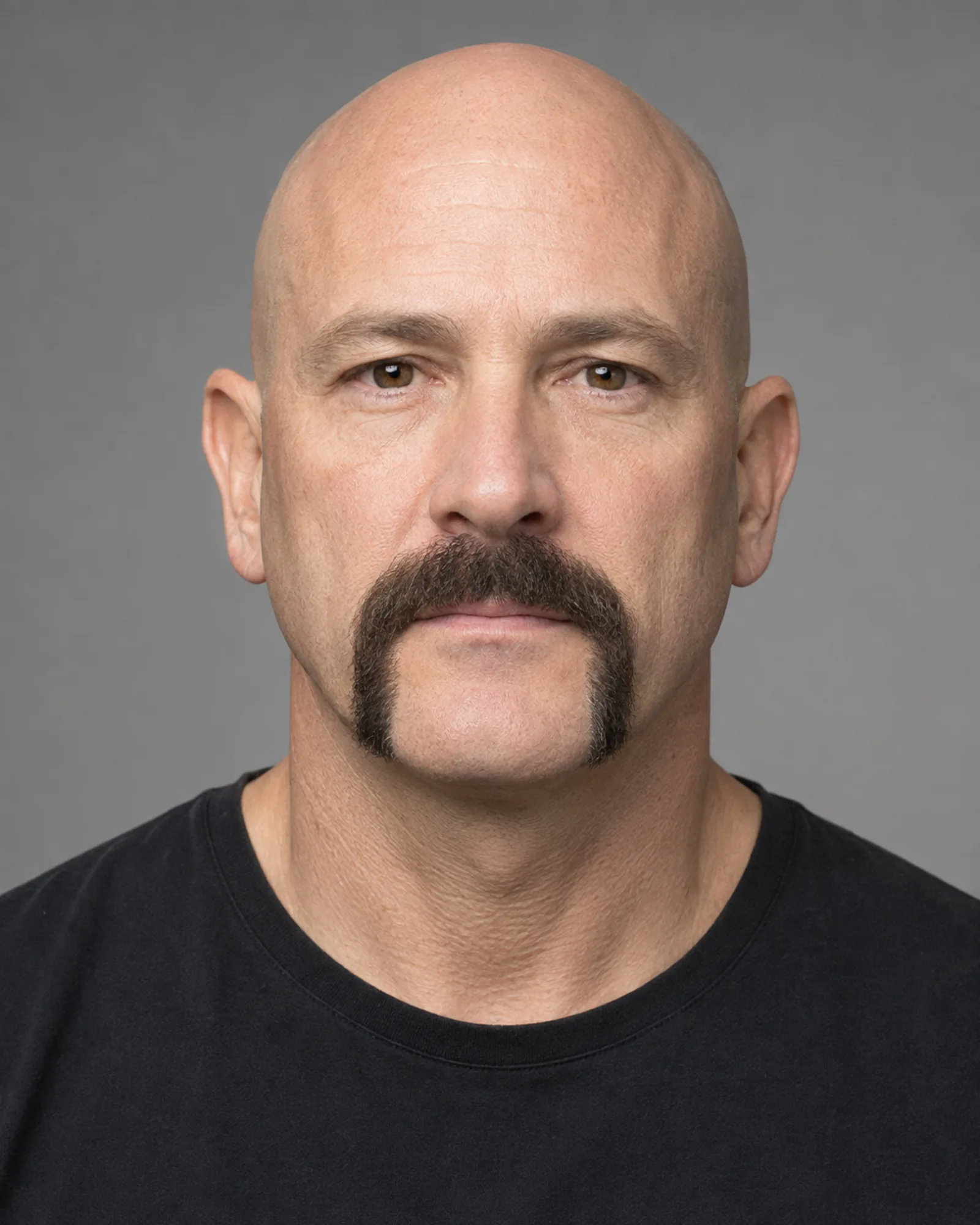
The Horseshoe begins with a thick mustache but adds two straight columns down beside the mouth, leaving the center chin clean. Choose it when those vertical bars are intentional, not merely because the Chevron ends have grown long.
The Beardstache keeps a dominant mustache but adds much lighter stubble across the cheeks, jaw and chin. Choose it when you want facial coverage without losing the mustache hierarchy. A Chevron keeps all attention on the upper lip by clearing the rest of the face.
Related beard styles

Related guides
Try On This Style
AI previews are illustrations, not guaranteed results. Your facial hair growth, face, lighting, and photo can change the preview and the result you can achieve with trimming.
Try On This Style