Horseshoe Mustache Guide: Two Vertical Bars and a Clean Center Chin
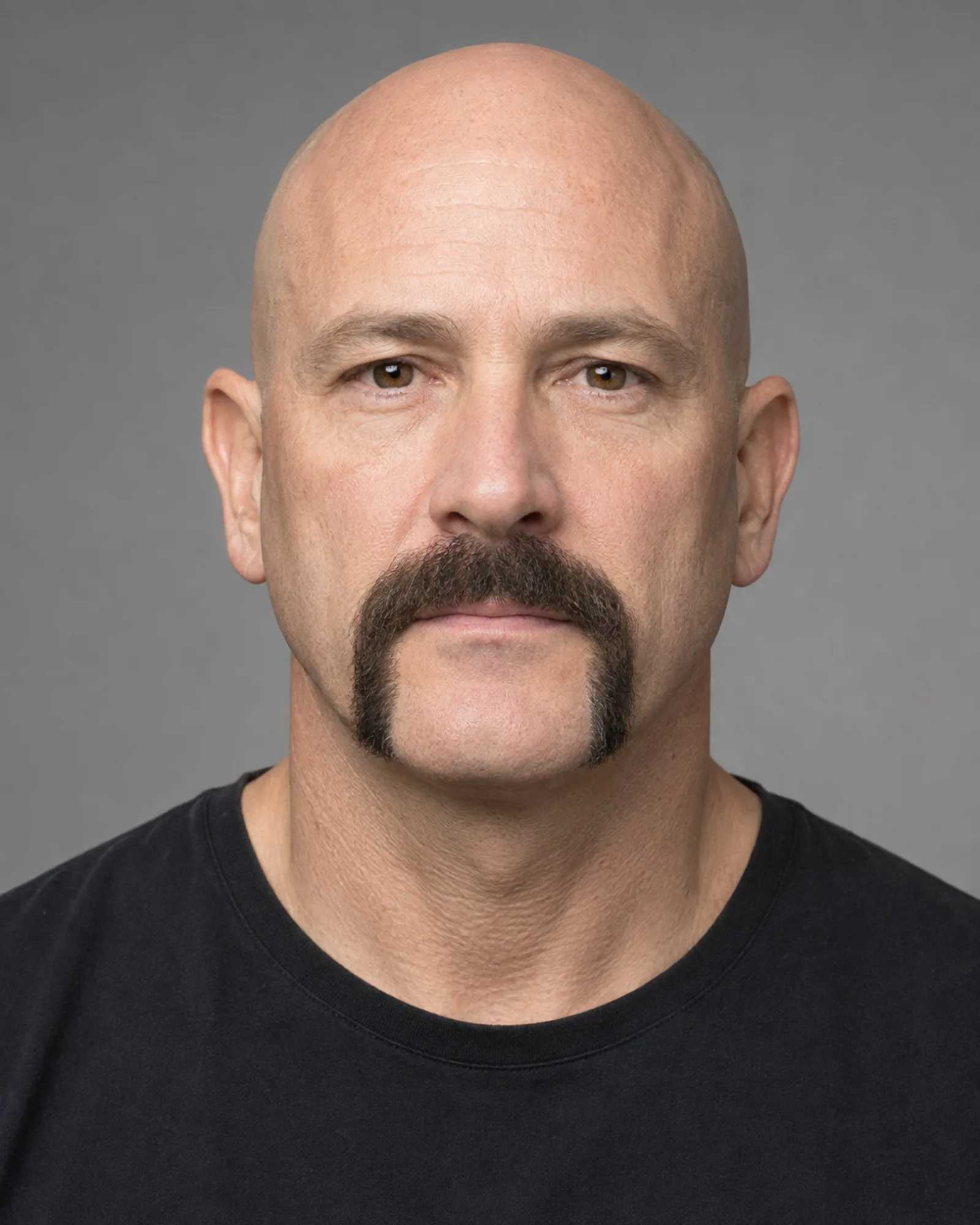
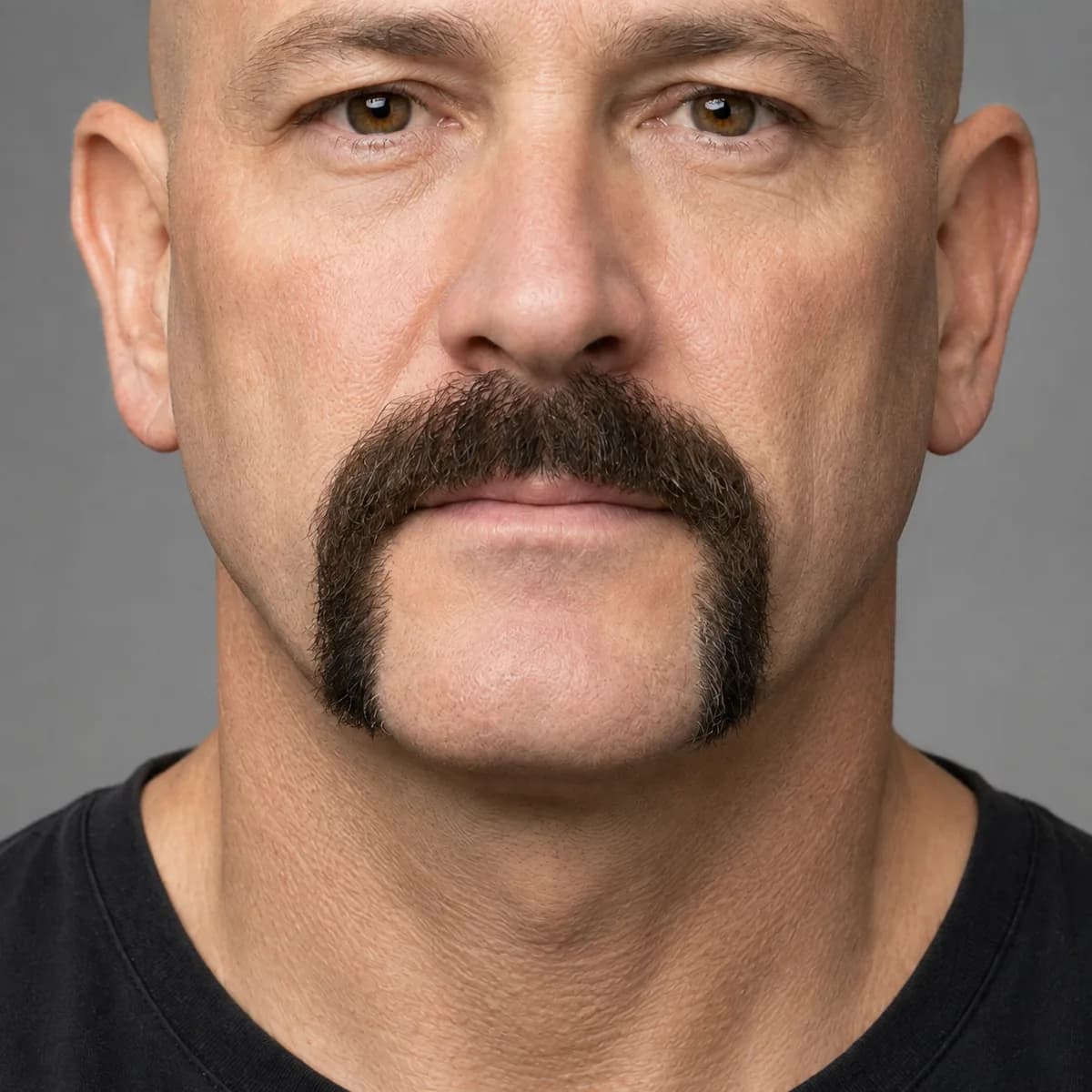
A Horseshoe mustache runs broadly across the upper lip, then drops in two thick, straight columns beside the mouth to the jawline. The center chin and space between the columns stay clean, creating an inverted-U outline that depends on parallel edges and matching lower endpoints.
Maintained by BeardStylesContent updated:
Latest recorded revision: Clarified that step 2 preserves extra hair width in both bars before gradually widening the clean central gap.
Content and source methodSave this style in this browser to compare it later. Saved styles do not sync across devices, and clearing browser data removes them.
- Length
- Keep the upper bridge and side columns visually similar in weight; choose bar width before shortening their lower ends.
- Maintenance
- Check inner edges, outer edges and two bottom endpoints separately while preserving the bare center chin.
- Could it suit you?
- Requires continuous growth from the upper lip down both sides of the mouth and enough symmetry to form two deliberate bars without filling the center chin.
What a Horseshoe Mustache Is
The Horseshoe begins as a thick mustache across the upper lip. At each mouth corner, hair continues downward in a straight column until the jawline. The two columns do not meet across the chin: the center chin, lower-lip area, cheeks and jaw between the bars stay clean.
Gillette's mustache overview likewise identifies the long downward bars as the feature that forms the horseshoe. The local renderer makes the bottom endpoints and clean center chin explicit; a beard joining those bars is a different geometry.
Can Your Growth Draw Both Bars?
Inspect the routes from each mustache corner down to the jaw. A dense upper lip alone is not enough if one vertical path breaks midway. Before shaping, comb the side hair downward and use two temporary lines to find the widest matching columns your coverage supports.
Vertical lines can affect how facial proportions are perceived, but they do not guarantee a longer-looking or more balanced face. The style is visually strong and exposes a large clean field, so consider both the outline and your willingness to maintain it. If the vertical routes are unreliable, a Chevron uses the upper-lip growth without requiring them.
How to Trim the Inverted U
- Comb the mustache down and direct the mouth-side growth vertically. Even obvious excess at a conservative setting; use the length chart to compare actual millimeters.
- Mark the inner edge of each bar from beside the mouth toward the jaw. Keep both bars slightly wider than intended at first, then widen the clean central gap gradually with short, matched passes along the inner edges.
- Mark the outer edges, preserving comparable bar width on both sides. Avoid following every natural zigzag; choose a clear route that stays within dense growth.
- Set the two bottom endpoints at equivalent jaw positions. View them from the front and each profile before removing hair below.
- Clear the center chin, lower-lip area, cheeks and hair between the bars and sideburns. Finish the upper-lip edge for comfort without thinning the bridge that joins the two columns.
Maintain the inner and outer edges independently. Moving both edges inward makes a whole bar narrower; moving just the inner edge enlarges the clean center. Note which boundary actually changed before correcting the opposite side.
The Critical Clean Center
The empty center is not incidental. It keeps the outline as an inverted U rather than a goatee or full beard. The bars should read as extensions of the mustache, not as detached side patches, and their lower ends should stop deliberately at the jaw rather than fading into neck stubble.
Use the contour image for direction and coverage only. An AI illustration can show perfectly straight columns, while real growth may require a slightly narrower path or softer edge to remain continuous.
Common Horseshoe Mistakes
Allowing stubble to fill the center chin weakens the defining negative space. Letting the bars drift outward can instead make them resemble narrow chops. Another mistake is shortening one bar from the bottom every time it appears less dense; reduce both to intentional matching endpoints only after checking the actual growth boundary.
Do not carve the inner edges with one long upward stroke. A small deviation beside the mouth can remove a large part of the bridge. Use short outward strokes and inspect between passes.
Horseshoe Compared with Chevron and Beardstache
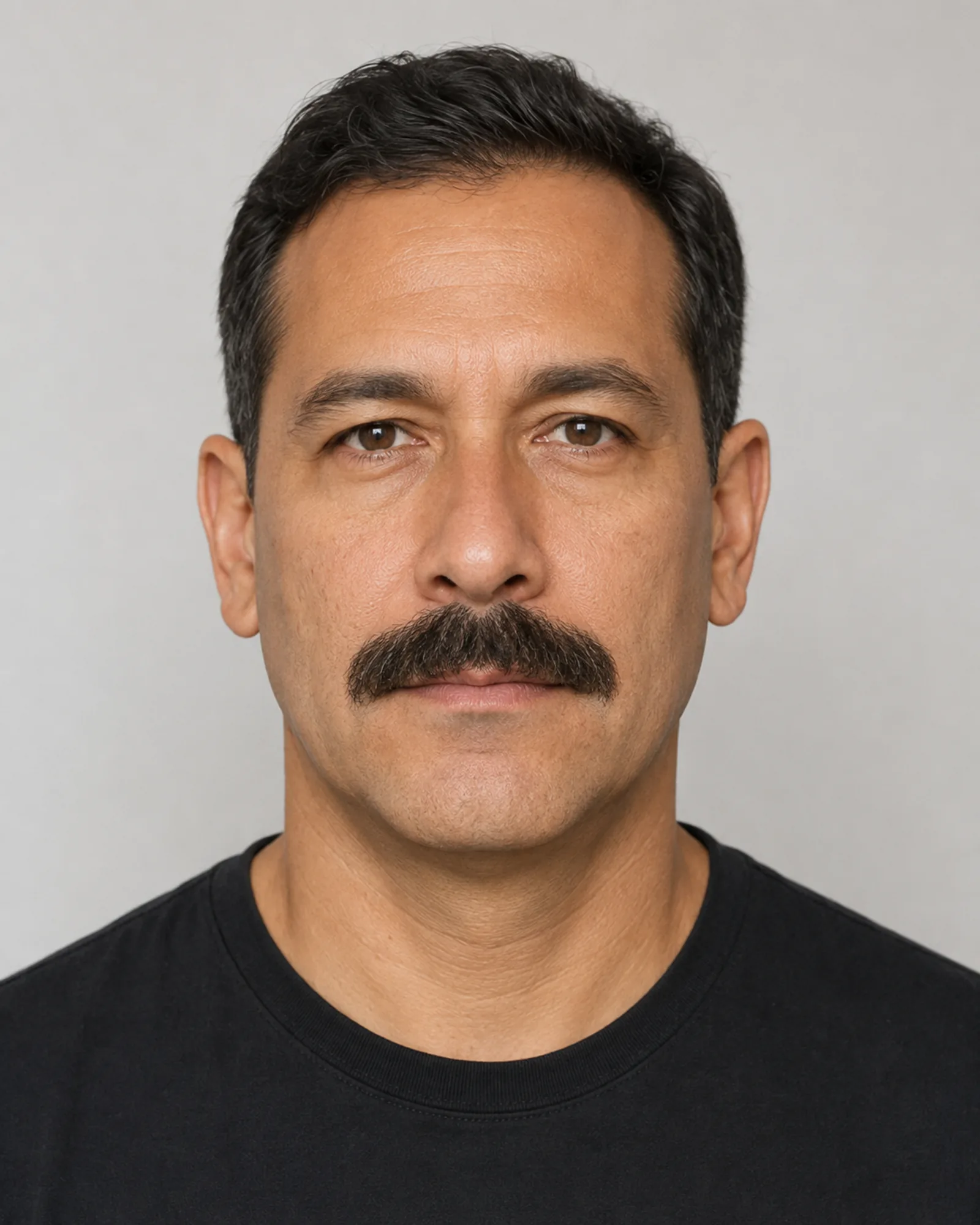
The Chevron is broad and dense above the lip but stops just beyond the mouth corners. Choose it when the horizontal upper shape is enough and you want the jaw and chin completely clear.
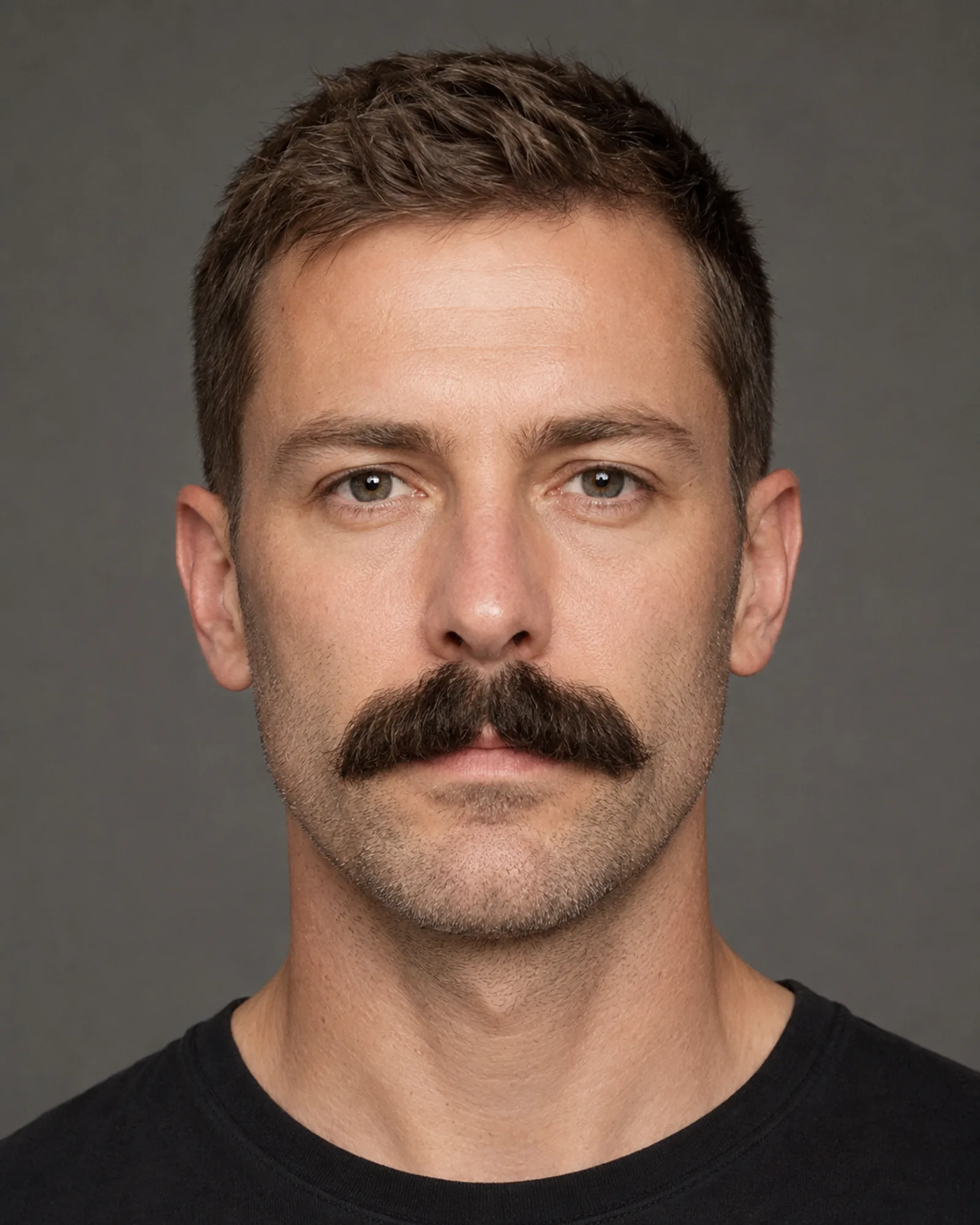
The Beardstache adds light stubble everywhere across cheeks, jaw and chin beneath a dominant mustache. Choose it when a soft background is preferred. A Horseshoe has stronger vertical structure and a specifically bare center chin, so even short all-over stubble changes the intended contrast.
Related beard styles
Related guides
Try On This Style
AI previews are illustrations, not guaranteed results. Your facial hair growth, face, lighting, and photo can change the preview and the result you can achieve with trimming.
Try On This Style