
Mustache coverage and shape
Mustache gap in the middle? Try two combing directions
Check the gap below your nose, compare inward and outward combing, and decide what length to keep before you trim.

In this guideLocate the gap
A gap below the nose gives you two useful directions to try. If nearby hairs reach the center without crossing the lip, comb them gently inward and down. If they spring back or look bunched, try sweeping each half away from the center and keeping the part visible. Try both before trimming.
Check the center and the corners separately
In the r/Moustache thread below, a reader asks how to cover the space under the nose when the middle hairs point sideways. The author later says the wax they tried made hairs bunch together. That experience raises a useful question: how does your own mustache sit without product?
Look at it with your lips relaxed and the hairs in their usual position. The philtrum is the groove between your nose and upper lip. A gap there separates the two halves of the mustache; gaps near the mouth corners separate it from the chin beard. Check which area you actually want to change.
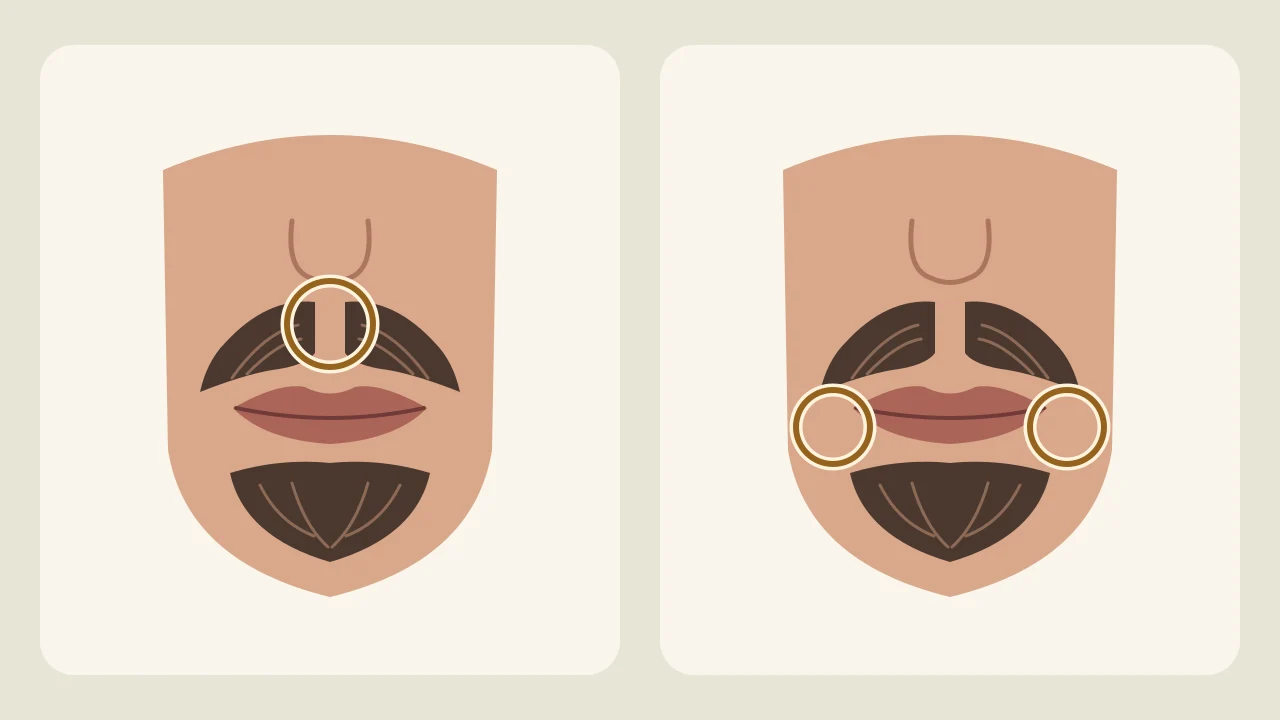
Compare the same length before you cut
Use a small comb and try the two directions in the same light. Start without wax so you can see how far your own hairs reach. Relax your mouth and step back from the mirror after each pass.
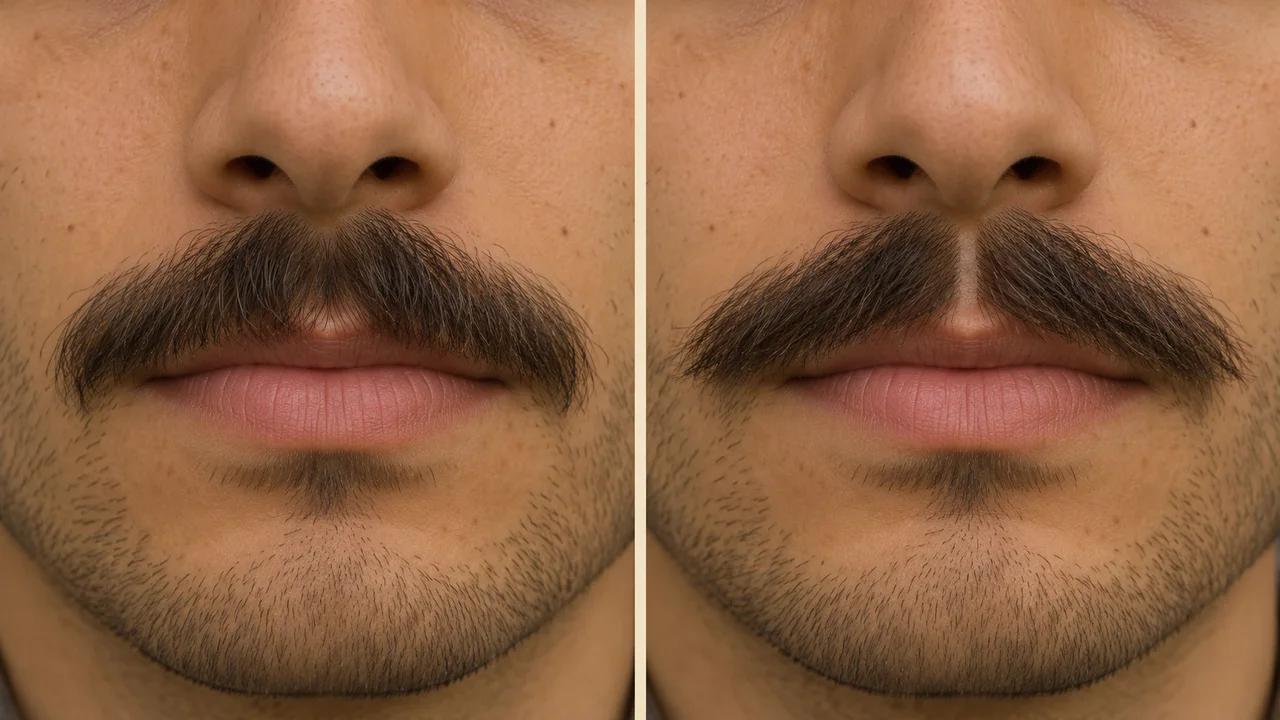
Comb inward and down
Guide a few neighboring hairs toward the center. Stop if they bunch into a thick ridge or fall over the lip. If the shape sits well and you want more hold, try a little mustache wax according to its label. It helps hold an arrangement while worn.
Sweep away from the center
Brush each half toward its own side and let the gap show. Compare where the ends sit, rather than trying to make the center perfectly symmetrical. If the shape reads well without extra hold, you can leave it there.
Decide how much emphasis the upper lip needs
Judge the whole face from a normal conversation distance. Highgate Cuts and Book of Barbering describe ways to keep visible separation or give more weight to the rest of the facial hair. Try the direction you liked with the coverage you already have.
Short stubble
If your jaw has enough coverage and you prefer a quieter mustache, consider short stubble around it. It changes how much attention the upper lip gets; the center gap can still be visible.
See the stubble guideA separate chin shape
If you have more coverage at the chin, a Van Dyke is another comparison. Its mustache and pointed chin are separate at the mouth corners. That feature is distinct from a part directly under the nose.
See the Van Dyke guide
Keep the hairs you used in the trial
If an inward sweep works, keep the nearby length that reaches toward the center. If the outward part works, ask to keep its current width while tidying the ends. Show the barber a straight-on photo of the result you like.
You can say: “Please leave the center as it is. Tidy the outline, and show me before taking more off the hairs beside the gap.” If the ends touch your lips when you talk, point out exactly which ends bother you.
What can styling change?
Can a comb make the middle grow straight down?
Combing and wax can reposition the hairs you have. Use them to judge a temporary shape; the sources do not establish a permanent change in growth direction.
Should I shave the center wider?
Try the natural part first. You can compare both directions without losing length, then decide whether you actually want a more defined gap.
Sources and further reading
Checked November 11, 2026. The thread shows a personal observation, the barber guides describe styling options, and the brand instructions explain wax application. The two-direction mirror trial is our editorial suggestion.
- Reddit r/Moustache · A reader’s center-gap question
- Beardbrand · Mustache gaps
- Highgate Cuts · Ways to wear a center part
- Book of Barbering · Styles for uneven mustache coverage
- Beardbrand · Mustache wax instructions
First published
Updated