
Style notes · At the barbershop
Ask for a tidier beard. Keep the length you want.
Explain what to keep, choose useful reference photos and agree on the shape before your barber starts. A practical beard consultation guide.

In this guideKeep first
Start with the length and fullness you want to keep. Then name the areas you want changed and show the useful detail in a reference photo. “Just tidy it up” leaves too much room for interpretation; a brief agreement before cutting gives you and the barber a clearer plan.
Lead with what should stay.
If you are growing your beard, say that before asking for a tidy-up. Keeping the length below your chin, reducing the width at the sides and leaving a full moustache are different requests. A style name alone does not explain which one matters most to you.
Here is an editable example we wrote, not a quote from a real client: “I’m growing it longer. Keep the length under my chin and the fullness at my jaw. I’d like the outer shape tidier. Please show me what you would remove before starting.”
Make a small plan for each area.
Dandies and The Beard Struggle both separate the overall look from individual beard areas. Use these prompts to explain your own priorities; you do not need to prescribe the barber’s technique.
Length and bulk
Say whether you want to maintain, grow or shorten the beard. Point to what must remain, and ask the barber to show the proposed reduction with a comb or fingers. A length category or a guard number alone cannot describe the whole shape.
Cheek and neck lines
Choose a softer natural edge or a more defined outline, then agree on its position. If you like the current line, say so. Use our neckline guide to prepare questions rather than treating a reference image as an exact cutting map.
Moustache
Mention whether you want to preserve the ends, keep fullness or clear the lip. Do not assume “beard trim” communicates your moustache preference.
Sideburn connection
Explain whether you like a gradual blend into the haircut or a more distinct connection. Point to the transition in a photo if words such as “fade” mean little to you.
Everyday upkeep
Describe how you normally arrange the beard and how much maintenance you want to do between visits. Ask which parts you can leave alone; a finish you cannot maintain may be the wrong choice for your routine.
Show the detail, not just the person.
Choose one clear overall reference, with another angle if it helps. Similar beard texture and coverage make a reference easier to discuss. Explain the feature you like: the width, the chin shape or the softness of a line. You can like one detail without requesting the entire look.
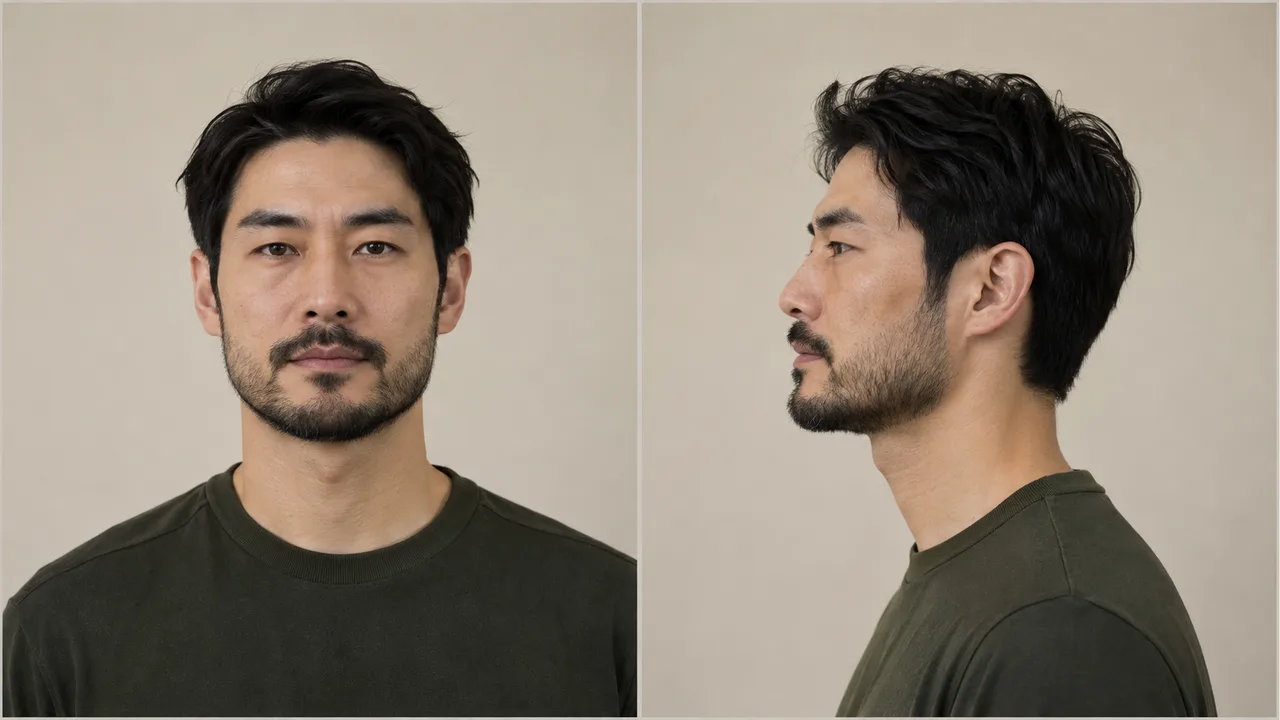
A good photo of your own previous beard can be especially useful. Bring a front and side view when available; the side reveals projection and the neck outline that a front-facing image can hide. These angles help communication, but they do not guarantee an identical result.
Agree before cutting. Check before leaving.
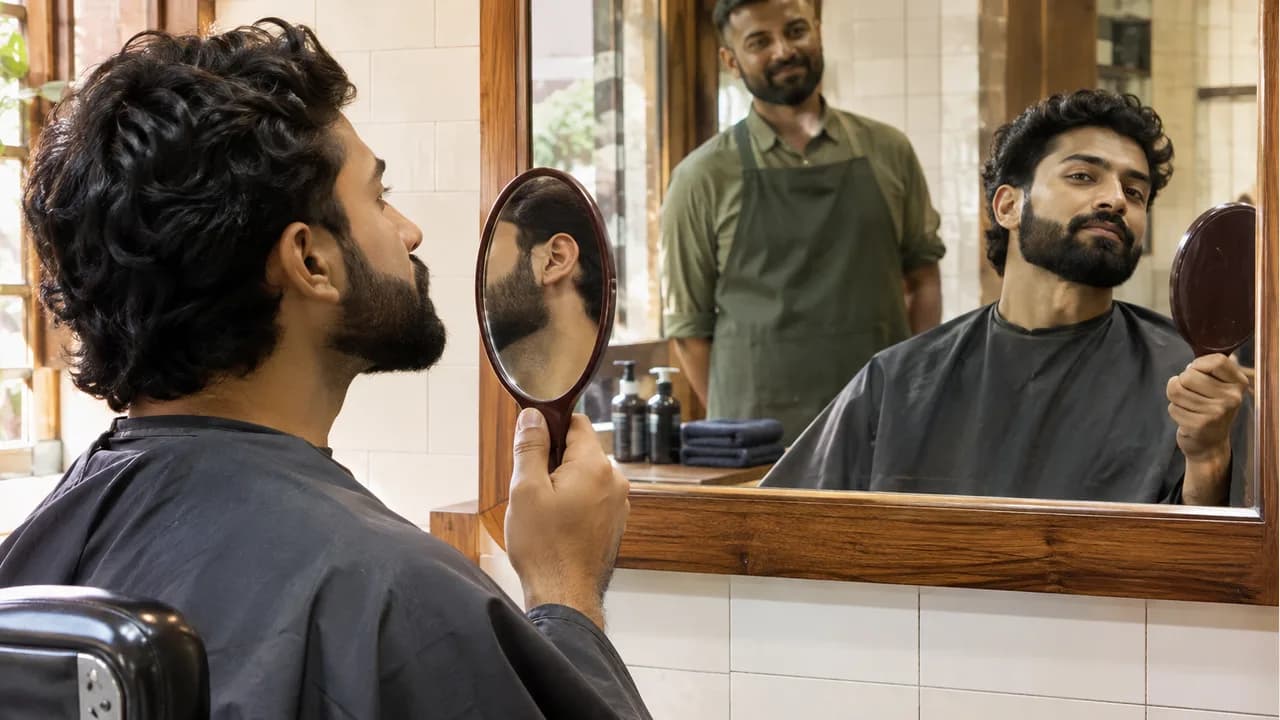
Modern Barber’s practitioner interviews stress a beard consultation and a final mirror check. Turn that into two simple pauses: one while length is still there, and one before you leave.
Before the first cut
Ask the barber to recap what stays, what changes and where the boundaries will sit. If the plan sounds shorter than you intended, clarify it now. You can ask what is realistic for your actual coverage without committing to a drastic change.
When the plan changes
If an adjustment would remove more than you agreed, ask to discuss it first. Speak up early and describe the area that concerns you; “keep more here” is easier to act on while there is still length to preserve.
At the final mirror check
Look at the front and both sides, with your head in a normal position. Ask how to reproduce the everyday shape. With everyone’s permission, keep a photo of a result you like and your agreed notes for the next visit.
What if you do not know the right words?
Do I need to know a guard number?
No. Describe the length you want to retain and ask how the barber plans to achieve it. If a setting is useful for later maintenance, record the tool and attachment as well. Our length guide explains why a number alone is incomplete.
Can I use an AI beard image?
Use it to discuss a shape, and say that it is generated. It cannot prove your growth, density or an achievable cutting result. A current photo of your actual beard helps the barber assess the starting point.
Can I prepare something to show on my phone?
Yes. Write your keep/change priorities in a short note, or use our barber brief to choose candidates and add discussion notes. Review the sheet before printing or saving it as a PDF; the tool does not replace the conversation.
The guides behind this conversation.
Sources checked on November 3, 2026. This is a source-backed evergreen question; current popularity and page traffic are unverified. The keep/change checklist and example wording are our editorial synthesis, not a transcript or a promise of a particular result.
- Dandies Barber · Explaining a beard trim
- The Beard Struggle · Beard consultation and terminology
- Modern Barber · Practitioner interviews, April–June 2023
- Youssef Ouda · References and agreeing the plan
First published
Updated